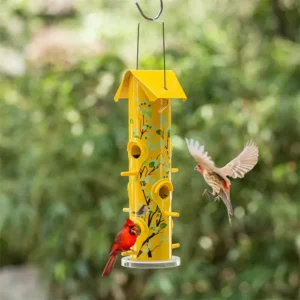
Tube Feeders
Tube bird feeders for dry seed, peanuts, finches, and other clinging or perching songbirds.
Buying guide
Choosing your bird feeder
Match the feeder to the food, the birds already nearby, and a care routine you can maintain. Consider feeding access, placement and cleaning before capacity alone.
How to choose a bird feeder
Tube bird feeders for dry seed, peanuts, finches, and other clinging or perching songbirds.
Which tube feeder fits your birds?
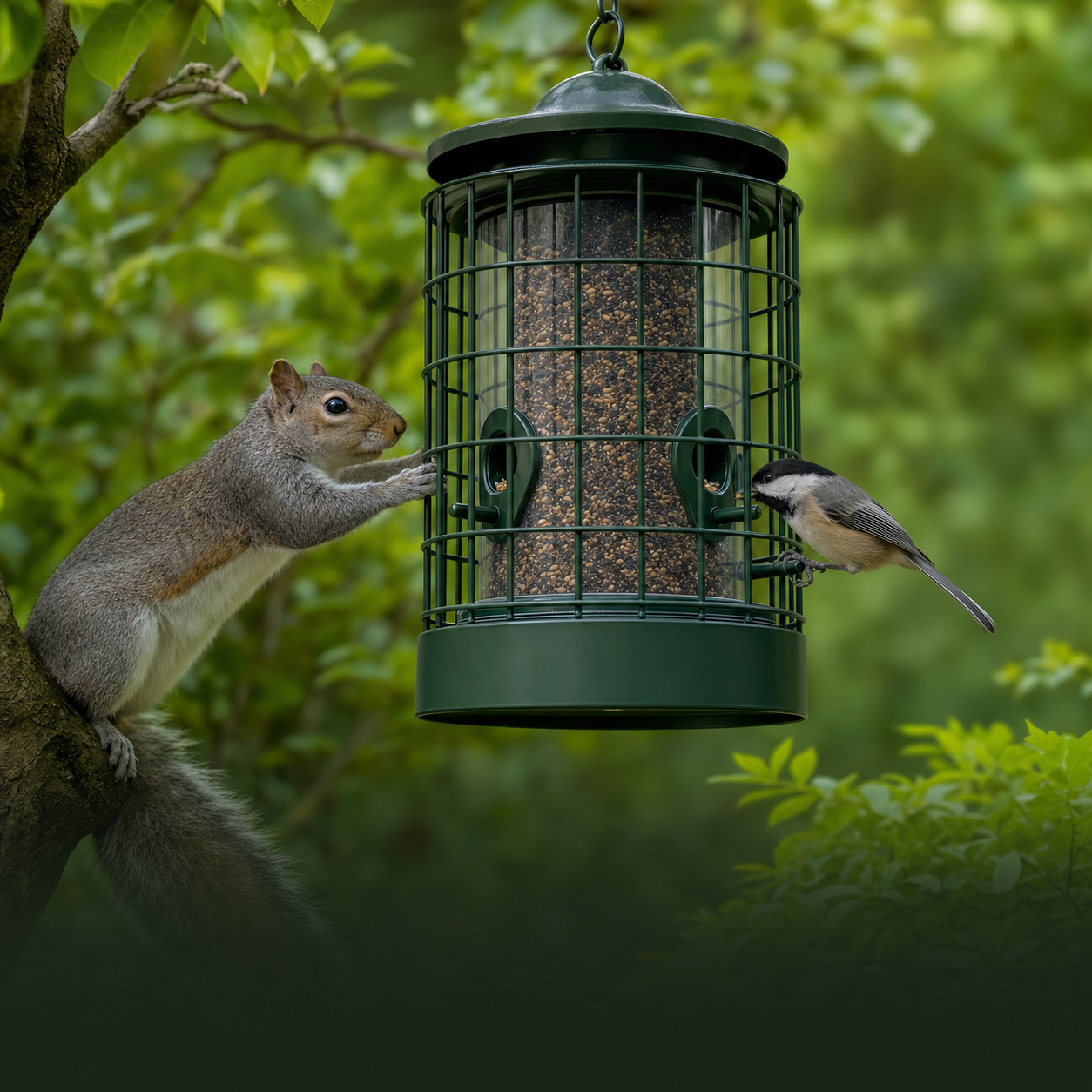
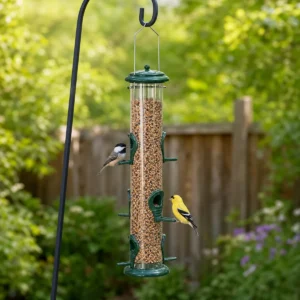
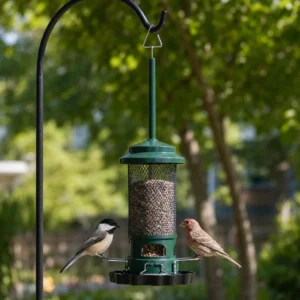
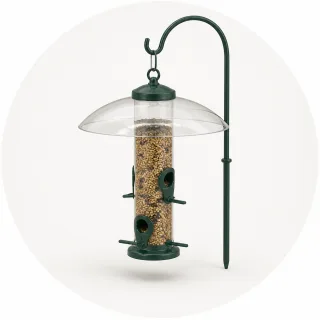
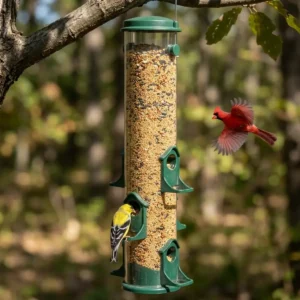
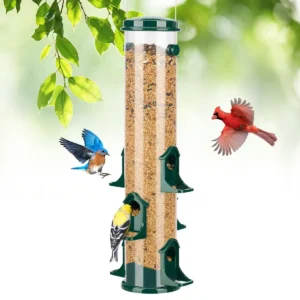
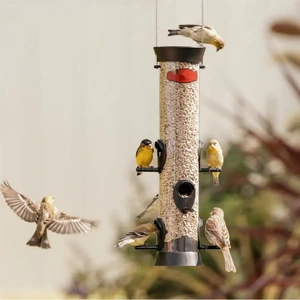
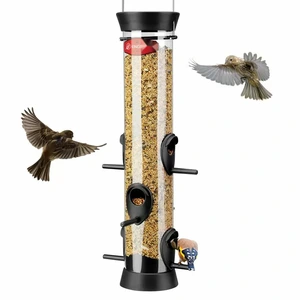
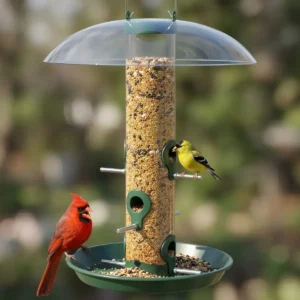
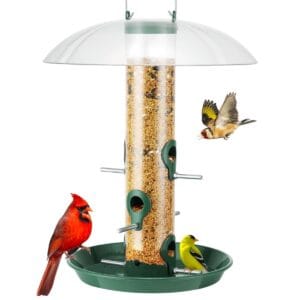
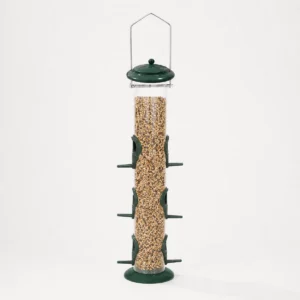
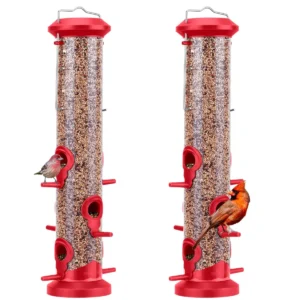
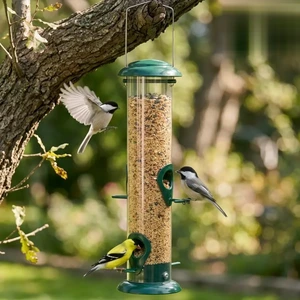
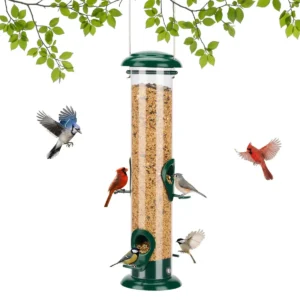
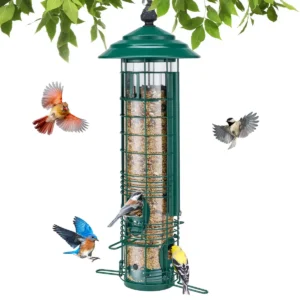
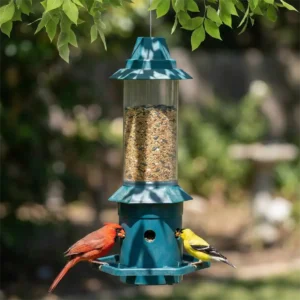
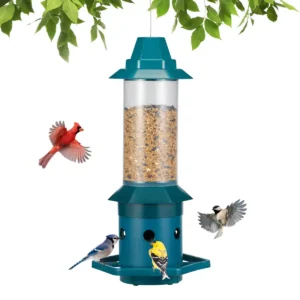
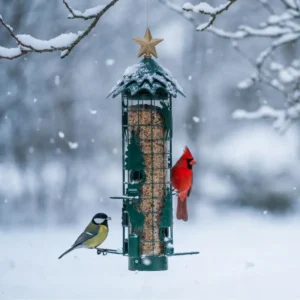
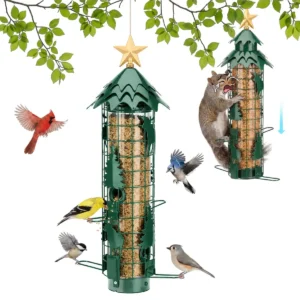
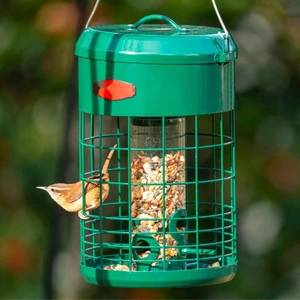
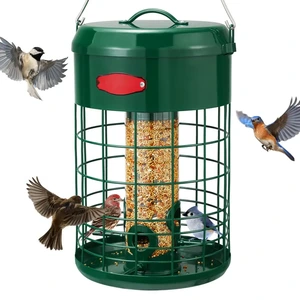
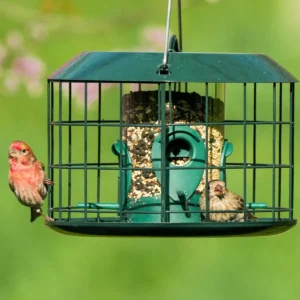
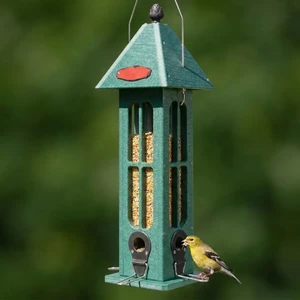
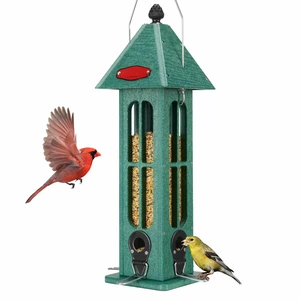
Choose a tube feeder by seed flow, port size, and the birds you want to welcome. PerchKind’s current six-port design uses a clear vertical reservoir, individual perches, and feeding ports at several heights for small seed-eating songbirds. It needs clean, dry food, secure hanging hardware, and routine removal of damp seed and old hulls.
FeatureWhat to checkPerchKind option
Feeding accessPort and perch size should suit the intended small birds.Six feeding ports with individual perches
Seed visibilityA clear reservoir makes levels, clumping, and moisture easier to notice.Transparent seed tube
Refilling and careThe top and interior should be reachable for routine cleaning and drying.Removable upper section and visible interior
See the dimensions, included parts, and feeding features on the green six-port tube bird feeder product page. Use clean, dry seed sized to move through the ports without compacting, start with a modest amount, and check the lower ports after wet weather.
Placement and routine care
Hang the feeder from a secure hook with a clear approach and enough room to remove the cap or feeder for cleaning. Check after rain, discard damp or clumped food, and let every washed part dry completely before refilling. Project FeederWatch’s feeding-birds guidance also recommends keeping the ground below feeders clean and discontinuing feeding temporarily if disease is suspected.
For help comparing tube, hopper, platform, nectar, and squirrel-resistant designs, use the PerchKind bird feeder guide.
Tube bird feeder questions
What seed works in a tube bird feeder?
Use clean, dry seed that fits the feeding-port design. Black-oil sunflower seed or sunflower hearts often work in port-style tubes; always check that food flows freely and remains dry.
Why choose several feeding ports?
Ports at different heights give small birds more approach points and can reduce crowding. The number of ports does not replace good cleaning or suitable placement.
How do I know when tube-feeder seed should be replaced?
Discard seed that is damp, clumped, moldy, or contaminated. Check the bottom and lower ports after rain because moisture can collect where it is less visible.
Which tube feeder fits your birds?
Choose a tube feeder by seed flow, port size, and the birds you want to welcome. PerchKind’s current six-port design uses a clear vertical reservoir, individual perches, and feeding ports at several heights for small seed-eating songbirds. It needs clean, dry food, secure hanging hardware, and routine removal of damp seed and old hulls.
| Feature | What to check | PerchKind option |
|---|---|---|
| Feeding access | Port and perch size should suit the intended small birds. | Six feeding ports with individual perches |
| Seed visibility | A clear reservoir makes levels, clumping, and moisture easier to notice. | Transparent seed tube |
| Refilling and care | The top and interior should be reachable for routine cleaning and drying. | Removable upper section and visible interior |
See the dimensions, included parts, and feeding features on the green six-port tube bird feeder product page. Use clean, dry seed sized to move through the ports without compacting, start with a modest amount, and check the lower ports after wet weather.
Placement and everyday care
Placement and routine care
Hang the feeder from a secure hook with a clear approach and enough room to remove the cap or feeder for cleaning. Check after rain, discard damp or clumped food, and let every washed part dry completely before refilling. Project FeederWatch’s feeding-birds guidance also recommends keeping the ground below feeders clean and discontinuing feeding temporarily if disease is suspected.
For help comparing tube, hopper, platform, nectar, and squirrel-resistant designs, use the PerchKind bird feeder guide.
Bird feeder questions
Tube bird feeder questions
What seed works in a tube bird feeder?
Use clean, dry seed that fits the feeding-port design. Black-oil sunflower seed or sunflower hearts often work in port-style tubes; always check that food flows freely and remains dry.
Why choose several feeding ports?
Ports at different heights give small birds more approach points and can reduce crowding. The number of ports does not replace good cleaning or suitable placement.
How do I know when tube-feeder seed should be replaced?
Discard seed that is damp, clumped, moldy, or contaminated. Check the bottom and lower ports after rain because moisture can collect where it is less visible.
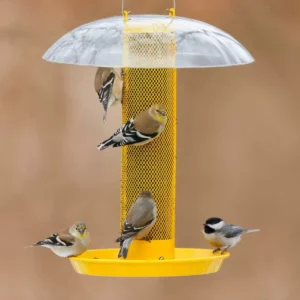
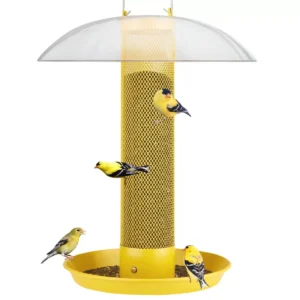
Choosing a feeder for finches? Our finch feeder guide explains how food and port design affect your choice.
Open a section to read the complete guidance.