Finch Feeders: How to Attract Finches Year-Round (2026)
To attract finches, start with fresh sunflower or nyjer suited to the species present and the feeder’s openings. Cornell Lab’s American Goldfinch account names both for American Goldfinches and notes that these birds can use several feeder styles. No seed or feeder guarantees year-round visits. Choose food for the species actually present. Nyjer can attract [...]
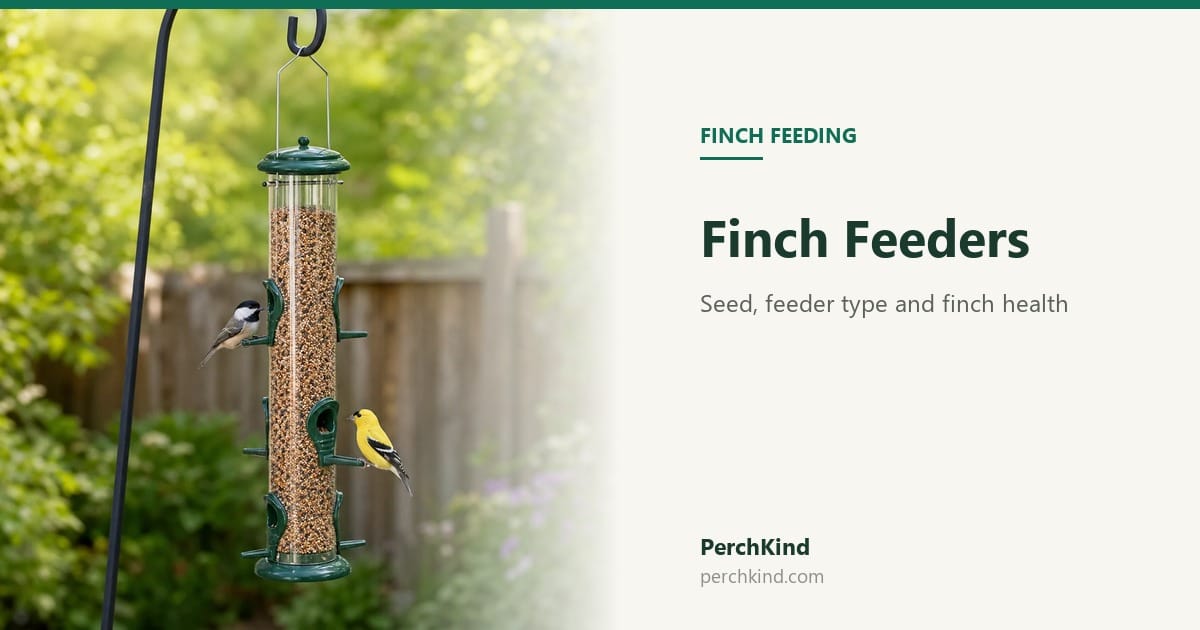
To attract finches, start with fresh sunflower or nyjer suited to the species present and the feeder’s openings. Cornell Lab’s American Goldfinch account names both for American Goldfinches and notes that these birds can use several feeder styles. No seed or feeder guarantees year-round visits.
Choose food for the species actually present. Nyjer can attract goldfinches, Pine Siskins and redpolls where they occur; sunflower also serves many feeder birds. Use fresh seed and suitable openings rather than assuming one food guarantees more visits in every yard.
This guide focuses on North American American Goldfinches, House Finches, Purple Finches and Lesser Goldfinches. Species, seasonal presence and food use vary by region. Keep feeding equipment and the ground clean, and follow local wildlife-health advice.
Key takeaways
- American Goldfinches have an unusually seed-based diet; do not generalize that dietary extreme to every finch species.
- Offer fresh sunflower or nyjer in openings suited to the seed. Choose for the finches present locally rather than treating either food as a universal winner.
- You do not need a dedicated nyjer feeder. Cornell Lab notes finches use hopper, platform and hanging feeders happily, and don’t even mind feeders that sway.
- Goldfinches nest in June or July — later than almost any other North American bird — timing their brood to thistle seed.
- Male goldfinches turn bright yellow in spring because they molt body feathers twice a year.
- Finches can be vulnerable to disease transmission at feeders. Rake the ground and clean feeders regularly.
Which finches you can attract
Four species account for nearly all finch traffic at North American feeders. They overlap in range and often feed together.
American Goldfinch
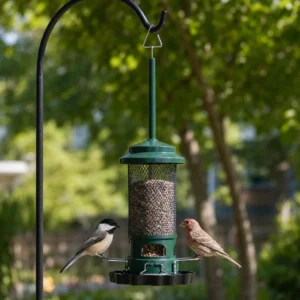
The most widespread and the most likely visitor. Cornell Lab notes it is welcome and common at feeders, taking primarily sunflower and nyjer. Spring males are brilliant yellow with a black cap; females and all winter birds are duller olive-brown but still identifiable by the conical bill, notched tail and wingbars. During moults they look, in Cornell’s words, “bizarrely patchy” — which is normal, not a sign of illness.
Goldfinches often flock with Pine Siskins and Redpolls, so a busy goldfinch feeder frequently brings in two or three species at once.
House Finch
The most urban and adaptable finch, present year-round across most of the United States. Males show red or orange on the head and chest, though the intensity varies with diet. House Finches are the species most affected by the eye disease discussed below, which makes feeder hygiene genuinely important if you have them.
Purple Finch and Lesser Goldfinch
Purple Finch and Lesser Goldfinch visits depend on your region and season. Lesser Goldfinches occur in western North America and can overlap with American Goldfinches; do not assume one simply replaces the other across the West.
What finches eat
The finches discussed here use seeds at feeders, but their diets and seasonal habits are not identical. American Goldfinches have an unusually plant-based diet; avoid extending every goldfinch fact to House Finches, Purple Finches or other species.
Sunflower: an option for mixed feeder visitors
Black-oil sunflower can serve finches alongside other seed-eating birds. Cornell Lab’s seed guide describes its thin shell and broad appeal; the same guide lists nyjer for several small finches. Match the food to local birds and the feeder openings rather than assuming one seed always attracts more finches.
Nyjer: good, but with caveats
Nyjer is used by goldfinches, Pine Siskins and redpolls where they occur. It needs openings small enough to retain it, as described in Project FeederWatch’s feeding guidance. Buy manageable quantities and inspect for dampness or spoilage; no freshness ranking over sunflower is established here.
American Goldfinches have an unusually seed-based diet
Cornell Lab describes American Goldfinches as being among the strictest vegetarians in the bird world — they select an entirely vegetable diet and only swallow an occasional insect by accident. This is not just trivia; it explains their feeder behaviour. They are not hunting protein at your feeder the way jays or orioles are. They want seed, and they want a lot of it.
It also produces one of the strangest facts in North American ornithology. When a Brown-headed Cowbird lays its egg in a goldfinch nest, the egg may hatch — but the chick seldom survives more than three days, because it cannot live on the all-seed diet the goldfinches feed their young. The goldfinch is one of the few host species the cowbird cannot successfully parasitise. See Cornell Lab’s American Goldfinch account.
Do you need a special finch feeder?
This is the most common misconception about finch feeding, and the answer is a clear no.
What Cornell actually says
Cornell Lab’s backyard guidance is direct: almost any kind of bird feeder may attract American Goldfinches, including hopper, platform and hanging feeders, and these birds don’t mind feeders that sway in the wind. They will also feed on the ground below a feeder, picking up spilled seed.
That last point is worth pausing on. The advice to buy a rigid, squirrel-proof, purpose-built finch feeder is widely repeated — but goldfinches are among the least fussy feeder users in the yard. A swaying hanging feeder that a Blue Jay would struggle with poses no problem for a finch.
When a nyjer feeder is worth buying
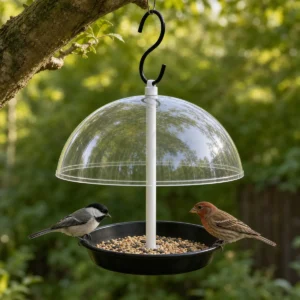
A fine-port nyjer feeder retains seed that would spill through larger openings. Access also depends on perch and guard design; it is not automatically a goldfinch-only station or a complete barrier to larger visitors.
Types of finch feeders
Three formats work well. All are effective — the difference is mainly about seed capacity and who else can use them.
| Type | How it works | Best for |
|---|---|---|
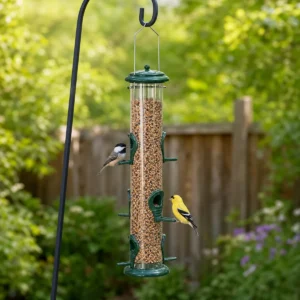
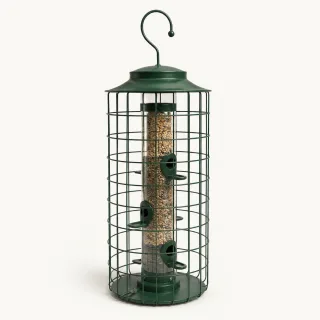
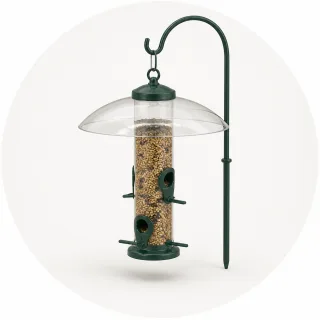
| Tube feeder | Vertical reservoir with multiple small ports and perches | Sunflower or nyjer; keeps seed dry and lets several finches feed at once |
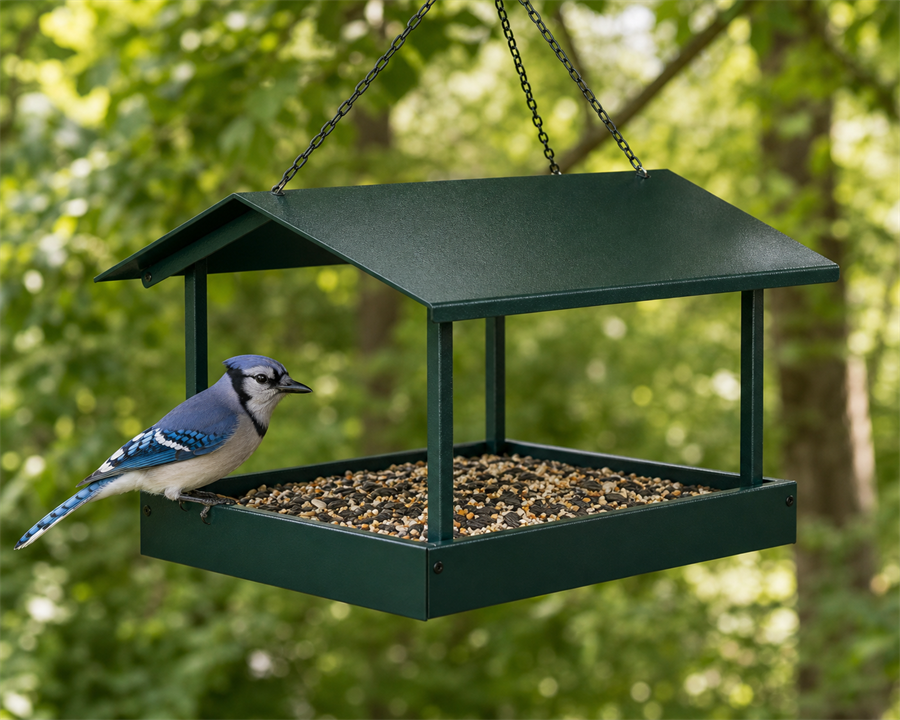
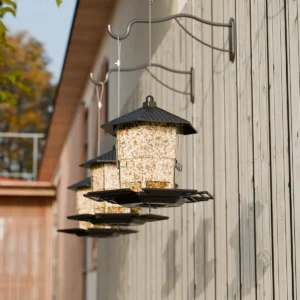
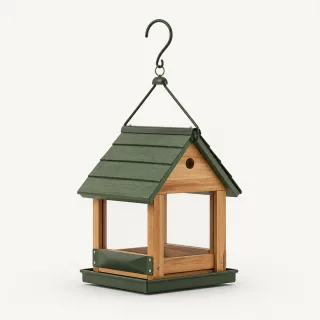
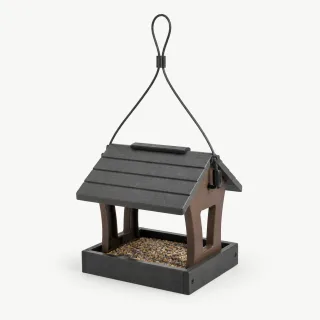
| Hopper feeder | Seed held in a covered box, dispensed onto a tray | Larger seed capacity; fewer refills, but open to bigger birds too |
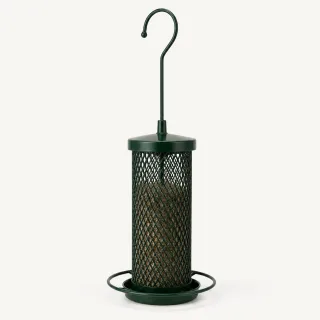
| Nyjer sock or fine-port feeder | Fine openings designed to retain tiny nyjer seeds | Offering nyjer with reduced spillage; visitor access depends on the whole design |
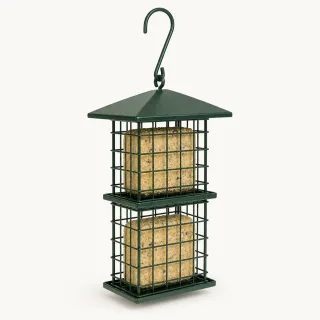
A tube feeder is one option, not a requirement. Compare the seed openings, perches, drainage and cleaning access of the actual model. If offering both sunflower and nyjer, check whether the openings retain each food; separate suitable feeders can make it easier to inspect what birds use and what is left uneaten.
Why port size matters more than feeder style
Match the openings to the seed and check the perch length and access. Small nyjer outlets retain tiny seeds, but opening size alone does not guarantee exclusion of every larger bird.
Where and when to hang it
Finches are less demanding about placement than most species, but three things help.
- Near trees or shrubs, with an open approach. Finches are open-woodland birds and like to move between cover and the feeder. A feeder 10–15 feet (3–5 m) from a tree line works well.
- Mount at a safe, serviceable height appropriate to the model. Convenient access helps cleaning, but height alone does not protect birds from cats or other predators.
- Dappled shade, not deep shade. Sunflower and nyjer both keep better out of direct sun, and finches will use a shaded feeder readily.
- Window safety. Treat hazardous glass with closely spaced exterior markings or an exterior screen. Feeder or birdbath distance alone does not prevent collisions.
On timing: American Goldfinches are present year-round across most of their range, so a finch feeder can run all year. They do shift south in winter, following a pattern that roughly tracks where January minimum temperatures stay above 0°F (−18°C), so northern feeders thin out in the coldest months and refill in early spring.
Keeping finches healthy
Finches can contract diseases at feeding stations. House Finch eye disease is one documented example; hygiene and the response to a sick bird should follow current local guidance, not an unsupported ranking of which birds are most vulnerable.
Rake the ground under the feeder
Cornell Lab’s specific advice for protecting American Goldfinches is to keep the ground well raked. Finches feed on the ground beneath feeders, and droppings and spoiled seed accumulate there. Raking breaks the cycle. If you do one extra thing for finch health, do this.
Clean the feeder on a schedule
Wash seed feeders every week or two, sooner in wet weather or heavy use. Project FeederWatch’s feeding guidance separates washing from optional disinfection; follow material instructions, rinse thoroughly and dry before refilling. Our bird feeder cleaning guide covers that sequence.
Know when to take the feeder down
A swollen or crusted eye, unusual inactivity or other worrying signs warrant checking local wildlife advice, not a backyard diagnosis. Project FeederWatch’s feeding guidance explains that the response depends on disease transmission and nearby feeding stations. There is no universal two-week pause; follow your authority’s instructions about removal, cleaning and resuming.
Do not let seed sit and spoil
Wet, clumped or mouldy seed is a disease reservoir. If the feeder has been rained in, empty it, dry it and refill with fresh seed rather than topping it up.
Finch feeding mistakes to avoid
Choosing food before checking local birds and openings
Nyjer can serve several small finches and related visitors, but needs a suitable fine-port feeder. Start with food your local birds use; do not assume sunflower always attracts more finch species or stays fresh longer.
Filling a standard port with nyjer
Nyjer is tiny and pours straight through a normal feeding port onto the ground. If you want to offer it, use a feeder with fine ports or a nyjer sock.
Mixing seed types in one tube
Finches sort through mixed seed, take what they want and scatter the rest. The result is a half-empty feeder and a mess underneath. Offer single-seed feeders instead, or use a mix designed for finches rather than a general wild bird mix.
Neglecting the ground
The most consequential mistake. Cornell’s specific finch-health advice is to keep the ground raked, precisely because finches feed there. An ignored feeder base is where disease circulates.
Assuming the patchy moult means sickness
Goldfinches moult body feathers twice a year — once in late winter, once in late summer. During those periods they look ragged and unevenly coloured. That is normal. A genuinely sick bird looks different: fluffed up, listless, or with a visibly affected eye.
Expecting goldfinches to nest in spring
Goldfinches breed later than almost any other North American bird, waiting until June or July when milkweed, thistle and similar plants have produced the fibrous seed they use to build nests and feed their young. If you are watching for nesting activity in April, you are watching too early. See Cornell Lab’s American Goldfinch account.
Quick finch setup checklist
- ☐ Fresh sunflower or nyjer matched to local finches and the feeder openings
- ☐ If adding nyjer, openings fine enough to retain it; seed condition checked regularly
- ☐ Feeding access and cleaning access checked on the actual model
- ☐ Feeder hung 10–15 feet (3–5 m) from trees or shrubs
- ☐ A serviceable, sheltered location; seed checked for dampness and spoilage
- ☐ Ground beneath the feeder raked regularly
- ☐ Feeder washed on a set schedule, not when it looks bad
- ☐ Wet or clumped seed discarded rather than topped up
- ☐ Current local wildlife-health guidance checked if a sick bird appears
Frequently asked questions
What is the best seed for finches?
Sunflower and nyjer are both useful options for American Goldfinches and other visitors. Choose for your local species, freshness and feeder openings; neither is a universal winner.
Do I need a special finch feeder?
Not for every food: Cornell notes that American Goldfinches use several feeder styles. Nyjer does need openings fine enough to retain it; a feeder’s access and perch design do not guarantee exclusion of every larger bird.
Why are there no finches at my nyjer feeder?
Check fresh seed, suitable fine openings, feeder cleanliness, regional species and seasonal natural food. Stale or damp seed is one possibility, not a diagnosis from an unused feeder alone.
What is the yellow bird at my feeder?
A bright yellow bird with a black cap and wings could be a male American Goldfinch in breeding plumage, but identify it using regional range, size, markings and behavior. Yellow color alone is not sufficient.
Why do goldfinches look ragged and patchy?
Because they moult body feathers twice a year, once in late winter and again in late summer. Cornell Lab describes the mid-moult appearance as “bizarrely patchy”. It is normal and not a sign of disease.
When do goldfinches nest?
June or July — later than almost any other North American bird. They wait for milkweed, thistle and similar plants to produce fibrous seed, which they use both to line the nest and to feed their young.
Why do finches leave my feeder in winter?
Goldfinches shift south in winter following a pattern that roughly tracks where average January minimum temperatures stay above 0°F (−18°C). Northern feeders thin out in the coldest months and refill as birds move back in early spring.
Are finches at risk from feeder disease?
Yes. Keep feeders and the ground clean, and check current local wildlife guidance if you see a sick bird. The appropriate response and pause length depend on the disease and local circumstances; do not automatically apply two weeks.
Make your yard a finch yard
A finch station can be simple: fresh food in suitable openings, accessible cleaning and attention to the birds actually present. Offer nyjer or sunflower based on those observations rather than a universal ranking of foods or a promise of year-round flocks.
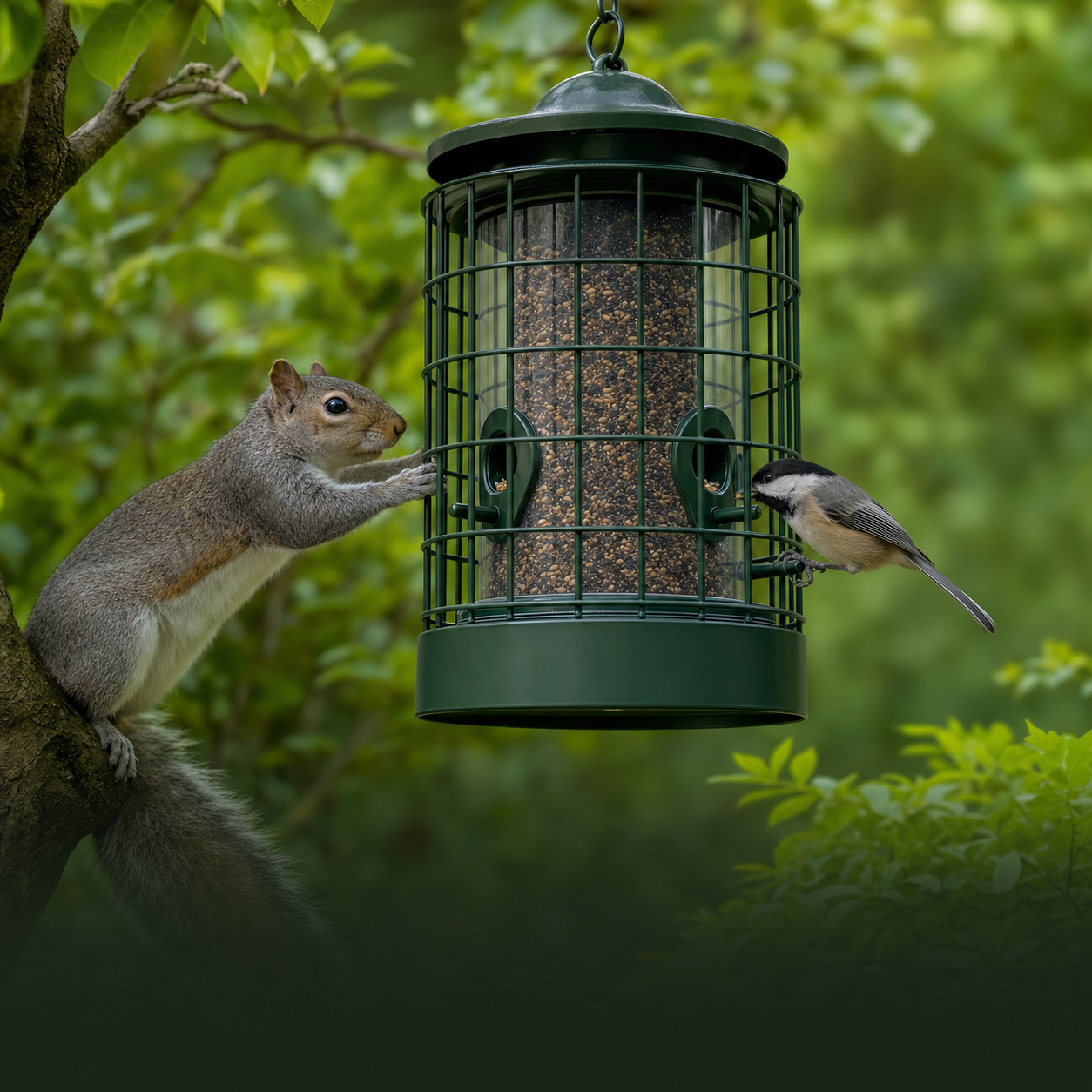
PerchKind stocks tube bird feeders with multiple ports and perches, sized so several finches can feed at once without crowding each other off. Browse the full bird feeder collection, or start with the green six-port tube feeder with a clear seed reservoir, which lets you see at a glance when the seed needs topping up — useful, given how quickly a flock of finches can empty a tube.
For seed choice, placement and squirrel control across every feeder type, see our bird feeder guide. Everything else — species profiles, water, housing and seasonal timing — is collected under birding guides.
Review our bird feeder placement guide before choosing a hanging point, especially where reflective glass, cats or difficult cleaning access could create problems.
Sources and editorial notes
- Cornell Lab of Ornithology, All About Birds — American Goldfinch species account (feeder tolerance, diet, moult, nesting timing, disease guidance)
- Cornell Lab of Ornithology, Project FeederWatch — Common Feeder Birds list (regional finch visitors and food preferences)
- Cornell Lab of Ornithology, Project FeederWatch — Project FeederWatch’s feeding guidance (feeder hygiene and disease prevention)
Written for PerchKind. This is an editorial guide, not a product trial. Finch species and seasonal visits vary by region. Cornell Lab’s Lesser Goldfinch account describes mixed feeding groups that can include American Goldfinches; do not treat the two species as mutually exclusive across the West.
Editorial correction, 21 October 2026: Food choices, species scope and model-specific claims have been aligned across the article and FAQ. This guide reports no independent product or bird-attendance trial.