Bird Feeder Placement Guide: Where to Put a Feeder Safely
Choose a safer bird feeder location near shelter while reducing window, predator, squirrel, and weather risks with this practical placement guide.
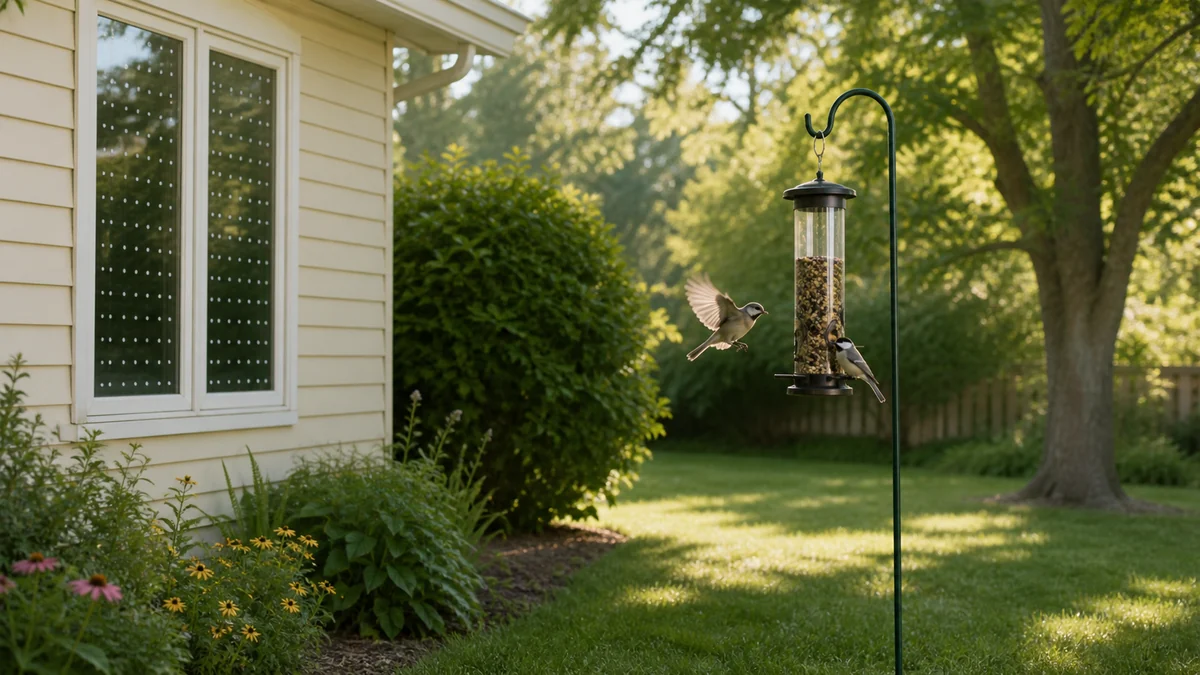
The best bird feeder placement is a quiet, visible spot that birds can approach from nearby cover, without giving cats or squirrels an easy ambush or launch point. Make nearby glass bird-friendly: feeder distance alone does not prevent window collisions. Choose a location that stays reasonably dry and is easy to clean and refill.
There is no single perfect point in every yard. A useful setup balances window safety, escape cover, predators, weather, spilled seed, and your ability to maintain the feeder. If you are still choosing a feeder, start with the PerchKind Bird Feeder Guide so the mounting method and location work together.
What Is the Best Place for a Bird Feeder?
The best place for a bird feeder is usually visible from the house, calm enough for birds to approach, close enough to natural cover for a quick retreat, and far enough from strong branches or dense low vegetation to reduce squirrel launches and cat ambushes. It should also be easy for you to reach in all seasons. A feeder that is awkward to refill or clean is more likely to hold wet seed, hull buildup, or spoiled food. Look for protection from the strongest wind and driving rain, but do not tuck the feeder into a dark, enclosed corner. Finally, assess nearby windows before mounting anything. If a feeder will be close to glass, use the glass-safety guidance below and treat reflective or collision-prone panes. Think of the first location as a measured starting point: watch bird approaches, predators, squirrels, drainage, and seed condition for several days, then adjust one factor at a time.
Use This Bird Feeder Placement Matrix
| Yard condition | Placement priority | Avoid | Best next step |
|---|---|---|---|
| Large window nearby | Reduce collision risk | Untreated reflective or transparent glass | Use effective exterior window treatments; do not rely on feeder distance |
| Trees or shrubs nearby | Give birds escape cover | Strong launch branches directly beside the feeder | Start around 10 feet away and adjust for the yard |
| Cats visit the yard | Reduce ambush opportunities | Dense low cover immediately beside the feeder | Keep cats indoors and move the feeder away from hiding spots |
| Windy or rainy exposure | Keep food dry and the feeder stable | Open, unsheltered corners | Use a calmer location with drainage and easy inspection |
| Frequent squirrels | Remove launch paths | Fences, roofs, branches, and furniture within jumping reach | Use an open pole location and review the squirrel guide |
| Limited space or apartment | Prioritize safe viewing and maintenance | A mount that cannot be inspected securely | Use a suitable compact setup and address nearby glass |
How Far Should a Bird Feeder Be From a Window?
Feeder distance alone does not make a window safe. The Cornell Lab’s current window-collision guidance says earlier very-close or very-far feeder-distance recommendations are no longer considered valid. Make nearby glass bird-friendly regardless of where the feeder stands.
Reflections of sky and vegetation, or a view through glass to open space, can mislead birds. Use an effective treatment on the exterior surface that interrupts these visual cues, following the treatment manufacturer’s pattern and coverage instructions. Address the whole collision-risk area rather than relying on a feeder, isolated decal or distance rule.
Prioritize windows with a history of strikes and large reflective panes. Review American Bird Conservancy’s collision-prevention guidance when choosing a treatment. Keep the feeder accessible for cleaning and monitor the surrounding glass after installation.
How Far Should a Bird Feeder Be From Trees and Shrubs?
About 10 feet from strong cover is a practical starting point, not a universal rule. Project FeederWatch feeding guidance describes this distance as a useful compromise: birds remain reasonably close to refuge, while branches are less convenient as squirrel launch points and dense vegetation is less useful as immediate ambush cover.
The right distance depends on the plants, feeder height, local predators, and birds using the yard. A small airy shrub is different from a heavy horizontal limb, and high canopy cover is different from dense ground-level vegetation where a cat can hide. After installation, observe the area for several days. Do birds pause in cover and approach confidently? Can squirrels move from a fence or branch to the feeder? Does a cat wait below the same shrub? Fine-tune the location based on these routes rather than treating 10 feet as a guarantee.
How to Place a Feeder to Discourage Squirrels
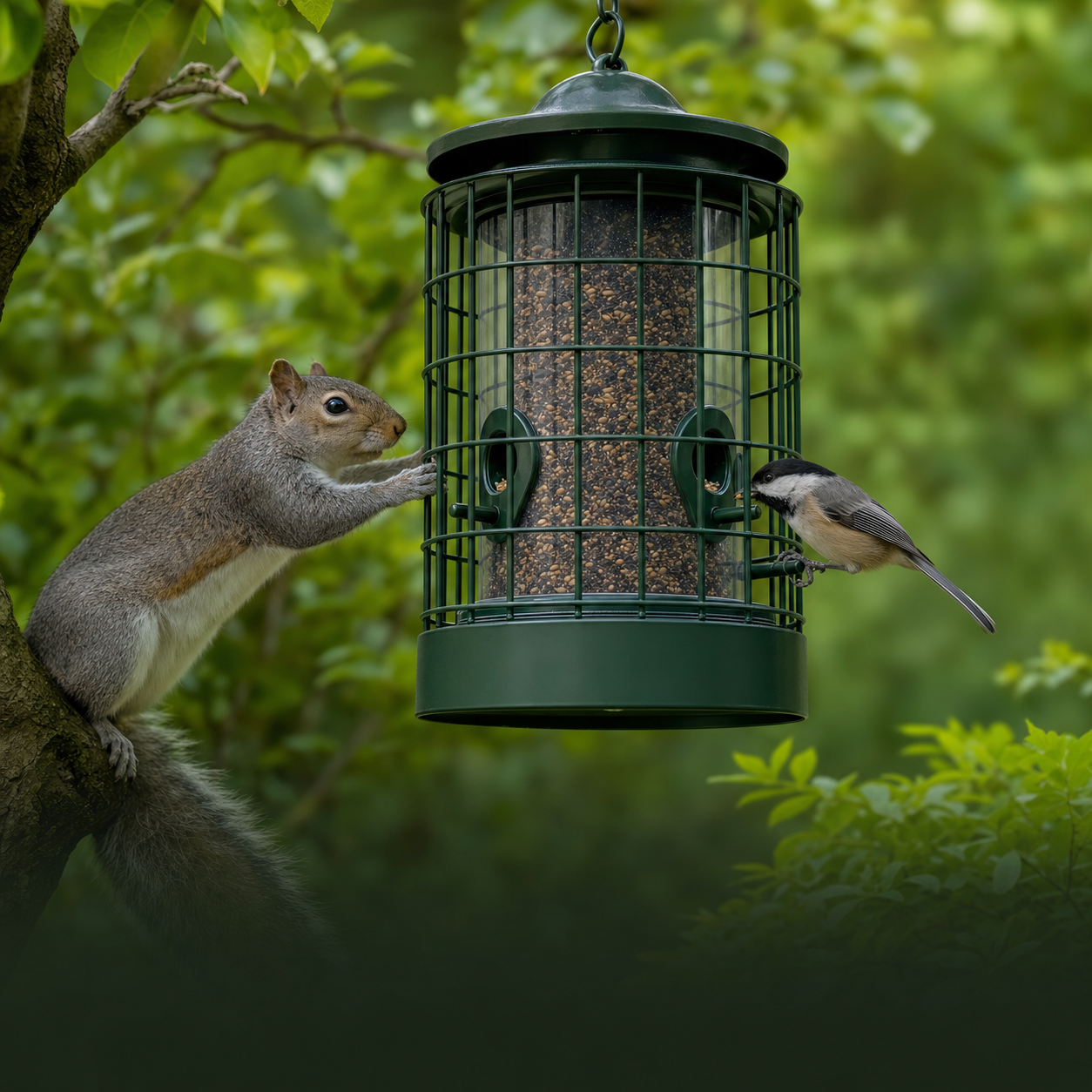
Start with an open, pole-mounted position when the yard allows it. Examine the entire three-dimensional launch zone—not only the nearest tree. Squirrels may jump from fences, roof edges, railings, sheds, patio furniture, wires, and angled branches. National Audubon Society guidance uses a feeder about 5 feet high and at least 10 feet from tall structures as a practical starting arrangement.
Those measurements do not replace observation. A sloping yard, long branch, nearby deck, or unusually agile route can change the result. Keep the pole stable and ensure the feeder remains accessible for cleaning. If squirrels repeatedly use the same path, move the feeder or remove that launch opportunity before adding more hardware.
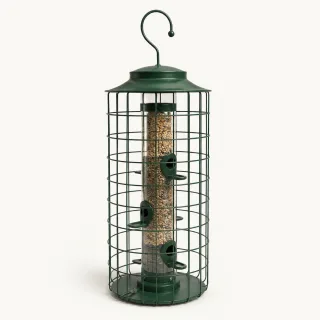
Placement is only the first layer of squirrel control. For baffle positioning, pole setup, seed choices, and humane exclusion methods, read how to keep squirrels off bird feeders. If the yard cannot provide enough open space, appropriately designed squirrel-proof feeders may add another barrier, but no design makes good placement unnecessary.
Match Placement to the Feeder Type
Different feeders expose food, birds, and mounting hardware in different ways. Browse the current bird feeder collection only after deciding where you can mount, refill, and clean a feeder safely.
Tube and Hopper Feeders
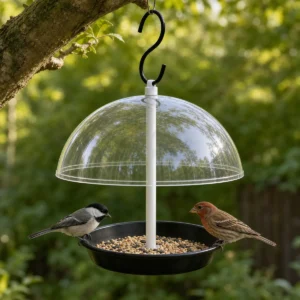
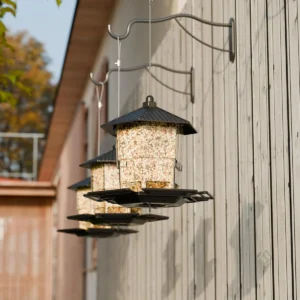
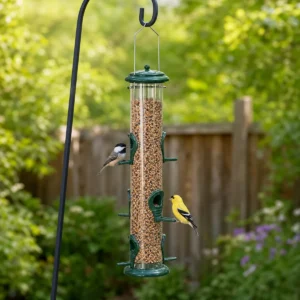
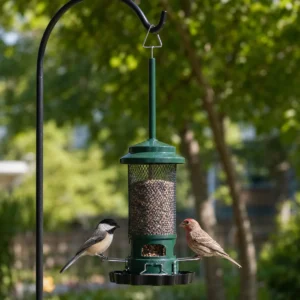
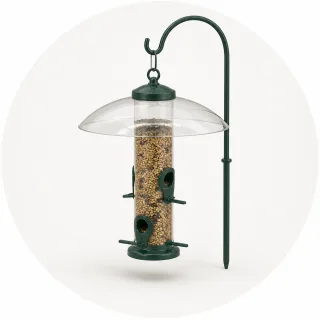
Choose a stable hanging point or pole and leave enough room to remove lids and reservoirs. Position the feeder where you can inspect seed after rain and clean hulls underneath without trampling plants. A slightly sheltered site can reduce direct weather exposure, but airflow and drainage still matter.
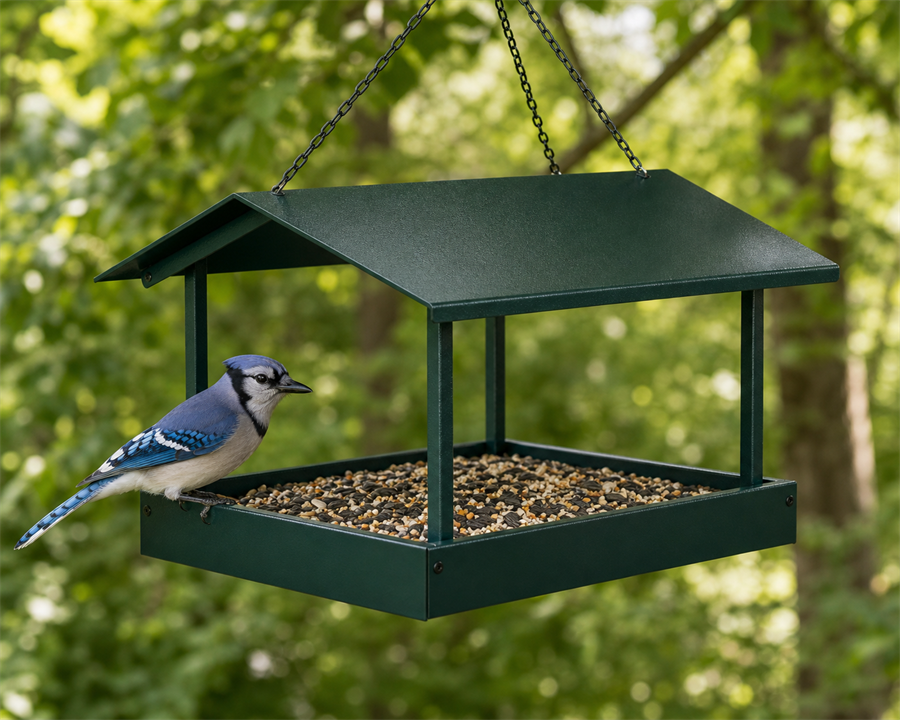
Platform Feeders
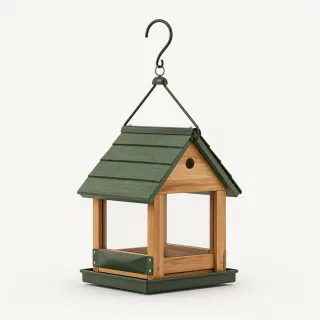
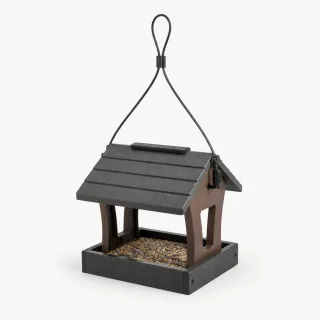
Open trays need regular inspection because seed is exposed to moisture and droppings. Place the tray where drainage holes remain clear and cleanup below is practical. Avoid dense low cover immediately beside the feeding surface. See available platform bird feeders for the mounting and tray formats you need to plan around.
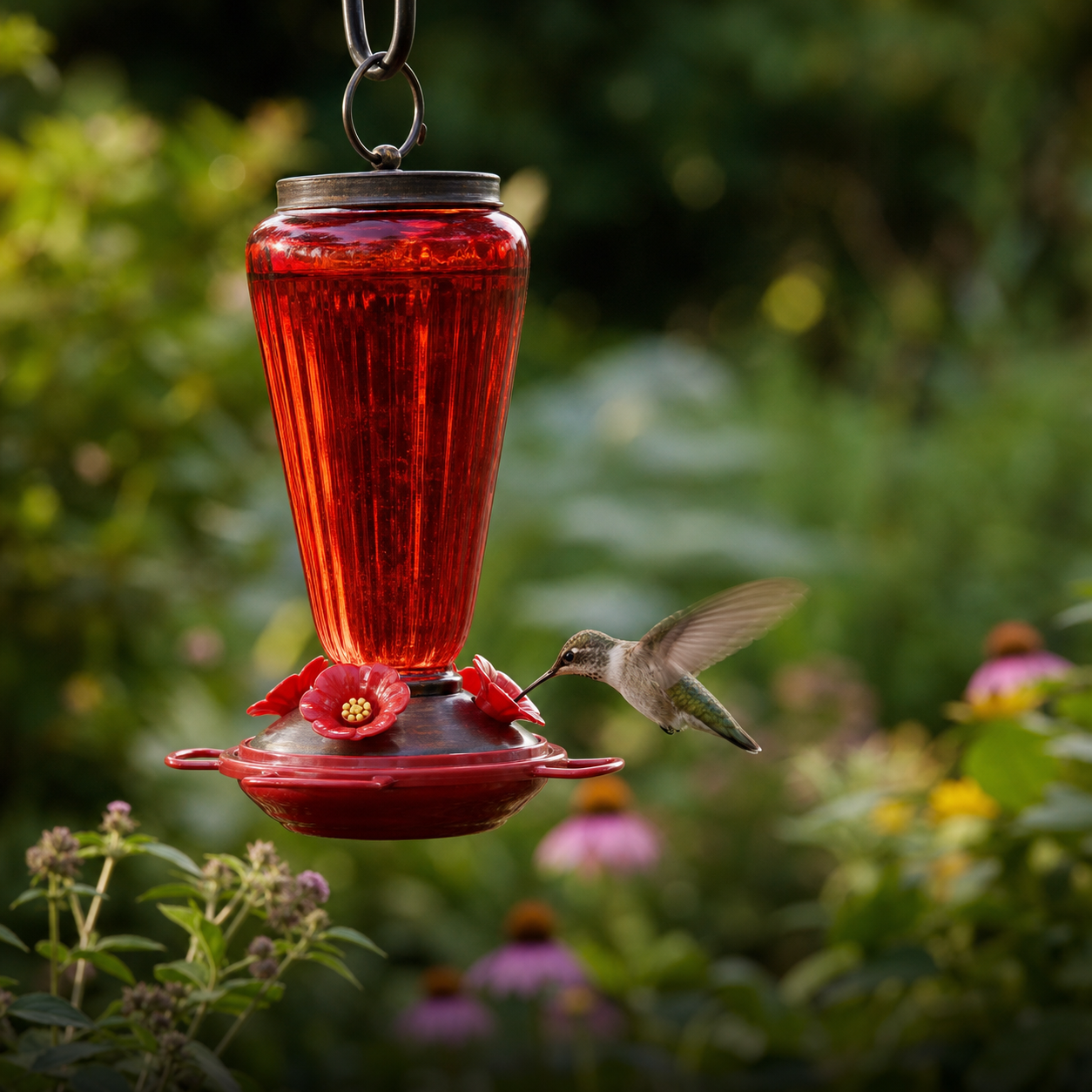
Hummingbird Feeders
Favor shade and protection from strong wind. Direct sun can warm nectar and speed spoilage, while a swaying feeder can spill. Keep the feeder visible for monitoring and easy to remove for frequent cleaning. Compare current hummingbird feeders only after identifying a shaded, serviceable location.
Window Feeders
Follow the manufacturer’s mounting instructions, secure every attachment point, and keep the glass visually apparent to birds. The feeder must be reachable for cleaning without unsafe leaning or climbing. Treat surrounding collision-risk glass rather than assuming the feeder alone makes the entire window safe.
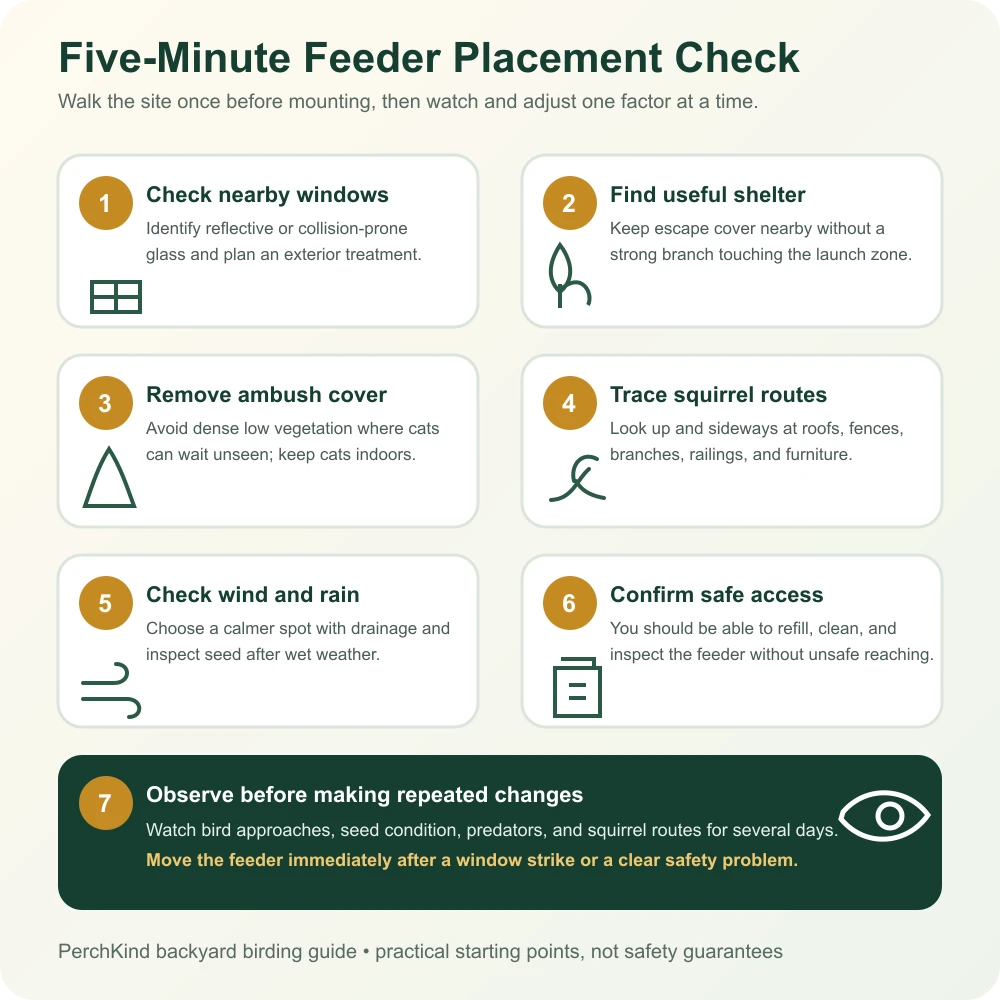
A Five-Minute Bird Feeder Placement Checklist
- Stand inside and confirm that the feeder will be easy to see and monitor.
- Check the nearest windows and identify reflective or collision-prone glass.
- Measure the relationship to shelter, strong branches, and dense hiding cover.
- Look upward and sideways for squirrel routes from trees, roofs, fences, and furniture.
- Check prevailing wind, rain exposure, feeder stability, and drainage.
- Confirm that refilling, cleaning, and ground cleanup can be done safely.
- Watch the setup for several days, then change one factor at a time.
When Should You Move a Bird Feeder?
Move or adjust a feeder when the current location creates a repeated, observable problem: window strikes, persistently wet or spoiled seed, cats stalking from nearby cover, squirrels reaching it from the same route, birds approaching but repeatedly refusing to land, or unsafe access for cleaning and refilling.
Do not move a new feeder every day simply because birds have not found it. Discovery can take time, especially when natural food is abundant or the feeder type is unfamiliar. First verify that the food is fresh, the feeder is clean, and there is no obvious predator activity. If you relocate it, make one deliberate change and observe again. This makes it easier to identify whether visibility, cover, weather, or mounting was the real problem.
Bird Feeder Placement FAQ
How far should a bird feeder be from a window?
Treat collision-risk glass regardless of feeder distance. Earlier very-close or very-far feeder-distance advice is not a reliable safety rule; use effective exterior window treatments.
How far should a bird feeder be from trees?
About 10 feet from strong branches is a practical starting compromise between nearby escape cover and fewer squirrel or cat opportunities. Adjust it for the actual routes and vegetation in your yard.
Should a bird feeder be in the sun or shade?
Seed feeders benefit from a reasonably sheltered site. Hummingbird feeders are better protected from direct sun and strong wind because heat speeds nectar spoilage and wind can spill solution.
How high should a bird feeder be?
There is no single height for every feeder. Around 5 feet is a common pole-mounted starting point, but mounting instructions, target species, cleaning access, and local predators all matter.
Should bird feeders be close to bushes?
Birds benefit from nearby refuge, but dense cover immediately beside a feeder can help cats hide and branches can help squirrels jump. About 10 feet is a useful starting compromise.
Why are birds not using my new feeder?
Birds may need time to find it. Check exposure, nearby cover, seed freshness, feeder type, cleanliness, and signs of predators before moving it repeatedly.
Can I put a bird feeder on a deck or balcony?
Yes, when building rules allow and the mount is secure. Plan for spilled seed, cleaning, glass safety, wind, and neighbor impact; do not assume every lease or homeowners association permits feeding.
Build a Safer Backyard Feeding Station
Good bird feeder placement gives birds a visible feeding point near useful shelter while reducing window, predator, weather, and squirrel risks. Start with the site, observe what actually happens, and adjust one factor at a time. Placement also decides how easy the station is to maintain: a feeder you can reach gets cleaned more often, as our bird feeder cleaning guide explains, and a sheltered position keeps seed usable longer, which our guide to keeping bird seed dry covers. Continue with the PerchKind Bird Feeder Guide to match the feeder type to the location, or explore more backyard birding guides before completing your setup.
Sources and editorial notes
- Cornell Lab of Ornithology: Why Birds Hit Windows—and How You Can Help Prevent It
- Cornell Lab of Ornithology: Where to Put Your Bird Feeder
- Project FeederWatch: Feeding Birds
- American Bird Conservancy: Preventing Bird-Window Collisions
Editorial note: Prepared by the PerchKind Editorial Team and reviewed against the sources above in August 2026. The window-safety section and its FAQ were updated on 7 October 2026 against Cornell Lab’s current guidance. Distances are practical starting points, not guarantees, and PerchKind has not independently tested them. Product links identify PerchKind products; the safety guidance remains independent of the product recommendations. If you spot an error, please contact us.