Hummingbird Feeders
Hummingbird feeders with visible reservoirs, multiple ports, easy refilling, ant control, and practical cleaning access.
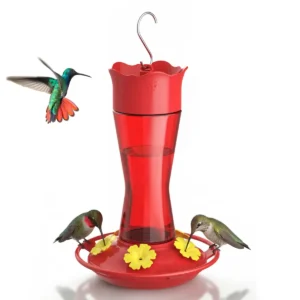
Curved Glass Hummingbird Feeder with Flower Ports
Price range: $24.99 through $36.99
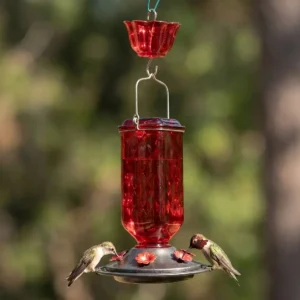
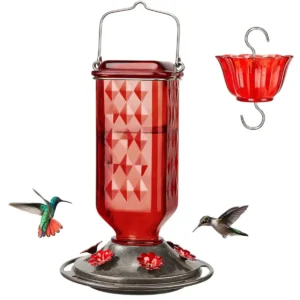
Faceted Cylinder Glass Hummingbird Feeder
Price range: $26.99 through $36.99
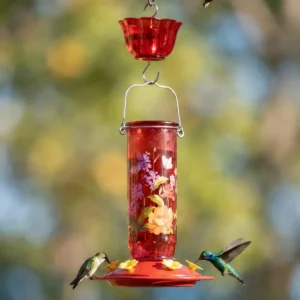
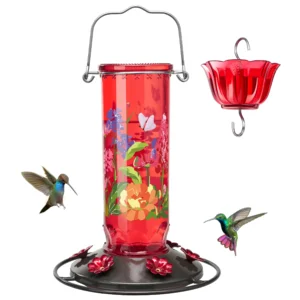
Floral Cylinder Glass Hummingbird Feeder
Price range: $28.99 through $37.99
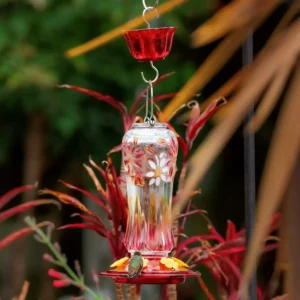
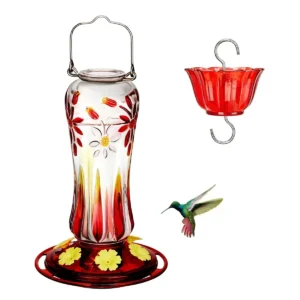
Floral-Pattern Glass Nectar Feeder
Price range: $27.99 through $39.99
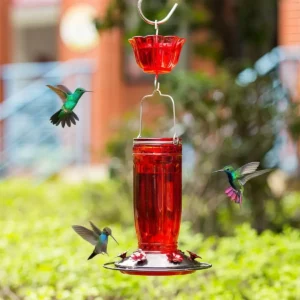
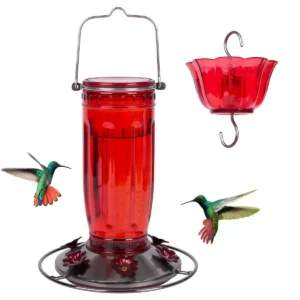
Fluted Glass Nectar Feeder with Hanging Ant Moat
Price range: $26.99 through $37.99
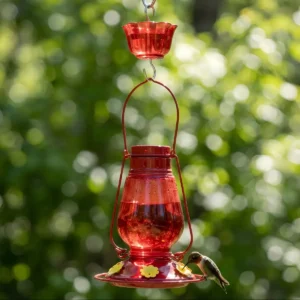
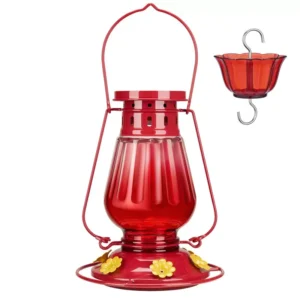
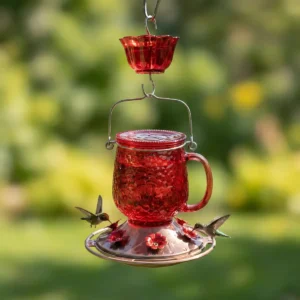
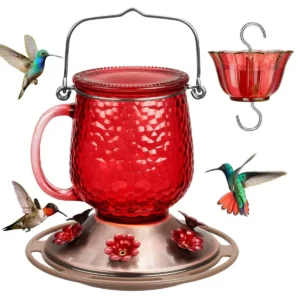
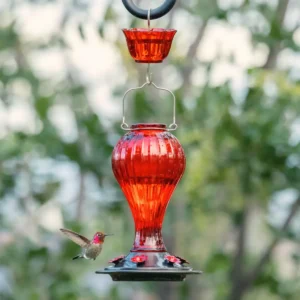
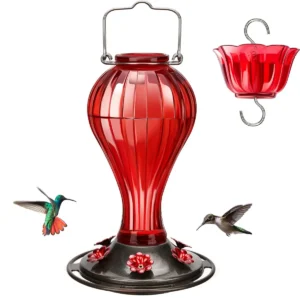
Ribbed Teardrop Glass Hummingbird Feeder
Price range: $24.99 through $36.99
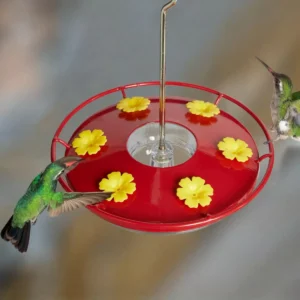
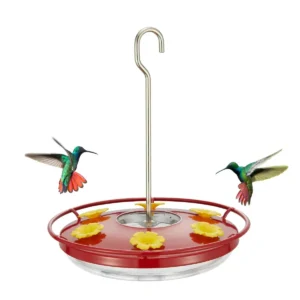
Saucer-Style Hummingbird Feeder with Raised Perch
Price range: $23.99 through $29.99
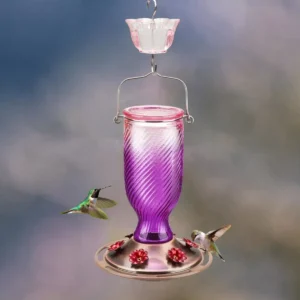
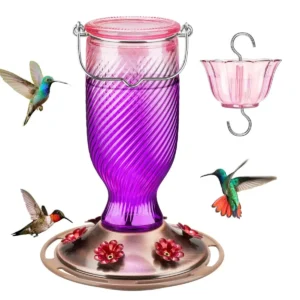
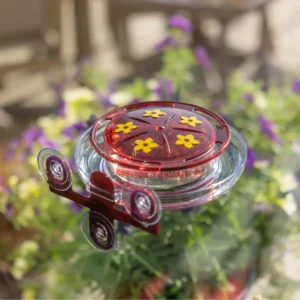
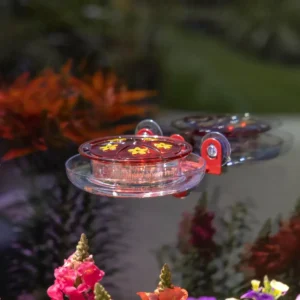
Suction-Mount Window Nectar Feeder
Price range: $17.99 through $28.99
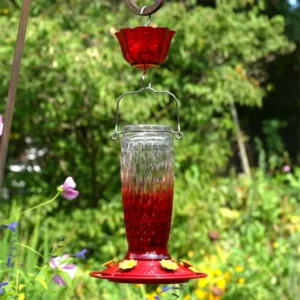
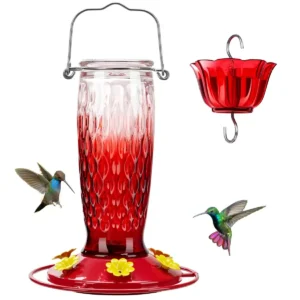
Textured Glass Nectar Feeder with Flower Base
Price range: $26.99 through $37.99
Buying guide
Choosing your bird feeder
Match the feeder to the food, the birds already nearby, and a care routine you can maintain. Consider feeding access, placement and cleaning before capacity alone.
How to choose a bird feeder
Hummingbird feeders with visible reservoirs, multiple ports, easy refilling, ant control, and practical cleaning access.
How to choose a hummingbird feeder
Choose a hummingbird feeder that is easy to open, rinse, refill, and inspect. Nectar care matters more than decorative details. A clear or glass reservoir makes the nectar level and cloudiness easier to see, while a wide opening reduces awkward filling and cleaning. Check that the base seats securely, the feeding ports can be reached during washing, and the hanger fits your intended location.
FeatureWhy it mattersPerchKind option
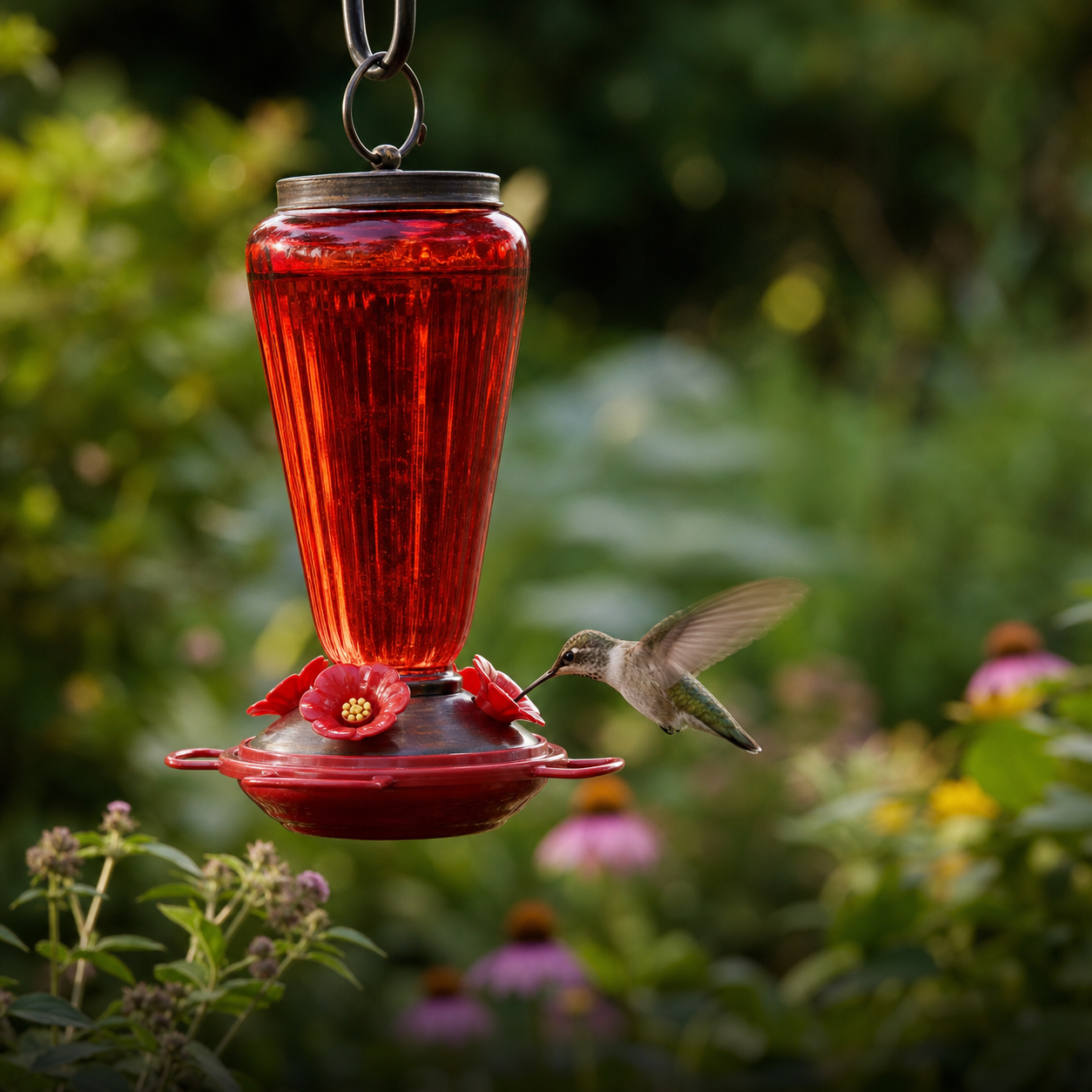
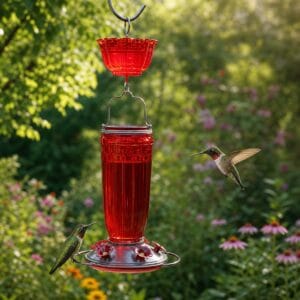
Visible reservoirHelps you check nectar level and clarity at a glance.16 oz red glass bottle
Cleaning accessWide openings and removable parts make routine care simpler.Wide-mouth reservoir and removable base
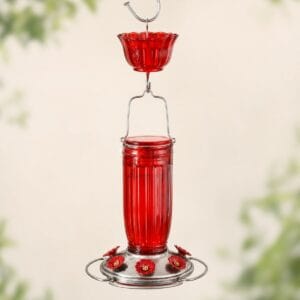
Insect controlA water-filled moat can discourage ants without adding chemicals to nectar.Built-in upper ant moat
Feeding spaceMultiple ports and a stable perch give birds more approach points.Six flower ports and circular perch
See the full specifications and included parts for the PerchKind 16 oz glass hummingbird feeder. Before hanging it, confirm that you can remove the feeder without stretching, carry it upright after filling, and reach every removable part during cleaning. If you are comparing nectar feeders with seed feeders, start with the bird feeder guide.
Nectar, placement, and cleaning
Use plain white sugar and water in the standard one-to-four ratio, and do not add red dye or honey. Replace nectar before it becomes cloudy and clean the feeder more often in warm weather. Audubon’s hummingbird feeding guidance explains nectar preparation and seasonal cleaning frequency. Hang the feeder where it is convenient to inspect and is not exposed to constant hot afternoon sun.
Hummingbird feeder questions
Is glass better than plastic for a hummingbird feeder?
Glass is durable and makes nectar easy to see, but material alone does not determine safety. Easy disassembly, thorough rinsing, secure seals, and frequent nectar replacement matter most.
Does an ant moat need chemicals?
No. Fill the separate moat with clean water and check it regularly. Never add insecticide, oil, or other chemicals to nectar or feeding ports.
How often should a hummingbird feeder be checked?
Check nectar clarity, insects, leaks, and the ant moat every day during active use. Clean and refill sooner when temperatures rise or nectar changes appearance.
How to choose a hummingbird feeder
Choose a hummingbird feeder that is easy to open, rinse, refill, and inspect. Nectar care matters more than decorative details. A clear or glass reservoir makes the nectar level and cloudiness easier to see, while a wide opening reduces awkward filling and cleaning. Check that the base seats securely, the feeding ports can be reached during washing, and the hanger fits your intended location.
| Feature | Why it matters | PerchKind option |
|---|---|---|
| Visible reservoir | Helps you check nectar level and clarity at a glance. | 16 oz red glass bottle |
| Cleaning access | Wide openings and removable parts make routine care simpler. | Wide-mouth reservoir and removable base |
| Insect control | A water-filled moat can discourage ants without adding chemicals to nectar. | Built-in upper ant moat |
| Feeding space | Multiple ports and a stable perch give birds more approach points. | Six flower ports and circular perch |
See the full specifications and included parts for the PerchKind 16 oz glass hummingbird feeder. Before hanging it, confirm that you can remove the feeder without stretching, carry it upright after filling, and reach every removable part during cleaning. If you are comparing nectar feeders with seed feeders, start with the bird feeder guide.
Placement and everyday care
Nectar, placement, and cleaning
Use plain white sugar and water in the standard one-to-four ratio, and do not add red dye or honey. Replace nectar before it becomes cloudy and clean the feeder more often in warm weather. Audubon’s hummingbird feeding guidance explains nectar preparation and seasonal cleaning frequency. Hang the feeder where it is convenient to inspect and is not exposed to constant hot afternoon sun.
Bird feeder questions
Hummingbird feeder questions
Is glass better than plastic for a hummingbird feeder?
Glass is durable and makes nectar easy to see, but material alone does not determine safety. Easy disassembly, thorough rinsing, secure seals, and frequent nectar replacement matter most.
Does an ant moat need chemicals?
No. Fill the separate moat with clean water and check it regularly. Never add insecticide, oil, or other chemicals to nectar or feeding ports.
How often should a hummingbird feeder be checked?
Check nectar clarity, insects, leaks, and the ant moat every day during active use. Clean and refill sooner when temperatures rise or nectar changes appearance.
Open a section to read the complete guidance.