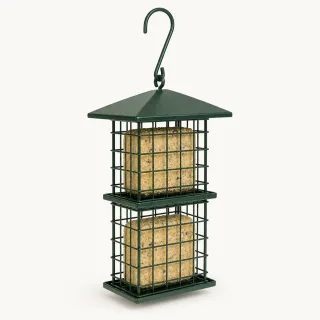
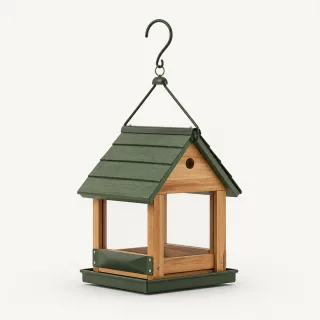
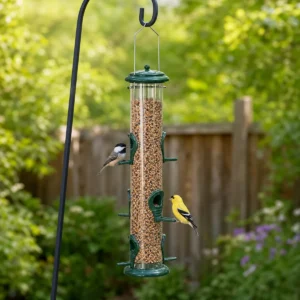
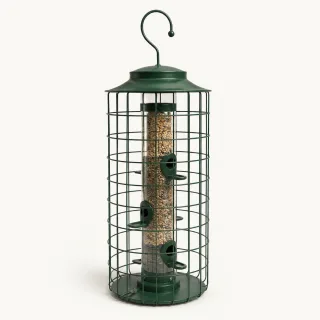
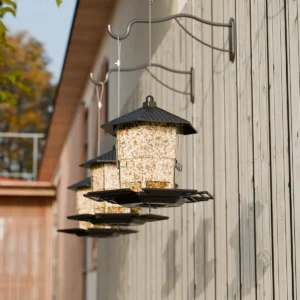
Hopper Feeders
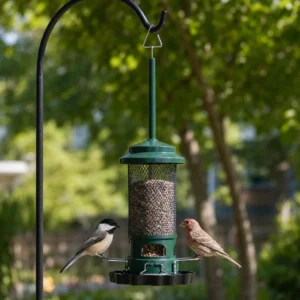
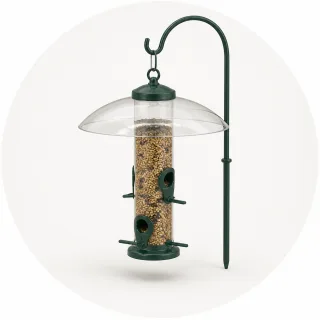
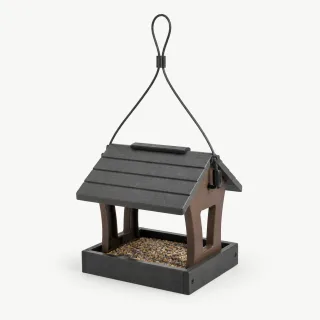
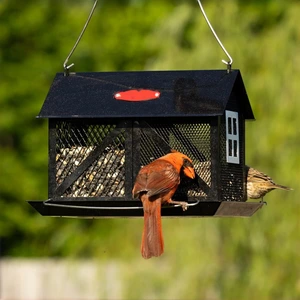
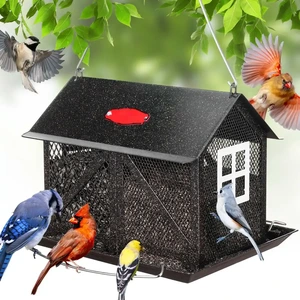
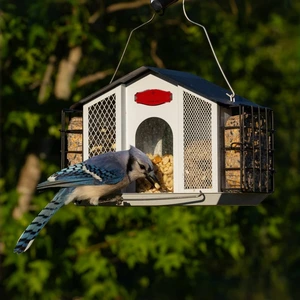
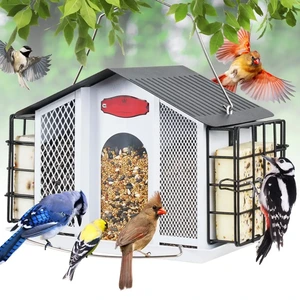
Hopper bird feeders with protected seed storage, adjustable flow, stable perches, and practical hanging features.
Buying guide
Choosing your bird feeder
Match the feeder to the food, the birds already nearby, and a care routine you can maintain. Consider feeding access, placement and cleaning before capacity alone.
How to choose a bird feeder
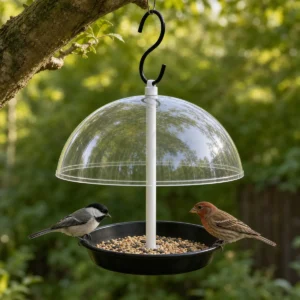
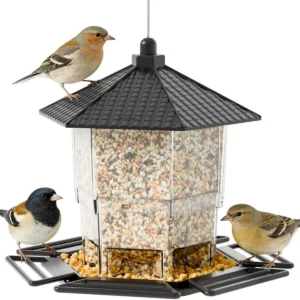
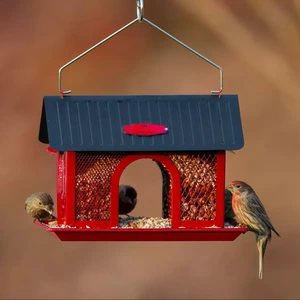
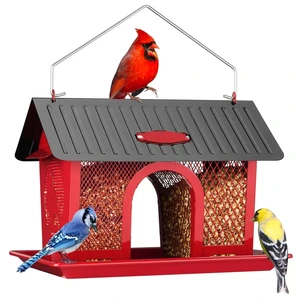
Hopper bird feeders store seed in a covered reservoir and dispense it into an open tray below by gravity. That one design decision — storage above, open tray below — is what makes a hopper the most versatile feeder style for a mixed backyard, and also what causes its two most common problems: an open tray is not squirrel-proof, and seed sitting in a reservoir can take on moisture.
How to choose a hopper bird feeder
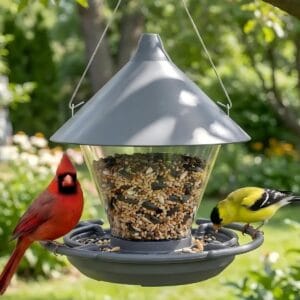
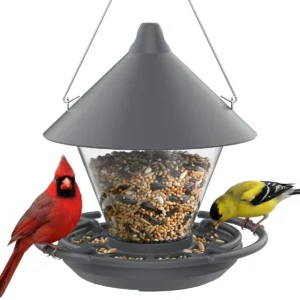
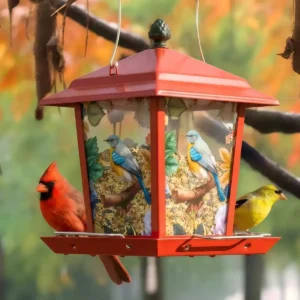
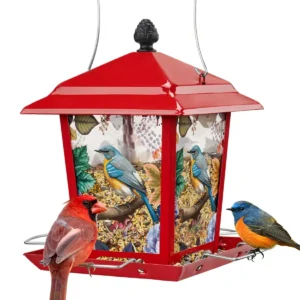
A clear reservoir. You should be able to check the seed level without opening the feeder. Clear panels also show condensation, which is the early warning sign that seed inside is getting damp.
A wide mouth or removable top. Refilling should take seconds, not minutes. If it is awkward, you will put it off.
Drainage in the tray. Water has to get out somewhere. A tray with drainage openings clears faster than a solid one.
Capacity matched to your birds. A larger feeder is only useful when the seed is eaten quickly enough to stay fresh. In a quiet yard, a big hopper means the seed at the bottom sits for weeks. For many backyards, an easy-to-clean design is worth more than maximum volume.
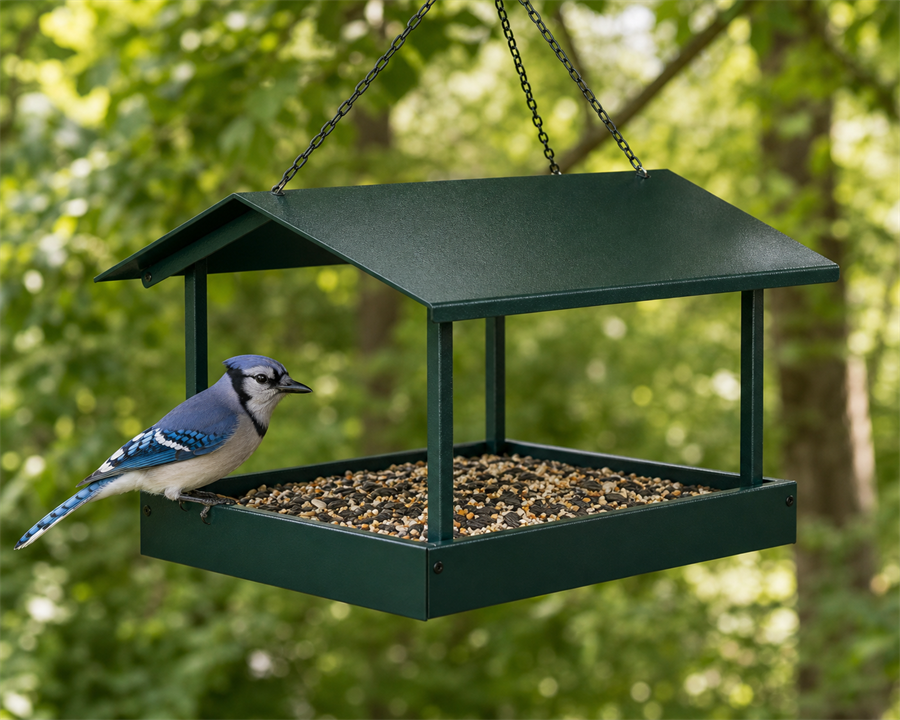
A stable perch tray. Several birds should be able to feed at once without crowding each other off. A wide tray is what lets cardinals and jays use the same feeder as finches.
What to put in a hopper feeder
Black oil sunflower is the best all-round choice: it suits the widest range of birds and holds up better than most blends. Avoid general wild bird mixes containing milo, wheat or red millet — birds sort out the filler and scatter it onto the tray and the ground below, so you pay for seed twice. Our guide to hopper bird feeders covers seed choice, gravity flow and maintenance in full.
How to choose a hopper bird feeder
Look for a clear reservoir so you can check seed levels without opening the feeder. A wide mouth or removable top makes refilling easier, while drainage openings help prevent moisture from collecting in the tray. Capacity matters, but a larger feeder is only useful when the seed is eaten quickly enough to stay fresh. For many backyards, an easy-to-clean design is more valuable than maximum volume.
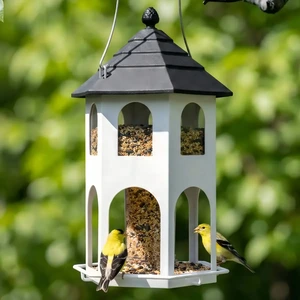
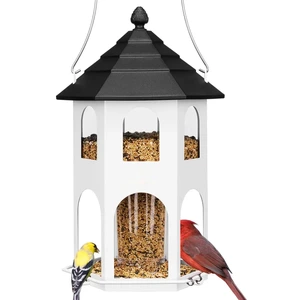
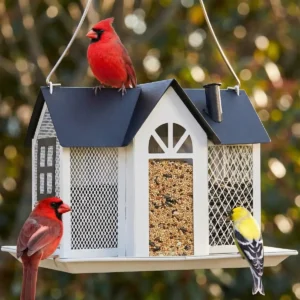
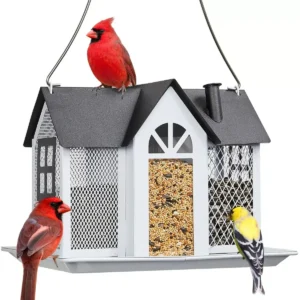
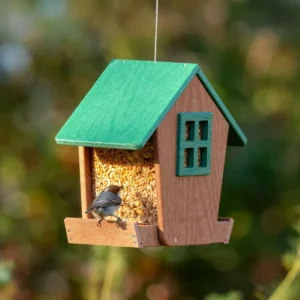
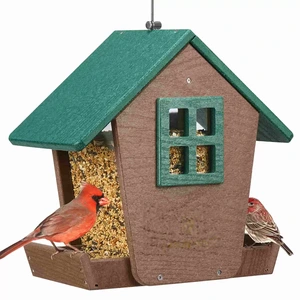
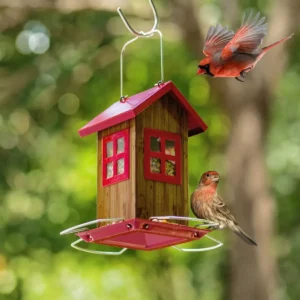
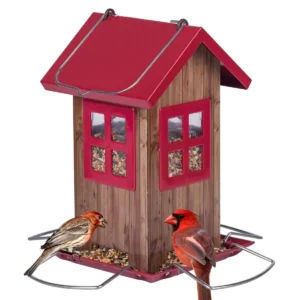
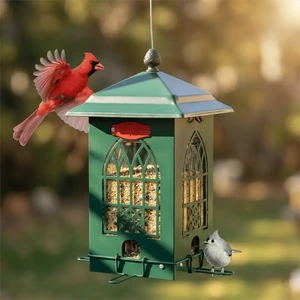
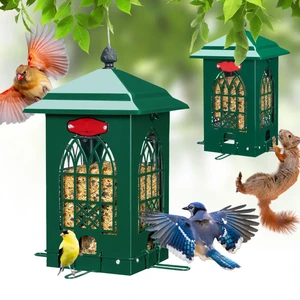
PerchKind's adjustable hanging hopper bird feeder pairs a protected reservoir with a wide perch tray and adjustable hanging setup. Compare its dimensions, capacity, and placement options on the product page before choosing a location.
Placement and everyday care
Placement and care
Hang or mount the feeder where you can reach it safely for refilling and cleaning, with nearby cover that birds can use without giving squirrels an easy launch point. Leave clearance from squirrel launch points and use a compatible baffle where appropriate. Effective spacing depends on the support, surrounding structures, and local squirrels; no single distance makes every feeder squirrel-proof.
Inspect the tray and reservoir at every refill. Clean seed feeders every week or two, and sooner after wet weather, heavy use, or visible contamination; follow local wildlife guidance and material-specific instructions. Never top up over damp seed: if the reservoir is wet or musty, empty it, dry it completely and start again. This is the habit that separates a healthy hopper feeder from a mould incubator. See our bird feeder cleaning guide for the full routine, and how to keep bird seed dry for the causes of clumping.
Placement and care
Hang a hopper feeder where you can reach it safely for refilling and cleaning, with nearby cover that birds can use without giving squirrels an easy launch point. Start with a fresh seed blend suited to the birds you want to attract. Inspect the tray and reservoir at every refill. Remove old hulls and damp seed. Clean seed feeders every week or two, sooner after wet weather, heavy use or visible contamination, using a method suitable for the materials. Let every part dry completely before refilling; local wildlife guidance takes priority. For a broader comparison of feeder shapes and feeding styles, visit the bird feeder guide.
For seed flow, refill decisions and common blockages, read our hopper feeder use and care guide.
Bird feeder questions
Hopper feeder questions
Are hopper feeders squirrel-proof?
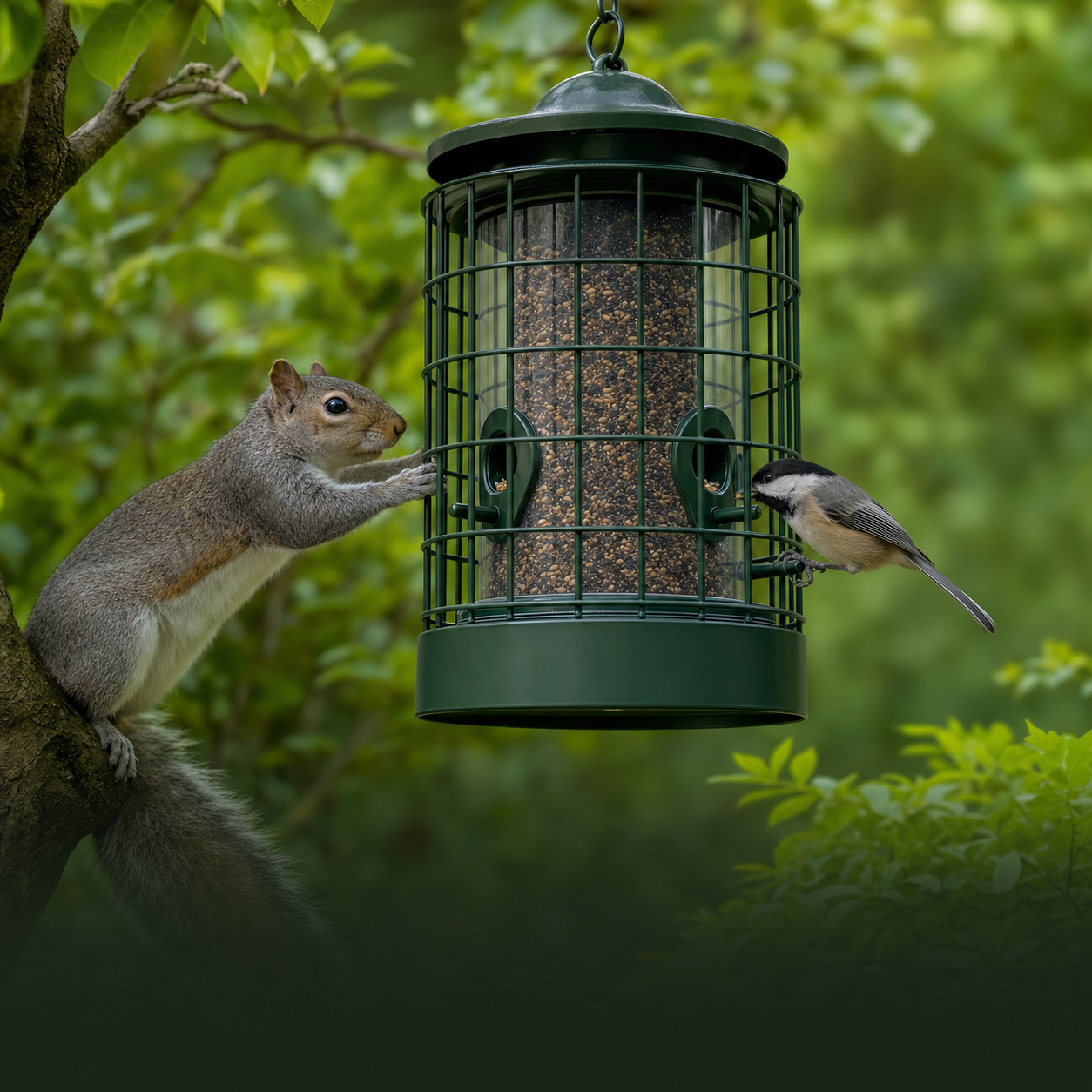
No. An open tray is accessible to anything that can reach it. Squirrel control comes from baffles, pole placement and distance from launch points, not from the feeder design — unless you choose a weight-activated model. Our guide to keeping squirrels off bird feeders covers eleven humane methods.
Are hopper feeders better than tube feeders?
Neither style is always better. Compare the actual reservoir capacity, drainage, perch access and ease of cleaning. Some hoppers accommodate larger tray-feeding birds, while tube access depends on the ports and perches. Refill frequency and waste depend on the model, food and visitors.
Why is seed not coming out of my hopper feeder?
Moisture can cause clumping, but oversized seed, hulls, an obstructed feed gap or incorrect assembly can also interrupt flow. Empty the feeder, inspect the opening, clean and dry it, then refill with a compatible fresh seed mix.
Can I hang a hopper feeder or does it need a pole?
Both work. Hanging is simpler and fine if the bracket is sturdy and clear of squirrel launch points. A pole gives you more control over height and lets you fit a baffle below.
PerchKind’s adjustable hanging hopper bird feeder pairs a protected reservoir with a wide perch tray and an adjustable hanging setup, so you can set the height to suit your yard. Compare its dimensions and capacity on the product page before choosing a location. For a broader comparison of feeder shapes and feeding styles, visit the bird feeder guide, or browse the full bird feeder collection.
Open a section to read the complete guidance.