How to Keep Bird Seed Dry in a Feeder
Reduce wet bird seed with better cover, clear drainage, smaller refills and a practical after-rain inspection routine.
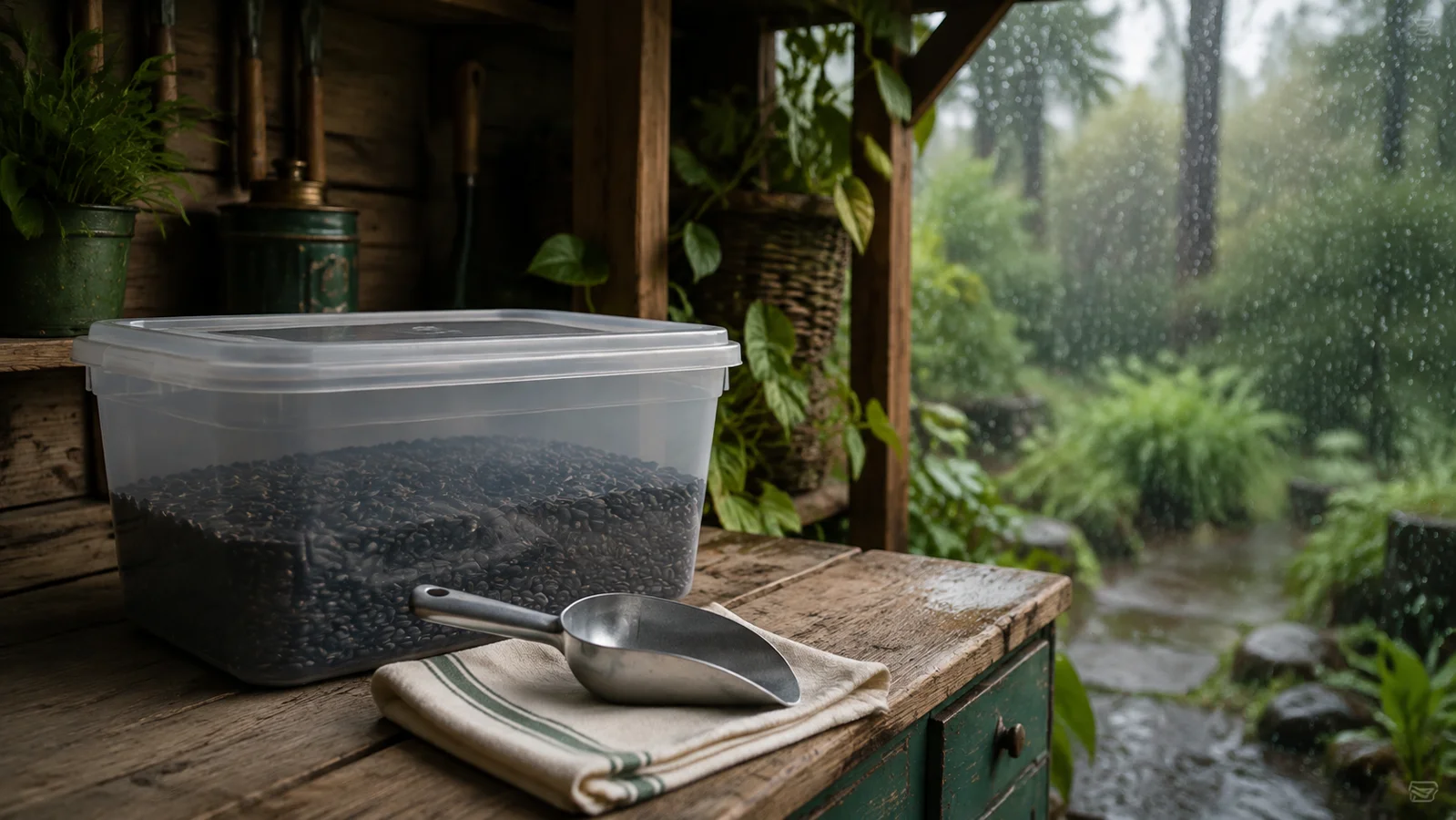
Keep bird seed dry by reducing its exposure to rain, keeping drainage clear and offering smaller refills that are easy to inspect. A roof and a draining tray solve different problems: the roof intercepts some falling water, while drainage lets water escape after it arrives. Neither makes a feeder maintenance-free.
This guide focuses on seed feeders in wet weather, not nectar or suet. If food is already moldy, spoiled or clumped with moisture, remove it rather than mixing it with fresh seed. Our bird feeder cleaning guide covers the cleaning process; here, start with the route the water takes.
Find Where the Water Enters
Inspect the feeder after the next rainfall, when you can safely reach it. Is the whole tray wet, only the windward edge, or the seed near a filling lid? Write down the location before changing anything. That observation gives you a useful starting point without assuming every damp feeder needs replacing.
- Wet food beneath an open sky: review overhead cover and refill size.
- Water collecting at the bottom: inspect existing drainage for hulls or debris.
- Dampness beside a lid: check whether it is seated as intended and whether visible damage needs attention.
- Repeated wetting on one side: consider how exposed the location is to driving rain.
These are troubleshooting clues, not a diagnosis of a particular product. Follow its assembly and care instructions. Do not drill extra holes, seal feeding openings or modify structural parts simply to match a generic tip.
Choose Cover and Drainage Together
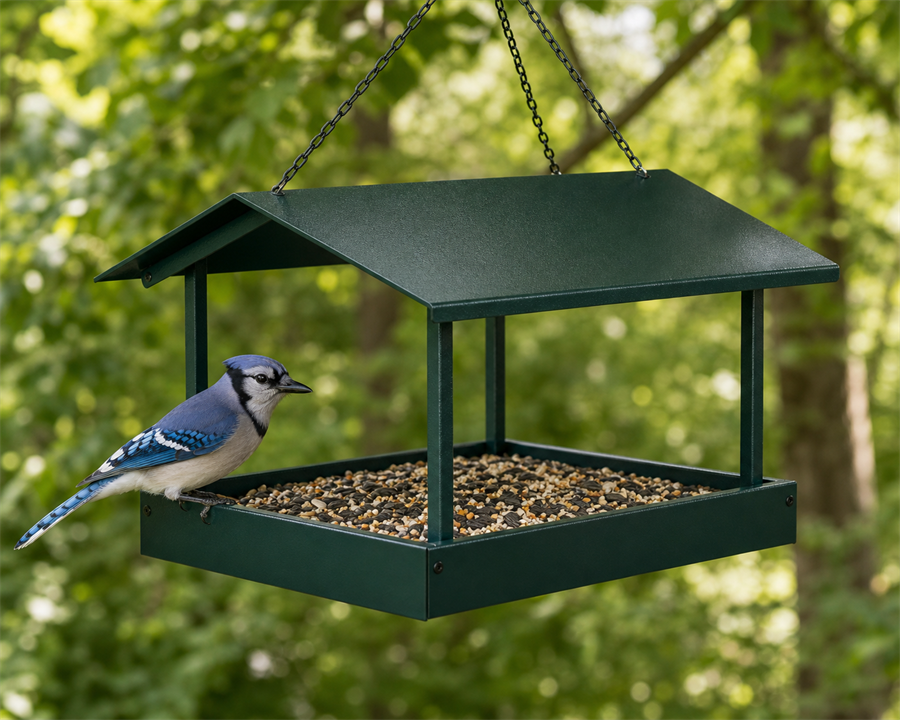
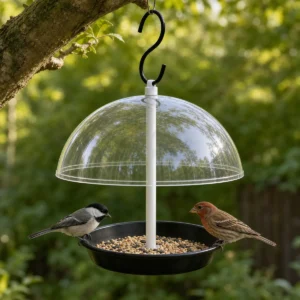
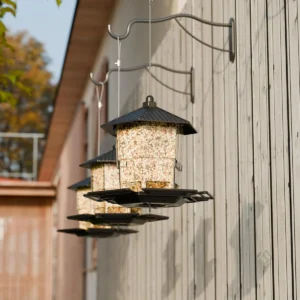
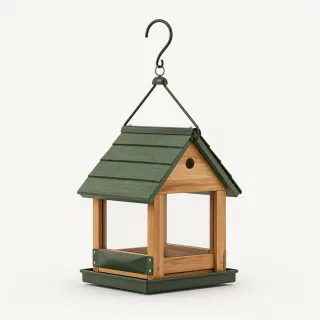
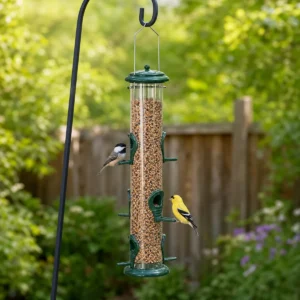
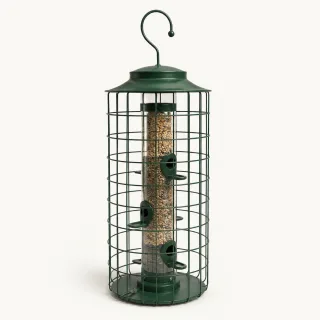
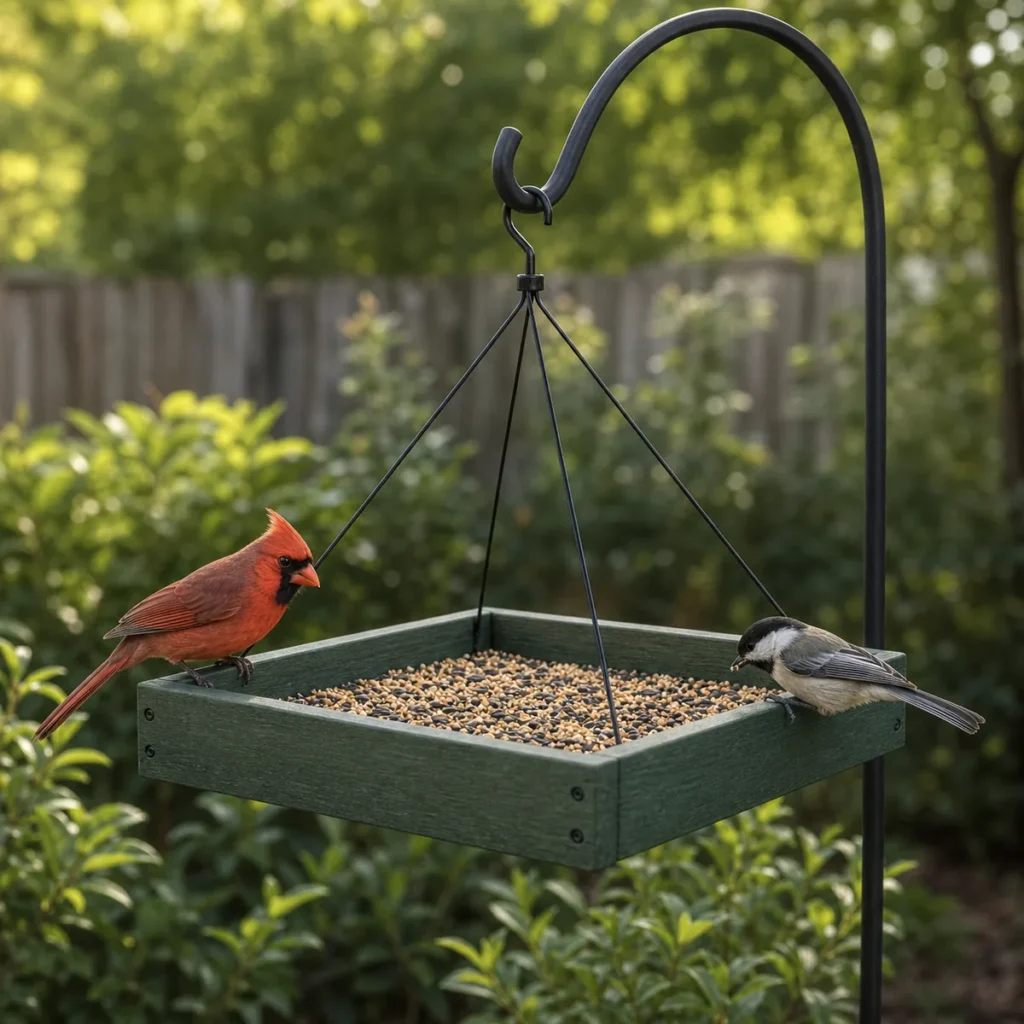
Cornell Lab’s feeder-type guide explains the exposure of an open tray and the shelter of a hopper roof. A roof and a draining base serve different jobs; neither guarantees dry food in driving rain. Compare the actual canopy, feeding surface, screened floor and cleaning access.
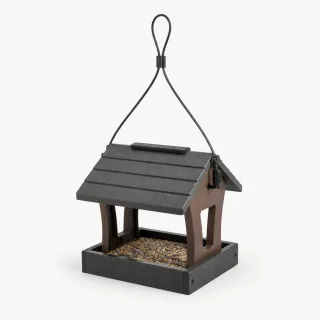
Use the PerchKind bird feeder guide for a broader comparison. On platform feeders, specifically ask whether you want an open feeding surface or some overhead shelter. Do not interpret “covered” as a promise that wind-driven rain cannot reach the tray.
Before buying an add-on rain guard, check its mounting compatibility and clearance against the feeder’s instructions. An accessory should not obstruct the ports or make the feeder difficult to secure and clean. We do not claim that an untested guard fits every PerchKind feeder.
Refill for the Birds You Actually See
A large reservoir is an option, not a refill target. Cornell Lab’s feeder-type guide recommends modest quantities on exposed platforms, while Cornell Lab’s seed guide warns that hulled sunflower spoils quickly and should be limited to what birds can eat in a day or two. Inspect sooner after rain; these are not guaranteed safe storage times.
Start with a modest amount and observe what remains. A quiet yard may need a smaller portion than a busy station. If the weather changes, reassess instead of carrying forward the same scoop count. Do not give wet food a fresh appearance by pouring new seed over it.
Keep the refill scoop clean and dry. Check the food before it goes into the feeder so you can distinguish a storage problem from water entering outdoors. Follow the supplier’s storage instructions rather than relying on the feeder to protect already-damaged food.
Check After Rain, Not Only on Refill Day
Make a quick inspection part of returning to the garden after wet weather. Look at accessible food, feeding openings and the lowest part of the tray or chamber. Empty material that has deteriorated; clear residue, clean as appropriate and let washed components dry before refilling.
Cornell’s cleaning guidance calls for more frequent attention in wet conditions. There is no universal number of rain-free hours that proves previously spoiled seed is safe. Our conservative recommendation is to discard questionable food rather than trying to rehabilitate it outdoors. See Cornell Lab’s feeder-cleaning guidance.
Improve the Location Without Creating a New Problem
If rain repeatedly reaches one side, consider another suitable position. Check secure support, your ability to reach the feeder and nearby glass before moving it. A drier-looking corner is not automatically the safest feeding station. Review our bird feeder placement guide before making a permanent change.
Change one variable at a time where practical. For example, clear a blocked tray and observe it after rain before deciding that the entire feeder design is unsuitable. Keep simple notes about weather, leftover seed and what you changed. This is a household observation method, not a controlled product test.
Quick Questions
Does a mesh tray keep seed dry?
It helps water drain, but an exposed tray can still receive rain. Inspect the food rather than treating drainage as proof that it stayed dry.
Should I fill a feeder completely before rainy weather?
Not automatically. Match the amount to consumption and your next opportunity to inspect it. A smaller refill can make leftovers easier to manage.
Can I dry moldy bird seed and put it back?
Do not reuse moldy or spoiled food. Remove it and clean the affected feeder before adding fresh seed.
Is buying a new feeder the first step?
No. Start with lid fit, drainage, exposure and refill habits. Replace damaged equipment or choose a different design when the existing setup cannot be maintained reliably.
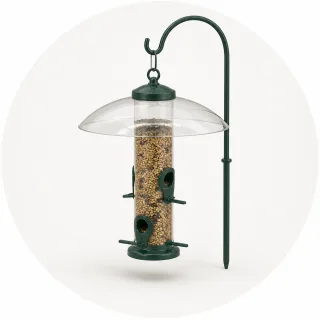
If your current feeder lacks overhead cover, compare the roof and cleaning access of available hopper bird feeders. A roof can reduce direct rain exposure, but it does not replace seed checks or guarantee dry food.
A More Manageable Wet-Weather Routine
Notice where moisture appears, address the relevant feature, keep refills manageable and check the result after rain. The aim is a routine you can maintain, not an unsupported “storm-proof” claim. Wet seed on the ground also rewards the visitors you would rather not encourage, which is where our squirrel management guide picks up. And if the problem is what you are filling the feeder with rather than the weather, see what to put in a platform bird feeder.
Editorial update, 17 October 2026: Source links and factual qualifications reviewed by the PerchKind Editorial Team. This is an editorial guide, not an independent product trial. Check local wildlife advice and the exact model’s instructions.