Squirrel-Proof Feeders
Squirrel-resistant feeders compared by access mechanism, placement needs, feeding ports, and routine cleaning.
Buying guide
Choosing your bird feeder
Match the feeder to the food, the birds already nearby, and a care routine you can maintain. Consider feeding access, placement and cleaning before capacity alone.
How to choose a bird feeder
Squirrel-resistant feeders compared by access mechanism, placement needs, feeding ports, and routine cleaning.
Which squirrel-resistant setup fits your yard?
Choose the feeder mechanism and the placement together. A weight-activated feeder can block its ports when a heavier animal lands, but it still needs open clearance so a squirrel cannot lean in from a branch, rail, trunk, or second hook. Caged feeders protect ports with an outer barrier, while pole baffles interrupt a climbing route. No single design can compensate for every launch point.
ApproachHow it worksBest fitPerchKind match
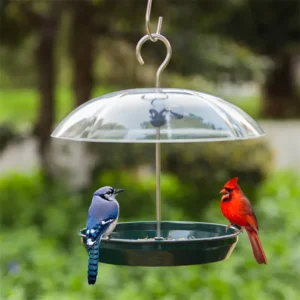
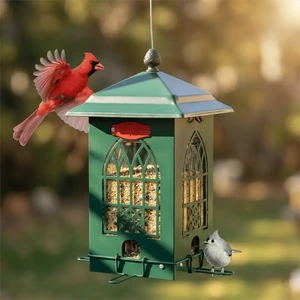
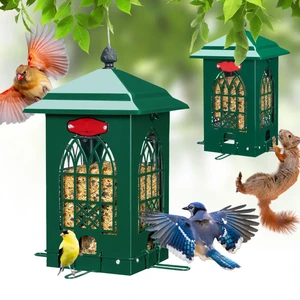
Weight-activated portsA heavier load moves a guard over the feeding openings.Yards where smaller birds should retain perch access.Weight-activated feeder with four ports
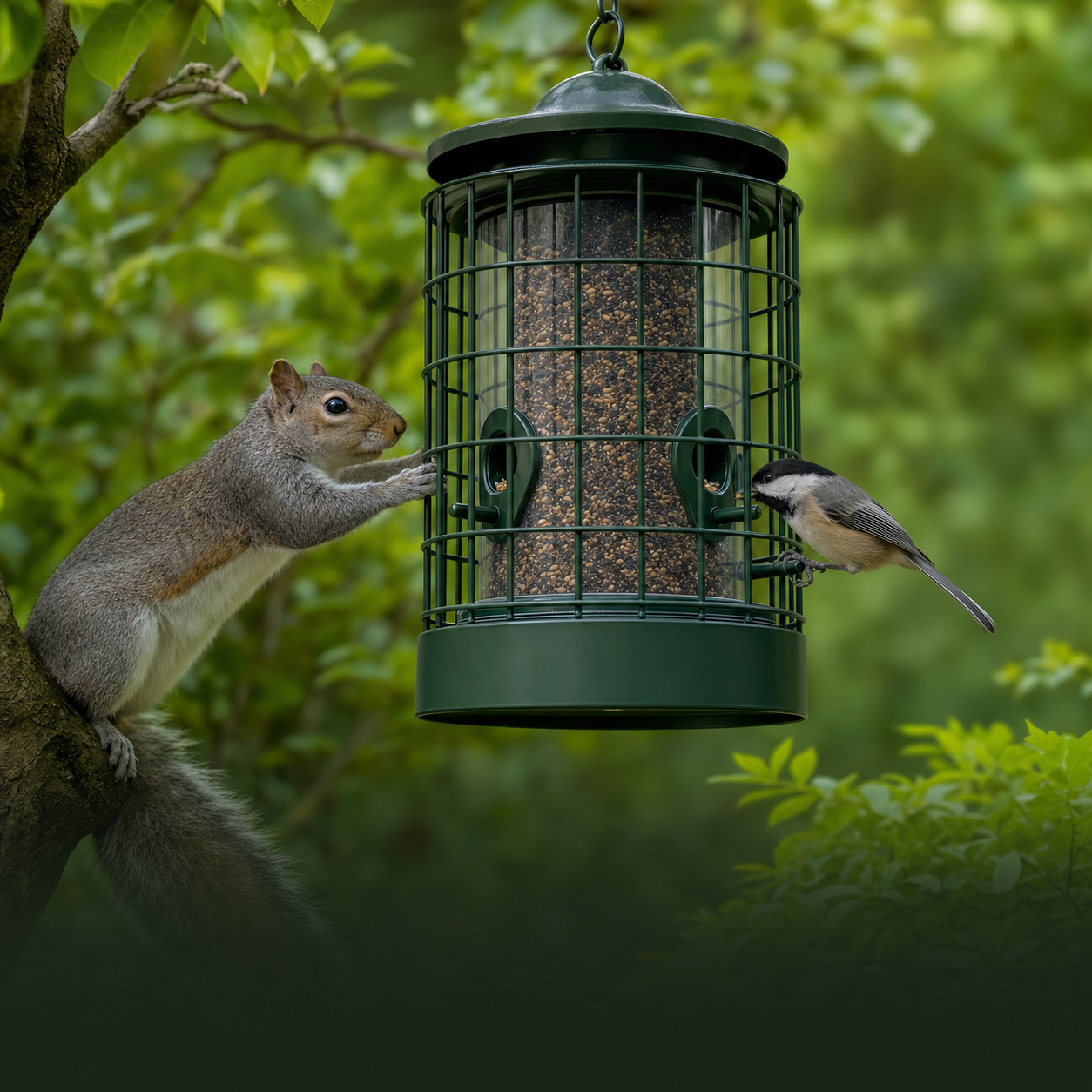
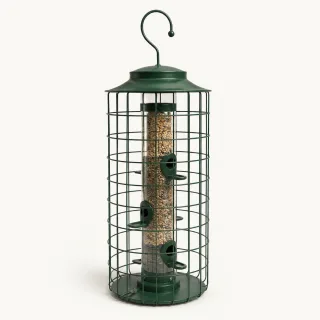
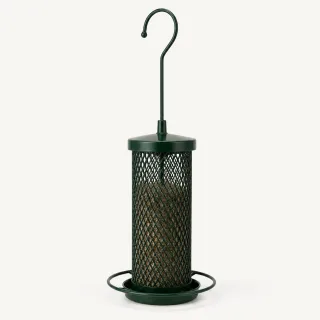
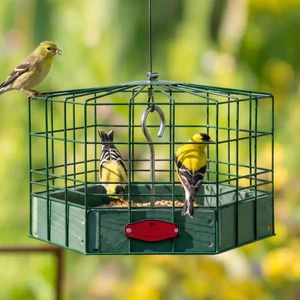
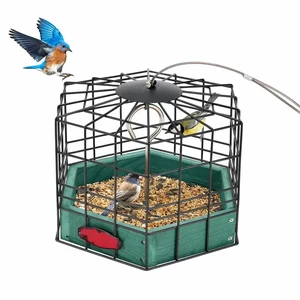
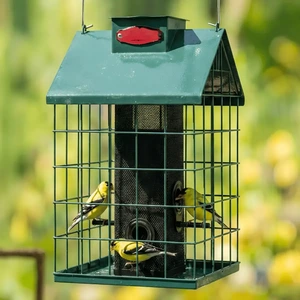
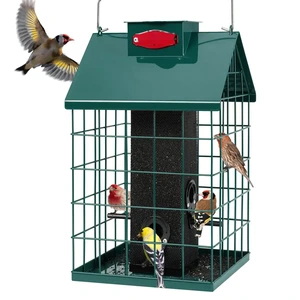
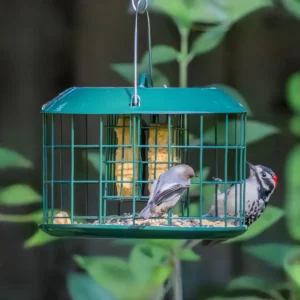
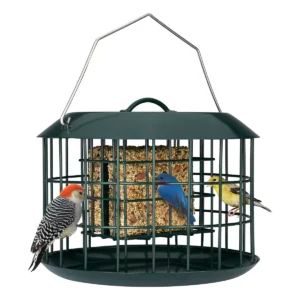
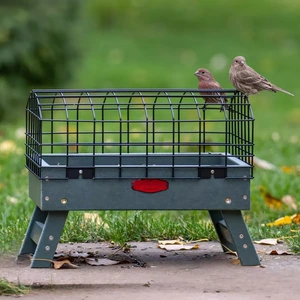
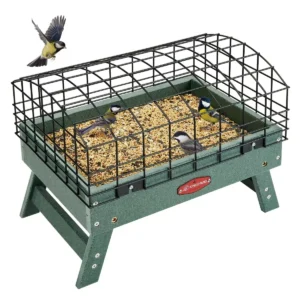
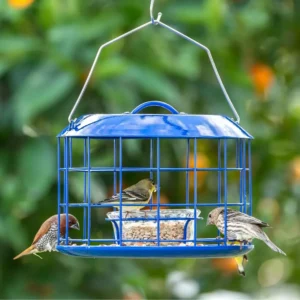
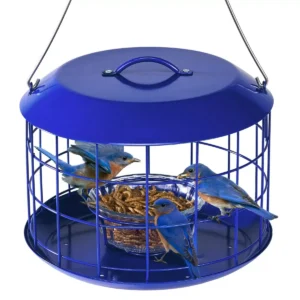
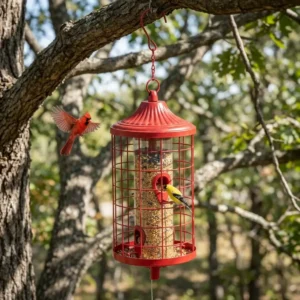
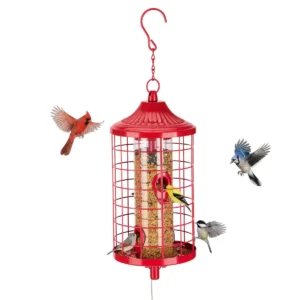
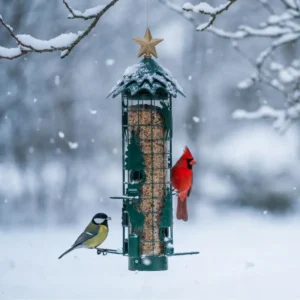
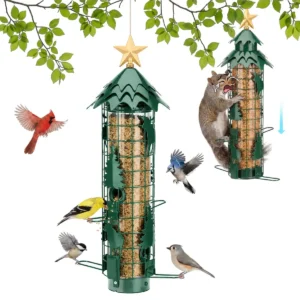
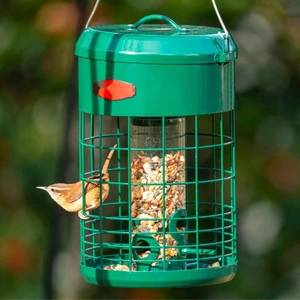
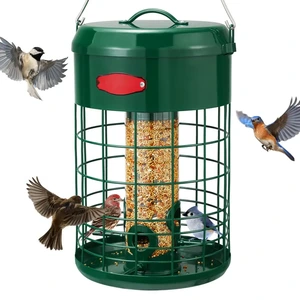
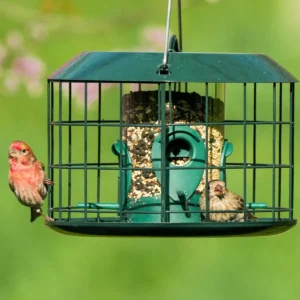
Protective cageAn outer cage limits which animals can reach inner ports.Small-bird feeding where cage spacing matches the intended visitors.Caged tube feeder; check spacing and placement
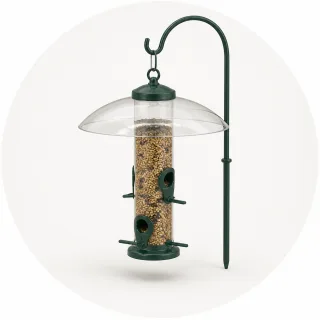
Pole baffle and spacingA smooth barrier and isolated placement interrupt climbing and side jumps.Pole-mounted stations with room away from launch points.Use with a compatible feeder setup
Example: the four-port weight-activated feeder
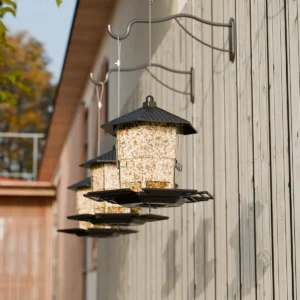
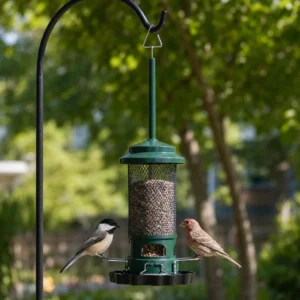
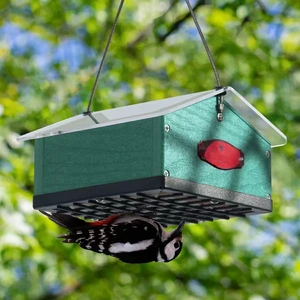
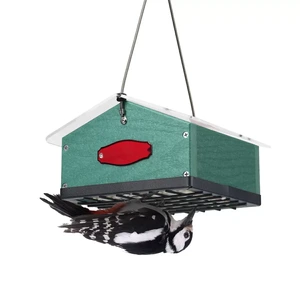
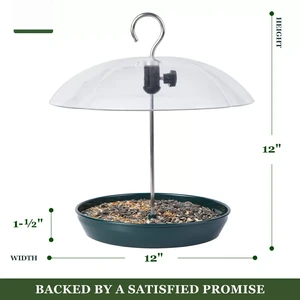
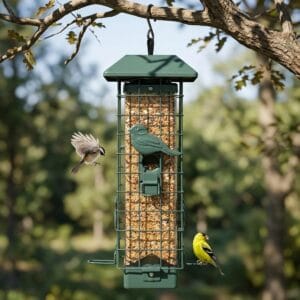
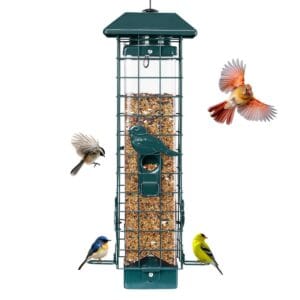
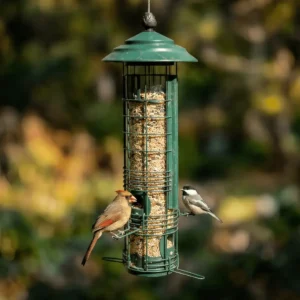
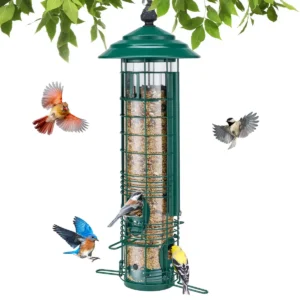
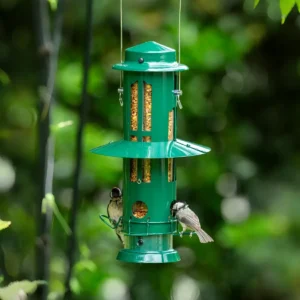
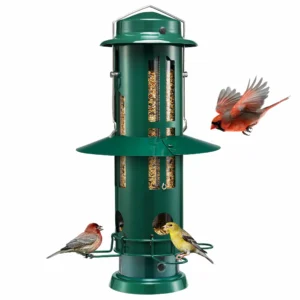
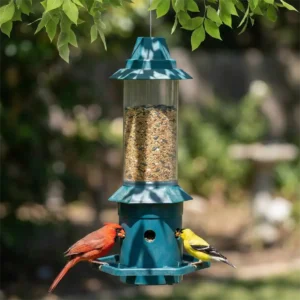
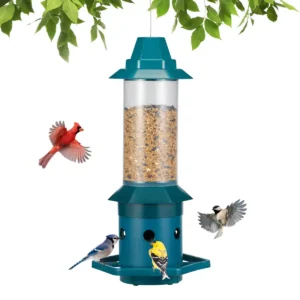
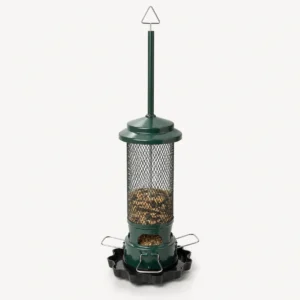
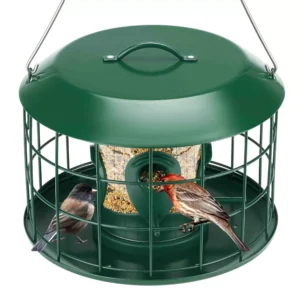
The four-port example linked below combines a battery-free moving shroud with four feeding stations, a visible metal-mesh seed chamber, a covered top, and a removable two-piece water trough. The trough is a separate care feature; it does not operate the squirrel-resistant mechanism. The product should be hung from a secure support with open space around it, and the moving lower assembly must remain clean and unobstructed.
Review dimensions, included components, installation clearance, and cleaning instructions on the weight-activated squirrel-resistant feeder product page. For a complete placement strategy, read how to keep squirrels off bird feeders. That guide explains launch distance, baffles, spilled seed, and humane methods using cited guidance from the Cornell Lab and Audubon.
Cleaning and adjustment
Discard damp seed, brush away hulls, and make sure the shroud moves freely before refilling. Separate and rinse the water-trough pieces, refresh drinking water regularly, and inspect the hanging loop, stem, perches, and port guard. If squirrels still reach the seed, observe the exact route and change the nearby foothold or hanging position before adding another device.
Squirrel-resistant feeder questions
Are squirrel-proof bird feeders completely squirrel-proof?
No feeder defeats every animal and yard layout. “Squirrel-proof” describes the intended resistance system; placement, clearance, maintenance, and local squirrel behavior still affect results.
Will a weight-activated feeder block larger birds?
It can if a larger bird places enough weight on the moving assembly. Choose and adjust a mechanism based on the bird species you want to welcome.
Can a squirrel reach the ports without landing?
Yes, if a branch, railing, trunk, roof, or nearby hook provides support. Leave open clearance and remove side access routes so the squirrel must load the feeder itself.
Compare other feeder shapes and maintenance needs in the PerchKind bird feeder guide.
Which squirrel-resistant setup fits your yard?
Choose the feeder mechanism and the placement together. A weight-activated feeder can block its ports when a heavier animal lands, but it still needs open clearance so a squirrel cannot lean in from a branch, rail, trunk, or second hook. Caged feeders protect ports with an outer barrier, while pole baffles interrupt a climbing route. No single design can compensate for every launch point.
| Approach | How it works | Best fit | PerchKind match |
|---|---|---|---|
| Weight-activated ports | A heavier load moves a guard over the feeding openings. | Yards where smaller birds should retain perch access. | Weight-activated feeder with four ports |
| Protective cage | An outer cage limits which animals can reach inner ports. | Small-bird feeding where cage spacing matches the intended visitors. | Caged tube feeder; check spacing and placement |
| Pole baffle and spacing | A smooth barrier and isolated placement interrupt climbing and side jumps. | Pole-mounted stations with room away from launch points. | Use with a compatible feeder setup |
Example: the four-port weight-activated feeder
The four-port example linked below combines a battery-free moving shroud with four feeding stations, a visible metal-mesh seed chamber, a covered top, and a removable two-piece water trough. The trough is a separate care feature; it does not operate the squirrel-resistant mechanism. The product should be hung from a secure support with open space around it, and the moving lower assembly must remain clean and unobstructed.
Review dimensions, included components, installation clearance, and cleaning instructions on the weight-activated squirrel-resistant feeder product page. For a complete placement strategy, read how to keep squirrels off bird feeders. That guide explains launch distance, baffles, spilled seed, and humane methods using cited guidance from the Cornell Lab and Audubon.
Placement and everyday care
Cleaning and adjustment
Discard damp seed, brush away hulls, and make sure the shroud moves freely before refilling. Separate and rinse the water-trough pieces, refresh drinking water regularly, and inspect the hanging loop, stem, perches, and port guard. If squirrels still reach the seed, observe the exact route and change the nearby foothold or hanging position before adding another device.
Bird feeder questions
Squirrel-resistant feeder questions
Are squirrel-proof bird feeders completely squirrel-proof?
No feeder defeats every animal and yard layout. “Squirrel-proof” describes the intended resistance system; placement, clearance, maintenance, and local squirrel behavior still affect results.
Will a weight-activated feeder block larger birds?
It can if a larger bird places enough weight on the moving assembly. Choose and adjust a mechanism based on the bird species you want to welcome.
Can a squirrel reach the ports without landing?
Yes, if a branch, railing, trunk, roof, or nearby hook provides support. Leave open clearance and remove side access routes so the squirrel must load the feeder itself.
Compare other feeder shapes and maintenance needs in the PerchKind bird feeder guide.
Open a section to read the complete guidance.