What to Put in a Platform Bird Feeder
A practical food-selection guide for an open tray: what to offer, how to retain it, what to keep separate, and when another feeder is a better fit.
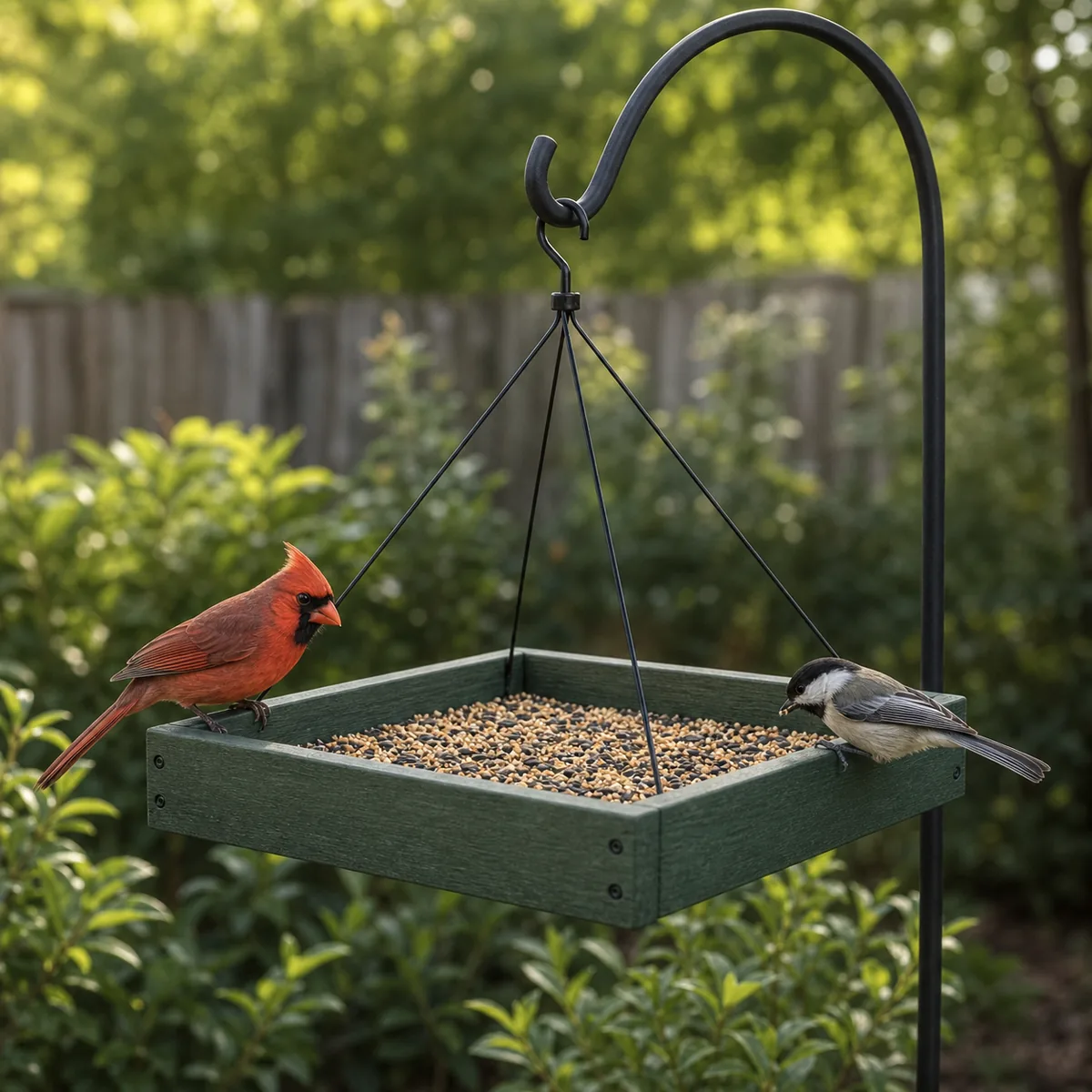
UK readers: Follow current RSPB guidance before feeding. Its seed-and-peanut season is 1 November–30 April; it advises avoiding flat-surface feeders. Elsewhere, check local wildlife guidance. See RSPB’s seasonal and flat-feeder guidance.
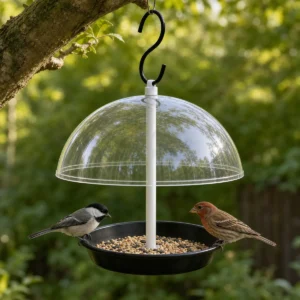
Start with a small serving of sunflower seed, then adapt the food to the birds visiting your yard and the tray’s openings. A platform can also hold suitable nuts, selected fruit, or mealworms, but those foods need different presentation and monitoring. An open tray is not a nectar reservoir or a place to leave kitchen scraps.
The useful question is not how many foods will fit. It is which food you can offer cleanly, keep on the tray, and remove before it deteriorates. This guide focuses on filling a platform you already own. For a comparison of feeder designs, use our bird feeder guide.
A practical food checklist
| Food | When it can fit | Check before offering |
|---|---|---|
| Sunflower seed | A starting food for many seed-eating visitors | Remove empty shells so they do not hide uneaten seed |
| Sunflower hearts | When reducing shell litter matters | Offer modest quantities and watch closely for moisture |
| White proso millet | When local sparrows, juncos, or doves are the intended visitors | Check that the small grains stay above the mesh |
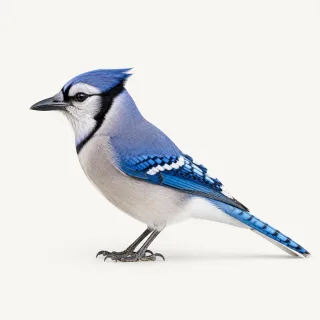
| Peanuts | A food option for visitors such as jays | Keep them fresh and dry; expect interest from squirrels too |
| Fruit pieces | An occasional option for fruit-eating birds | Use a removable, stable dish and inspect frequently |
| Mealworms | When insect-eating visitors actually use the station | Use a suitable smooth-sided container; do not assume open mesh will retain live larvae |
Sunflower hearts trade less shell waste for more exposure of the edible kernel. Peanuts are another food that deserves close attention in damp conditions. Neither is a reason to fill the tray to its advertised capacity. See Cornell Lab’s seed guide.
Start with one food, not a large mixed buffet
A single food makes the first few refills easier to interpret. You can see whether birds are eating it, discarding part of it, or ignoring the station. Mixing several new foods immediately makes those observations less useful: an apparently busy tray may still contain an untouched ingredient.
Try a modest amount of sunflower seed first if seed-eating birds are your target. On your next inspection, look for edible seed rather than judging only the apparent depth of the tray. Empty hulls can make it look fuller than it is.
Keep a simple note of what you offered and what remained. If you change the food, leave the rest of the setup unchanged where practical. This is an observation routine, not a controlled test, and it cannot guarantee which species will appear.
Match the food to the openings
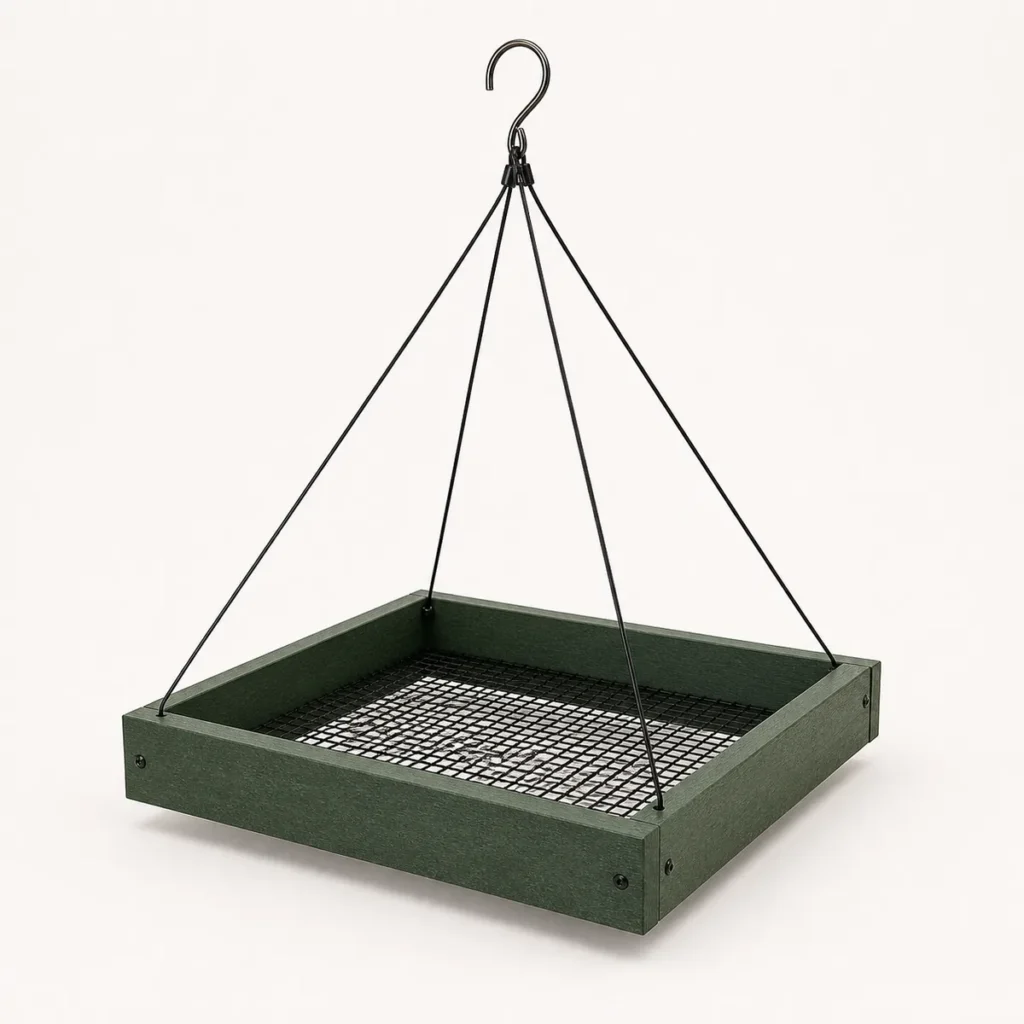
The same food behaves differently on a solid tray and a mesh tray. Before buying a large bag, place a small sample on the empty feeder and see whether it falls through. The product’s overall dimensions do not tell you its mesh opening size.
If food falls out immediately, do not seal the whole floor with a liner that traps rainwater. Choose a better-matched food or a securely positioned removable container that does not block the tray’s drainage or unbalance its hanging support. A container adds another surface to inspect and wash.
Fine seeds intended for specialist feeders may be awkward on an open platform. Live mealworms can also escape through surprisingly small openings. A dedicated feeding dish is more practical than trying to make a draining tray watertight.
Keep fruit and mealworms separate from dry seed
Fruit can appeal to birds that do not regularly eat seed, but it spoils quickly and may attract insects. Offer it only when you can inspect the station and remove leftovers promptly. A removable dish makes that task easier than spreading soft fruit into mesh corners. See Project FeederWatch’s feeding guidance.
Mealworms should also be offered in manageable portions. Keep their serving area separate so you can remove leftovers without throwing away an entire seed mixture. Do not pour nectar into the tray; nectar belongs in a feeder designed to contain and dispense it.
There is no requirement to provide all these foods. If a simple seed offering works for your visitors and your care routine, adding more ingredients is optional. Native plants can provide food without another feeder to maintain.
Use capacity as a limit, not a refill target
A feeder’s advertised capacity tells you how much it is designed to hold, not how much your yard will use before the next inspection. Start with a shallow serving that leaves the food easy to inspect. Increase it only if fresh food is consistently consumed and you can still maintain the feeder properly.
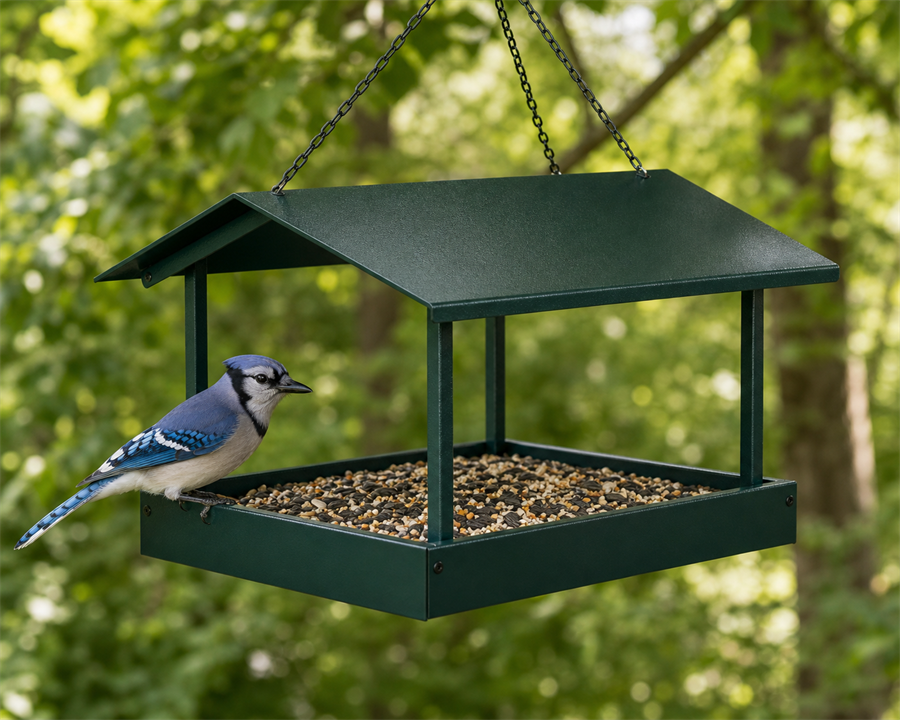
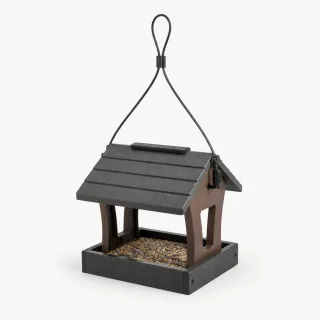
For the PerchKind hanging platform feeder, the open mesh tray gives direct access for checking food and clearing debris. It has no overhead roof. Do not treat drainage as weatherproof storage or leave a full tray unattended because water can pass through it.
Rain management is covered separately in how to keep bird seed dry. For mounting and nearby hazards, see the bird feeder placement guide.
When a different feeding setup is the better choice
An open tray does not select only the birds you want. If larger visitors repeatedly monopolize it, adding more food may simply increase consumption. A feeder with more restricted access may fit that goal better; compare the available designs in our bird feeder collection.
Food and droppings can share the same surface on a platform. If birds appear sick, seek guidance from your local wildlife authority rather than trying to identify a disease from appearance alone. Project FeederWatch specifically advises considering retirement of tray feeders when oral–fecal disease transmission is a concern. That is different from a blanket statement that every platform must always be removed. See Project FeederWatch’s feeding guidance.
Do not top up contaminated food. Clear debris, wash and rinse accessible surfaces, and let them dry before refilling. Our bird feeder cleaning guide covers the cleaning process and material precautions.
Frequently asked questions
Can I use a seed blend?
Yes, if its ingredients suit your visitors and remain on the tray. Watch which ingredients are left behind before buying more of the same blend. A busy feeder does not necessarily mean the entire mix is being eaten.
Should the tray be filled to the rim?
No. Start with an amount you can inspect easily and manage before it deteriorates. Maximum capacity is not a recommended daily portion.
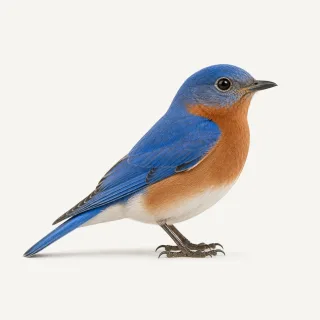
Will fruit or mealworms guarantee bluebirds?
No. Food is only one part of the setup. Local species, habitat, seasonal activity, and whether birds already recognize the station all matter.
Is an open platform squirrel-proof?
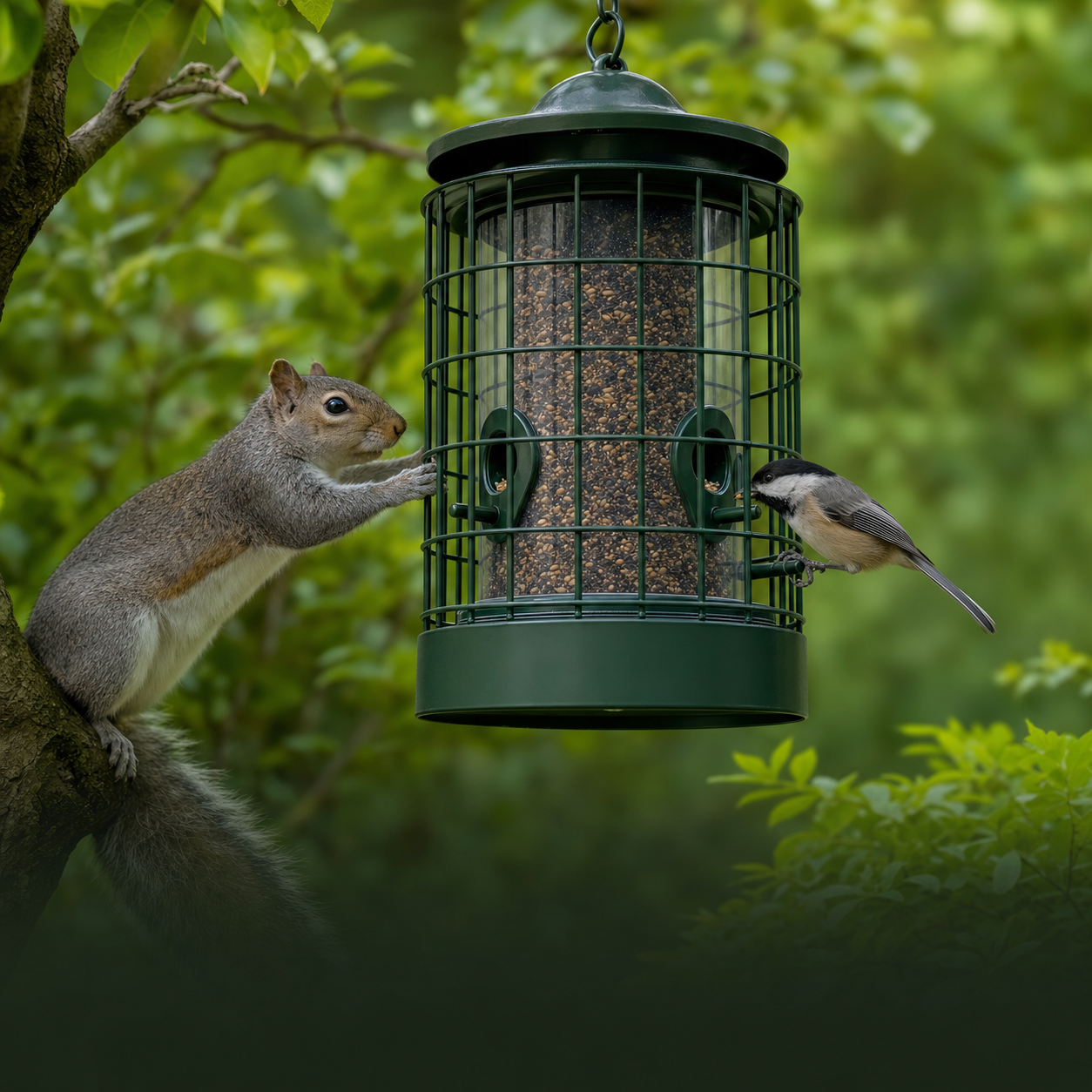
No. Open access also allows unwanted visitors to reach food. Food choice alone does not make a tray squirrel-proof; review our squirrel management guide for the broader setup.
What is the simplest routine to start with?
Choose one suitable food, offer a small serving, inspect the tray before adding more, and adjust based on what remains. Keep the routine manageable rather than turning every refill into a larger buffet. For tray designs that suit this approach, browse our platform bird feeders, or explore more backyard birding guides for feeder, water and housing advice.
Editorial notes
Food guidance was checked against Cornell Lab of Ornithology’s seed and other bird food guides and Project FeederWatch’s feeding guidance. Product illustrations are AI-generated, not photographs of a feeding trial; depicted birds and food amounts are not guarantees or serving recommendations. PerchKind sells feeders mentioned here. For corrections, contact our editorial team.
Editorial update, 17 October 2026: Source links and factual qualifications reviewed by the PerchKind Editorial Team. This is an editorial guide, not an independent product trial. Check local wildlife advice and the exact model’s instructions.