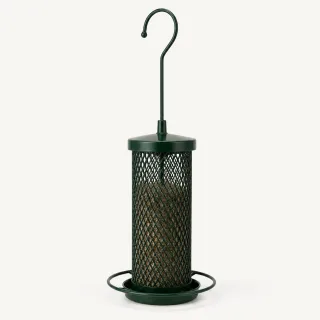
Bird Seed on Grass: Clean Up the Mess and Reduce Spills
Identify hulls, whole seed and wet waste, clean the grass gently, and compare practical ways to reduce the next spill without a zero-mess promise.
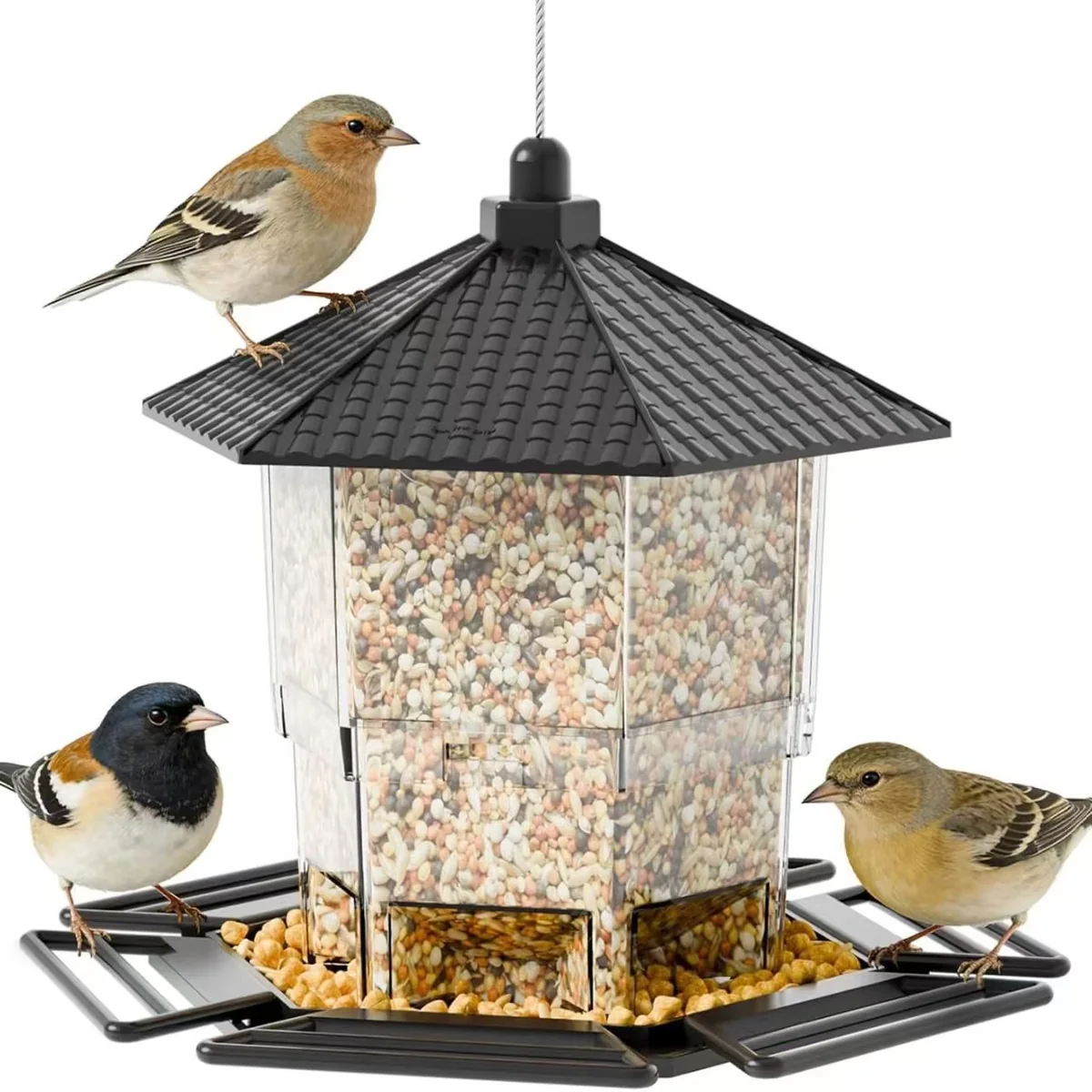
To deal with bird seed spillage on grass, remove the fallen food and hulls first, then reduce what lands there. Use a gentle rake or hand collection rather than digging through the turf. Next, adjust the amount and type of seed, or fit a compatible catcher. A different feeder can help with a specific cause, but no feeder makes ground cleanup unnecessary.
This guide is for backyard seed feeders in the United States and Canada. Follow current local wildlife advice before feeding; recommendations for other regions can differ. Start with the mess you can actually see, not a promise of a completely waste-free lawn.
Identify what is on the grass before changing the feeder
Look at a small sample without handling it bare-handed. The practical question is whether you are removing empty shells, edible seed, plants or spoiled food. These are different problems, even when they appear under the same feeder.
| What you see | What to check | First action |
|---|---|---|
| Mostly empty hulls | Are birds eating the kernels and leaving shells? | Collect the hulls; consider a suitable hulled alternative. |
| Many intact seeds | Which ingredients remain? Is food escaping the openings or being flicked out? | Offer less and check seed-to-feeder fit. |
| Sprouts among the grass | Is the same patch receiving repeated spills? | Remove unwanted seedlings by hand and reduce new deposits. |
| Wet clumps or contaminated food | Did rain, blocked drainage or droppings reach the food? | Remove the waste promptly and inspect the feeder before refilling. |
Do not identify lawn damage solely from a pile of sunflower shells. Foot traffic, shade, water and other lawn conditions may also need attention. This is a feeder-maintenance guide, not a diagnosis of a turf disease.
Remove spilled seed without digging up the lawn
Work on a manageable patch. Lift obvious clumps into a collection container, then use light passes with a flexible leaf rake to bring loose debris onto a dustpan or sheet. Stop if the rake pulls grass out; pick out the remaining concentrated patches by hand instead of scraping away soil. The aim is to collect the waste, not to recover every tiny fragment at the cost of the lawn.
Wear gloves. Project FeederWatch also recommends a mask when raking or sweeping below feeders and washing hands after feeder care. Avoid raising dust unnecessarily. Do not pour bleach, salt, vinegar or boiling water onto the feeding patch as a seed-cleanup treatment.
Keep collected ground waste out of the feeder. Bag it and follow local disposal rules; do not assume a home compost pile will make spoiled feed suitable to reuse. PAWS recommends removing spilled seed and droppings around feeders, not simply adding fresh food over accumulated waste.
For the feeder itself, use our bird feeder cleaning guide. Cleaning a removable feeder and treating living turf are separate jobs.
Match the seed to the birds, not a zero-mess promise
If shells make up most of the pile, shell-free seed addresses that part of the mess. If whole seeds dominate, first note what is being discarded and whether it fits the feeding openings. Changing an entire setup before checking the leftovers can hide the actual cause.
Hulled sunflower seed reduces shell debris, but still needs protection from moisture; FeederWatch notes that it spoils faster than sunflower seed in the shell. “No mess” is not a guarantee that every piece will be eaten or that nothing can sprout. A label does not replace checking the ground.
Try a smaller offering and change one thing at a time. Do not declare every small seed in a mix unwanted: different birds use different foods. Compare what your visitors actually take, and use our platform feeder food guide when choosing food for an open tray.
Check a seed catcher before attaching it
An accessory catcher hangs or mounts below a feeder to intercept some falling material. It is not automatically compatible with every hook, pole or feeder. Before buying or fitting one, check the maker’s instructions for the mounting method, supported load, size and clearance.
- Can you remove and wash it easily, rather than letting it become another layer of old food?
- Does water drain freely, and can you reach every collection area?
- Will it obstruct ports, upset the hanger or interfere with existing squirrel protection?
- Can birds reach collected food, including food soiled by droppings?
A catcher is another surface to maintain, not permission to leave fallen food indefinitely. During illness concerns, follow local wildlife guidance. FeederWatch’s advice about flat feeding surfaces depends in part on the disease transmission route; a tray is not a universal safety upgrade.
Compare a hopper tray with an open platform
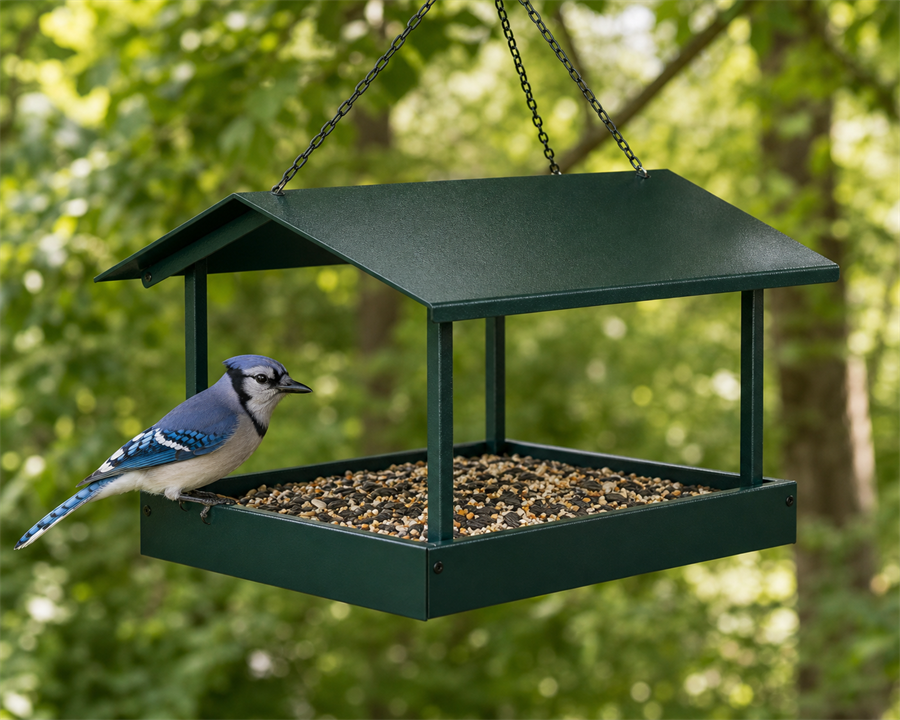
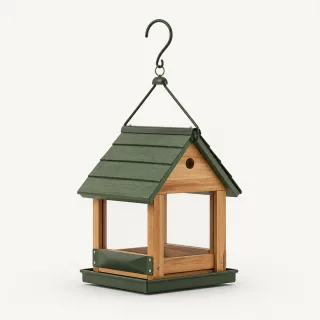
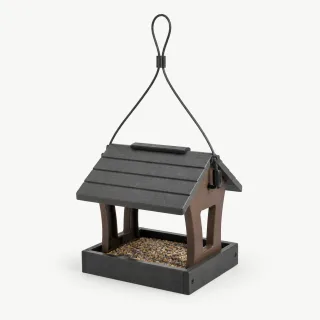
A hopper’s surrounding tray presents seed from its reservoir; an open platform is itself the feeding surface. Neither should be described as a universal retrofit catcher. Choose a design for the access and maintenance you need, not an untested claim that it eliminates spills.
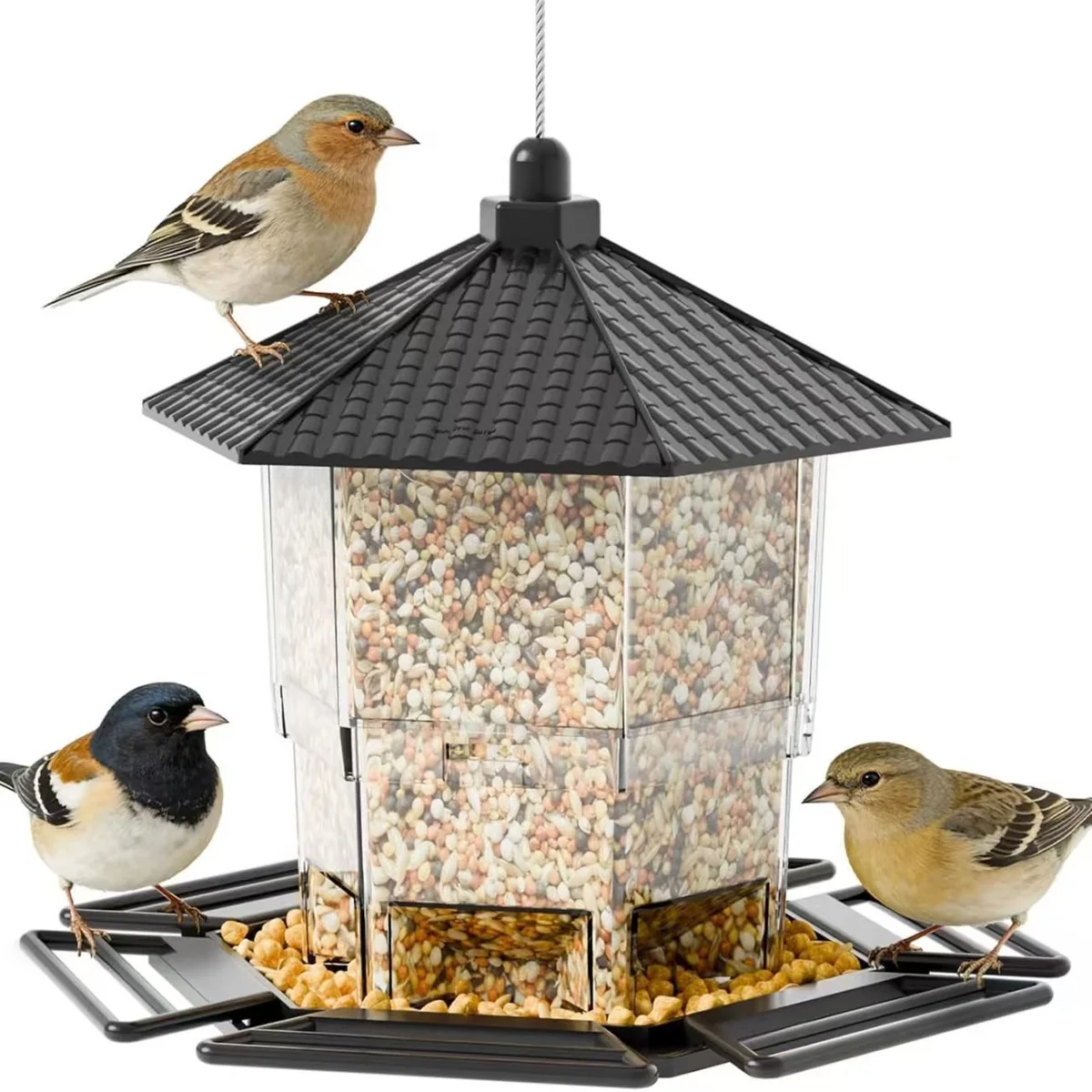
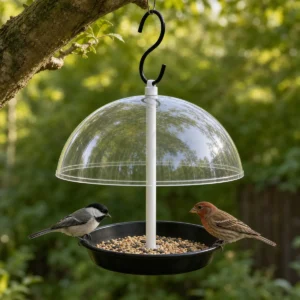
The current adjustable hanging hopper feeder has a clear reservoir, roof and surrounding perch tray. Its listing states an overall tray width of 8.8 inches; seed capacity is not specified. We have not measured how much seed it keeps off a lawn.
An open platform makes a shallow offering easy to inspect, but also exposes the food. A roof does not make a hopper’s feeding edge weatherproof. For either design, check after rain and discard affected food. Our dry-seed guide covers moisture checks; our hopper comparison explains the design differences.
Use a simple cleanup log to choose the next change
Take a photo of the cleared patch, then note what returns before the next cleanup. Keep the feeder and food unchanged initially so you have a useful comparison. After that, change one variable, such as offering less or trying a compatible seed. This is a record for your yard, not a controlled product test.
| Date and weather | Food and amount offered | Debris found | One next change |
|---|---|---|---|
| ________ | ________ | ________ | ________ |
| ________ | ________ | ________ | ________ |
If you cannot keep the ground and feeder clean, reduce or pause feeding while you reassess the setup. Moving the feeder only helps if the new spot can be maintained safely; it should not move the mess to a hidden corner. Check our placement guide before changing the site.
Frequently asked questions about seed on grass
Will ground-feeding birds clean up all the spilled seed?
Do not rely on that as the cleanup plan. Some food may remain, and empty hulls are not food. Check the patch yourself and remove accumulating waste.
Should I buy a new feeder first?
Not necessarily. Identify the leftovers, reduce an oversized offering and check the existing feeder’s openings, hanger and drainage first. A new feeder is useful only when it addresses a problem you have identified.
Can I leave sprouts and make a flower patch?
You can choose a planted area instead of lawn, but that does not remove the need to clear old feed and droppings. If you want habitat plants, choose species appropriate to your area rather than assuming an unidentified seed mix is a suitable planting plan.