How to Keep Squirrels Off Bird Feeders: 11 Humane Methods That Work
Keep squirrels away from bird feeders humanely with better placement, correctly fitted baffles, durable poles, seed choices, and weight-activated feeder designs.
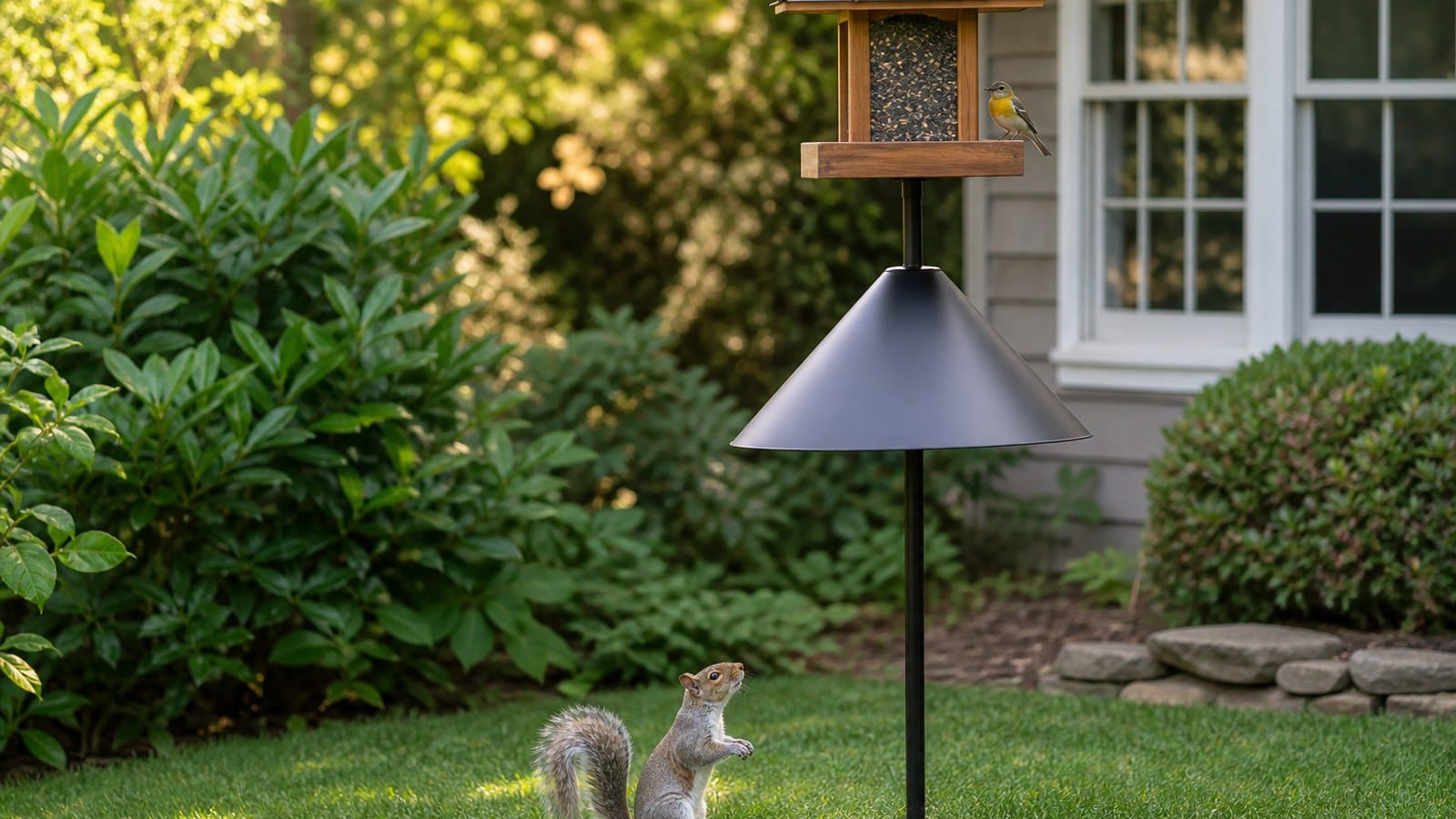
Squirrels are clever, athletic, and very persistent. If they can climb a pole, launch from a branch, or hang upside down from a roofline, they will eventually find the seed. The good news is that you do not need to harm them—or turn your backyard into an obstacle course—to protect your feeding station.
The most reliable answer to how to keep squirrels off bird feeders is to combine three things: place the feeder beyond jumping distance, block the climbing route with a correctly fitted baffle, and use a squirrel-resistant feeder that closes when a heavier animal lands on it. No single method works in every yard, but this layered setup solves most recurring problems.
Quick answer: the most effective squirrel-proof setup
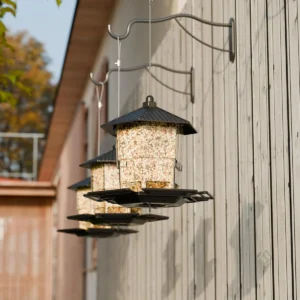
Start with three defenses working together: place the feeder about 10 feet from trees, fences, roofs, deck rails, and other launch points; fit a pole baffle below the feeder or a hanging baffle at least 18 inches wide above it; then use a weight-activated feeder if squirrels still reach the seed. Keep the feeder high enough to prevent a jump from the ground and remove spilled seed that rewards repeat visits. This approach follows guidance from the Cornell Lab of Ornithology and Audubon. No arrangement is completely squirrel-proof, so watch the next few attempts and adjust the exact route the animal uses. In a small yard where ideal spacing is impossible, prioritize a properly fitted baffle and an adjustable weight-activated feeder.
Why squirrels are so difficult to stop
A squirrel does not see your feeder the way you do. It sees a route: tree trunk to branch, branch to roof, roof to shepherd’s hook, and hook to seed. Blocking only the last step often fails because the animal simply finds another path.
Before buying anything, spend a few minutes observing the yard. Look for:
- Branches, fences, deck rails, walls, roofs, or furniture within jumping range
- Poles that can be climbed directly
- Hanging wires that can be crossed from the side
- Seed scattered on the ground, which rewards repeat visits
- Plastic ports or lids that can be chewed open
Your goal is to break every practical route, not merely make one route harder.
1. Move the feeder away from launch points
Placement is the foundation of squirrel control. Put the feeding station roughly 10 feet from tree trunks, overhanging branches, fences, roof edges, and raised decks whenever your yard allows it. The Cornell Lab feeder-placement guide recommends keeping cover nearby while avoiding easy squirrel access. Trim only the small branches that create obvious shortcuts; mature trees and shrubs are still valuable shelter for birds.
This creates a useful balance. Birds have nearby cover, while squirrels lose the easiest launch points. If your space is tight, use a window-mounted feeder or a weight-activated model instead of forcing an open-yard layout that does not fit.
For a yard-wide checklist covering windows, cover, predators, weather, and cleaning access, use the PerchKind bird feeder placement guide.
2. Install a pole-mounted squirrel baffle
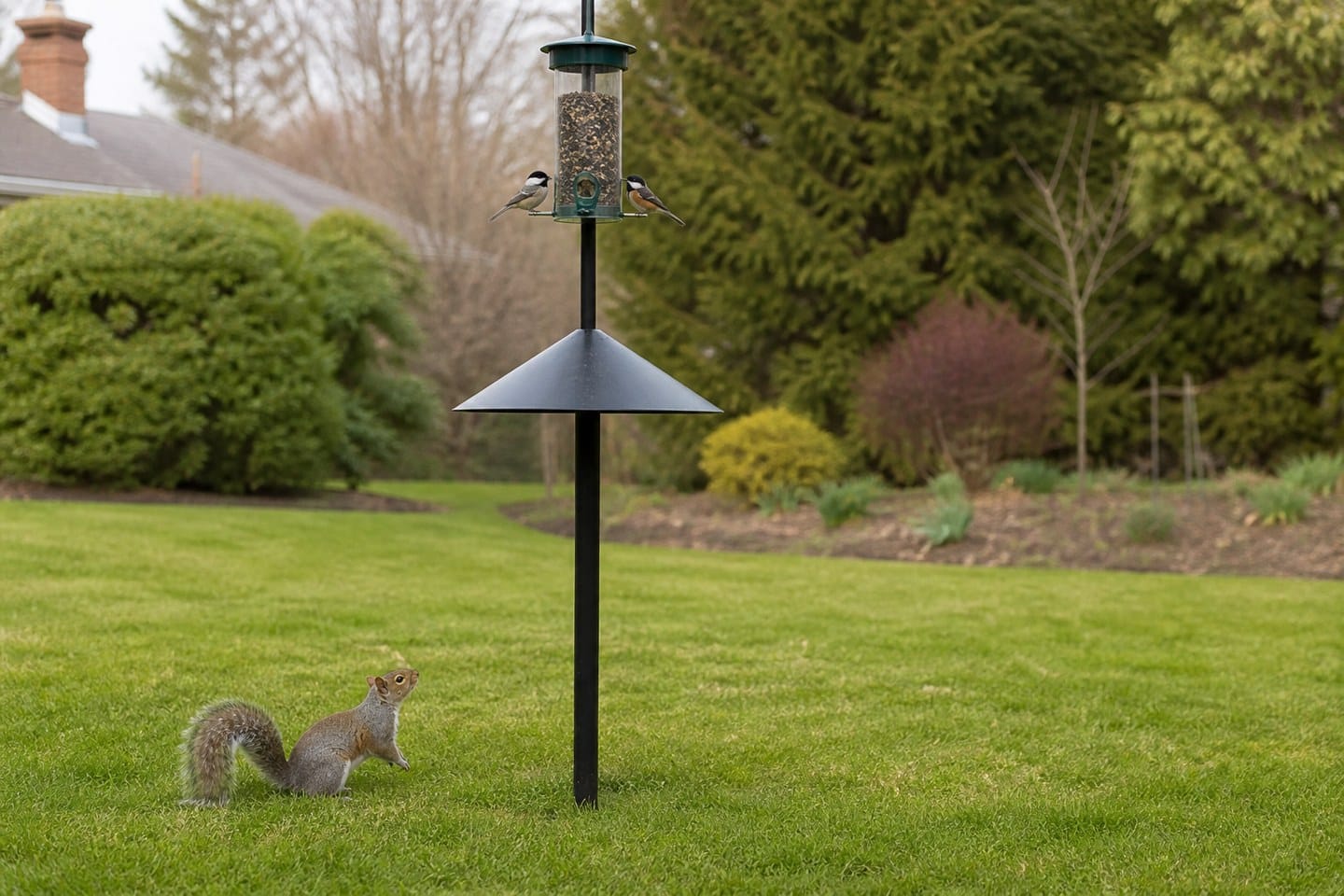
A squirrel baffle is a smooth barrier that prevents an animal from climbing past a point on the pole. Cone- and stovepipe-style baffles can both work when they are wide enough, stable, and mounted correctly.
Place the baffle below the lowest feeder. Make sure squirrels cannot brace against a nearby wall or second pole to climb around it. A loose baffle that tilts easily or leaves a grippable gap may become a step instead of a barrier.
After installation, watch from a window. If a squirrel gets above the baffle, identify exactly where it gained leverage and adjust that point rather than rebuilding the whole station.
3. Use a weight-activated squirrel-resistant bird feeder
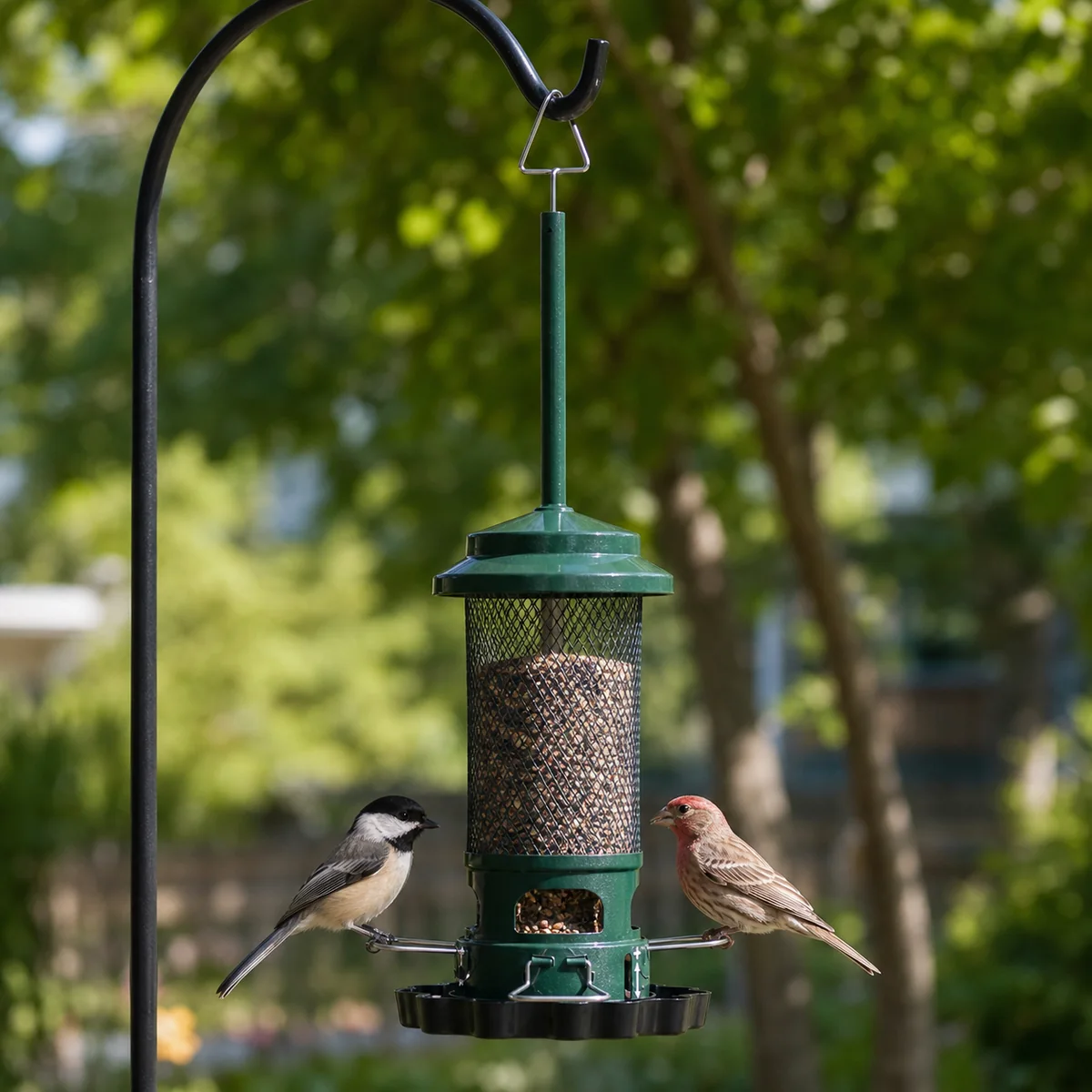
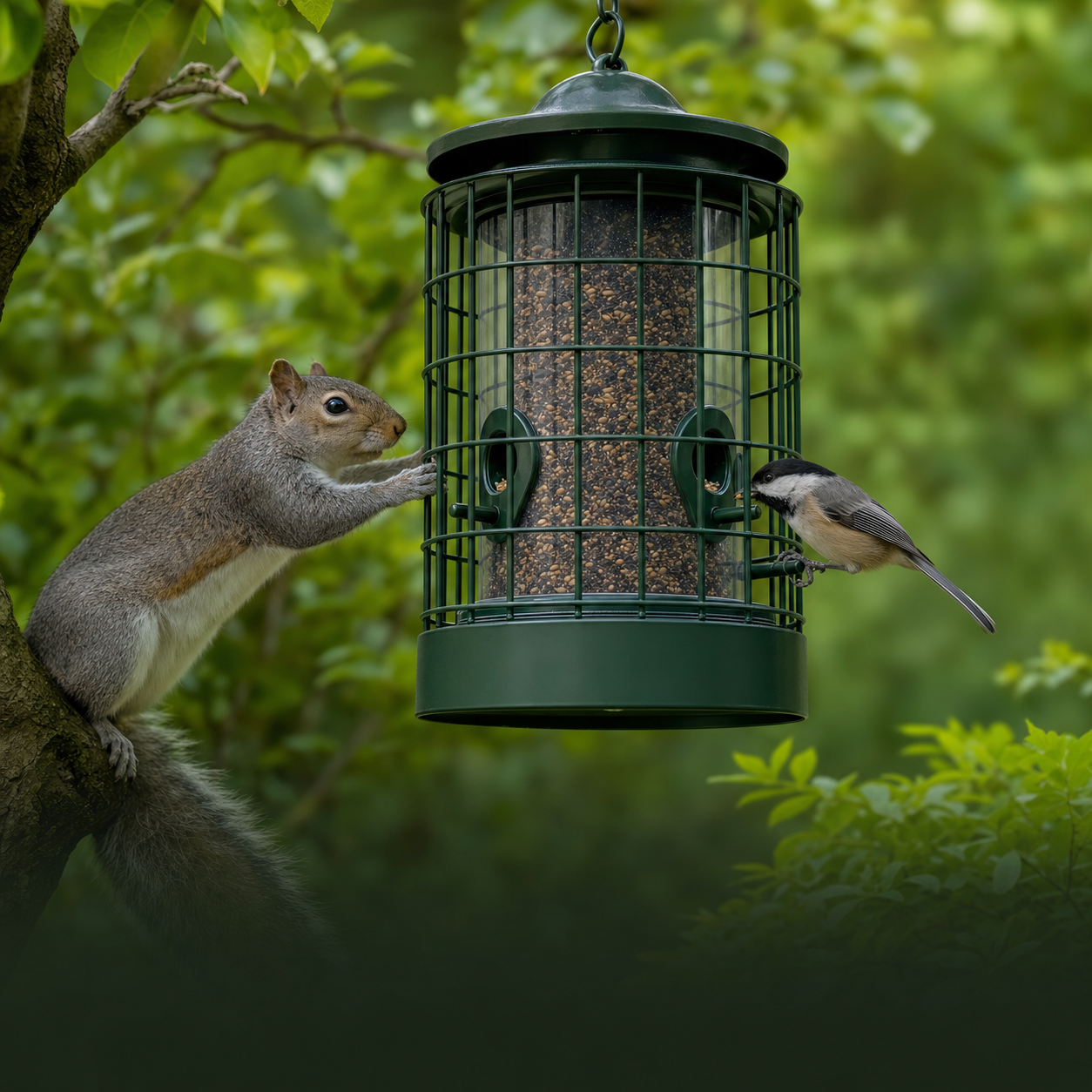
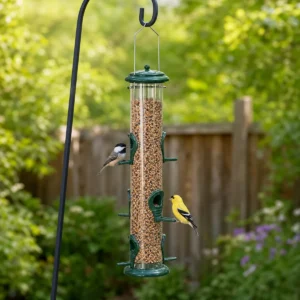
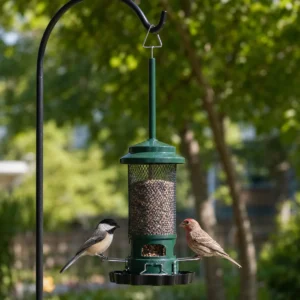
A weight-activated squirrel-resistant bird feeder closes its seed ports when a heavier animal lands on the perch or outer frame. Small songbirds can continue feeding, while squirrels lose access to the seed.
This design is especially useful when:
- The yard is too small for ideal feeder placement
- Trees or fences cannot be moved
- Several squirrels visit every day
- You want to reduce seed waste as well as squirrel access
Choose a model with adjustable sensitivity if larger birds such as cardinals are welcome. Start with the manufacturer’s recommended setting, then test and fine-tune it for the birds in your yard.
Explore PerchKind squirrel-resistant feeders, including our weight-activated squirrel-resistant bird feeder.
4. Choose a durable feeder body
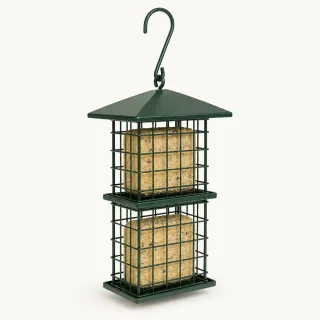
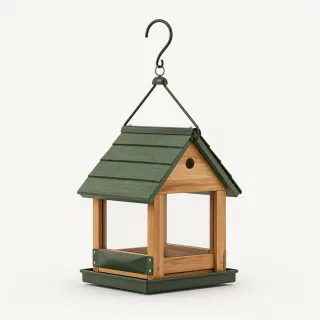
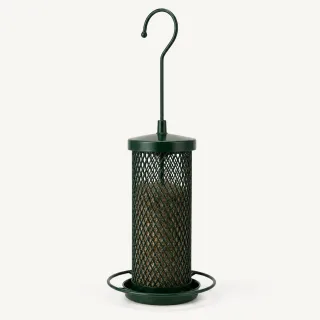
Once squirrels reach a feeder, thin plastic ports and lightweight lids can become chew points. Metal-reinforced feeding ports, secure lids, and robust hanging hardware are better choices for yards with persistent squirrels.
Durability does not replace good placement, but it prevents a brief breach from becoming permanent damage. It also makes the feeder easier to clean and keep in service through changing weather — and a feeder that opens easily gets washed more often, which is where our bird feeder cleaning guide matters.
5. Add a baffle above a hanging feeder
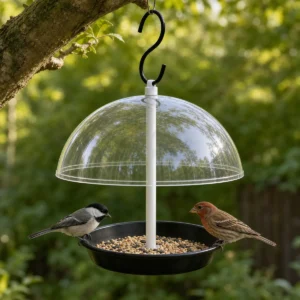
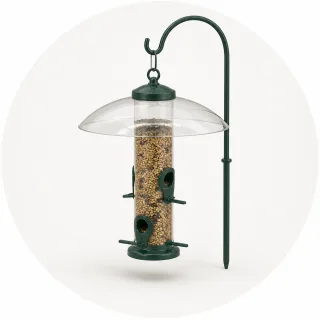
If your feeder hangs from a branch or overhead line, a hanging squirrel baffle above the feeder can block access from above and help shield seed from rain. The Cornell Lab guidance on unwanted feeder visitors recommends a hanging baffle at least 18 inches across.
Keep the feeder far enough below the baffle that a squirrel cannot hang from the rim and reach the ports. Also inspect the supporting branch or line: a perfect dome cannot help if the squirrel can jump directly to the feeder from the side.
6. Make horizontal lines difficult to cross
For feeders suspended between two supports, thread smooth, free-spinning sections of tubing onto the line. When a squirrel tries to walk across, the sections rotate and remove its footing.
Keep the line high enough for people to walk safely beneath it, and make sure all mounting points are secure. This method works best as part of an isolated setup, not when a nearby branch provides an easier route.
7. Reduce spilled seed below the feeder
Seed on the ground turns a bird feeding station into a reliable squirrel feeding station. Add a seed-catching tray when it does not interfere with the feeder’s squirrel-resistant mechanism. Offer only the amount birds can eat while it is fresh. Project FeederWatch recommends raking or sweeping beneath feeders regularly so droppings and spoiled food do not accumulate.
Reducing waste also helps discourage rodents and keeps wet hulls from accumulating. If birds scatter large amounts of filler seed, switch to a better-matched blend or a no-mess option. Wet seed spoils fast and starts the same cycle over again — our guide to keeping bird seed dry covers the cover and drainage fixes that prevent it.
8. Try less squirrel-attractive foods
Squirrels are especially enthusiastic about sunflower seed and corn. Audubon’s squirrel-feeder guidance notes that safflower can discourage squirrels when space does not allow a pole-and-baffle setup. Results still vary by location and individual animals.
Do not make an abrupt switch if birds already depend on the station. Introduce the new food in one feeder, monitor which species use it, and adjust gradually. For a closer look at matching food to feeder style, see what to put in a platform bird feeder.
9. Create a separate squirrel feeding area—with caution
In a large yard, placing a small squirrel feeding spot well away from bird feeders may redirect some activity. This is not a universal solution: more food can also attract more squirrels.
Try it only if you already enjoy having squirrels in the yard and can keep the area clean. Treat it as a short experiment. If squirrel traffic increases, stop and return to placement, baffles, and feeder design.
10. Remove the rewards that keep squirrels returning
Secure seed in a hard-sided container with a tight lid. Clean up torn bags, spilled seed, and accessible pet food. Check that trash and compost containers are closed.
Squirrels repeat routes that pay off. When the feeder is blocked but an open seed bag sits nearby, the larger problem remains unsolved.
11. Combine methods and adjust one variable at a time
The most successful setup is usually a system:
- Isolate the feeder from launch points.
- Block the pole or hanging route with a baffle.
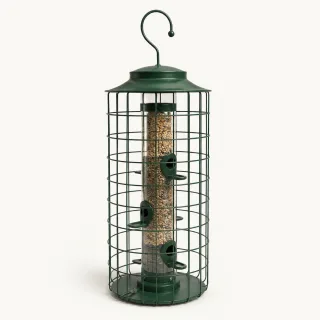
- Use a weight-activated or caged feeder.
- Control spilled seed.
- Watch the next attempt and correct the exact weak point.
Change one variable at a time so you know what worked. A simple note—date, squirrel route, adjustment, result—can save weeks of random trial and error.
Methods to avoid
Humane squirrel control protects birds, mammals, and your equipment. Avoid these approaches:
- Grease, petroleum jelly, or oil on poles. These substances can transfer to feathers or fur and reduce their protective function.
- Sticky products. They can trap feathers, insects, and debris.
- Poison or harmful traps. They can injure non-target wildlife and may violate local rules.
- Loose fishing line or unsafe wire. It can entangle birds and other animals.
- Unverified additives in birdseed. Use only products intended for bird feeding and follow the label.
Which solution fits your yard?
| Yard situation | Best first step | Add if needed |
|---|---|---|
| Open lawn | Pole-mounted feeder plus baffle | Weight-activated feeder |
| Small patio or deck | Weight-activated feeder | Seed-catching tray |
| Feeder hung from a branch | Large overhead baffle | Move farther from trunk |
| Frequent chewing damage | Metal-reinforced feeder | Better placement and baffle |
| Heavy seed waste | Better seed match and tray | Smaller refill amounts |
| Squirrels jump from several directions | Relocate the station | Remove one launch route at a time |
Frequently asked questions
What is the best way to keep squirrels out of bird feeders?
The best all-around setup is a pole-mounted feeder positioned away from trees and fences, protected by a properly installed baffle, with a weight-activated feeder as a second barrier. Combining methods is more reliable than relying on one product.
How far should a bird feeder be from trees to stop squirrels?
About 10 feet is a practical starting point for many yards. Watch nearby roofs, fences, and branches too; squirrels may use any elevated surface as a launch point.
Do squirrel baffles really work?
Yes, when the baffle blocks the only climbing route and the feeder is isolated from side jumps. An undersized, poorly positioned, or easily bypassed baffle will be much less effective.
Will a squirrel-proof feeder keep out large birds?
Some weight-activated feeders can exclude heavier birds if the sensitivity is set too low. Choose an adjustable model and tune it for the species you want to welcome.
Is it safe to grease a bird feeder pole?
No. Grease and similar substances can coat feathers or fur. Use a smooth physical baffle instead.
What should I do if squirrels keep winning?
Observe the exact route they use, then change only that part of the system. Moving the pole a few feet, raising a baffle, or removing a side launch point often matters more than adding another gadget.
Build a calmer feeding station
Squirrels may always test a backyard feeder, but they do not have to control it. Start with placement, add a physical baffle, choose a feeder designed around the problem, and keep the ground clean. The result is less wasted seed, fewer damaged feeders, and more peaceful space for the birds you want to watch.
Ready to simplify your setup? Shop PerchKind squirrel-resistant bird feeders or compare feeder styles in our bird feeder guide.
Sources and editorial notes
- Cornell Lab: dealing with unwanted feeder visitors
- Cornell Lab: where to put a bird feeder
- Project FeederWatch: feeding birds
- Audubon: how to stop squirrels raiding bird feeders
Editorial note: Prepared by the PerchKind Editorial Team and reviewed against the sources above in August 2026. Product links identify PerchKind products; the wildlife guidance remains independent of the product recommendation. If you spot an error, please contact us.