Oriole Feeders: How to Attract Orioles to Your Yard (2026)
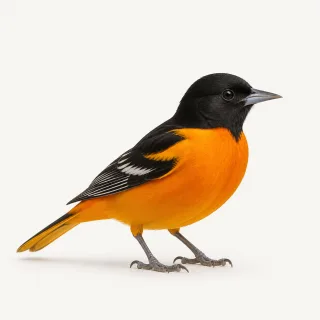
To attract Baltimore Orioles, offer ripe fruit such as orange halves, small amounts of jelly, or plain sugar water in a feeder designed for orioles. Cornell Lab’s Baltimore Oriole account describes these supplements to their natural diet. Choose a format you can keep clean; no food guarantees a visit, and a general seed mix is [...]
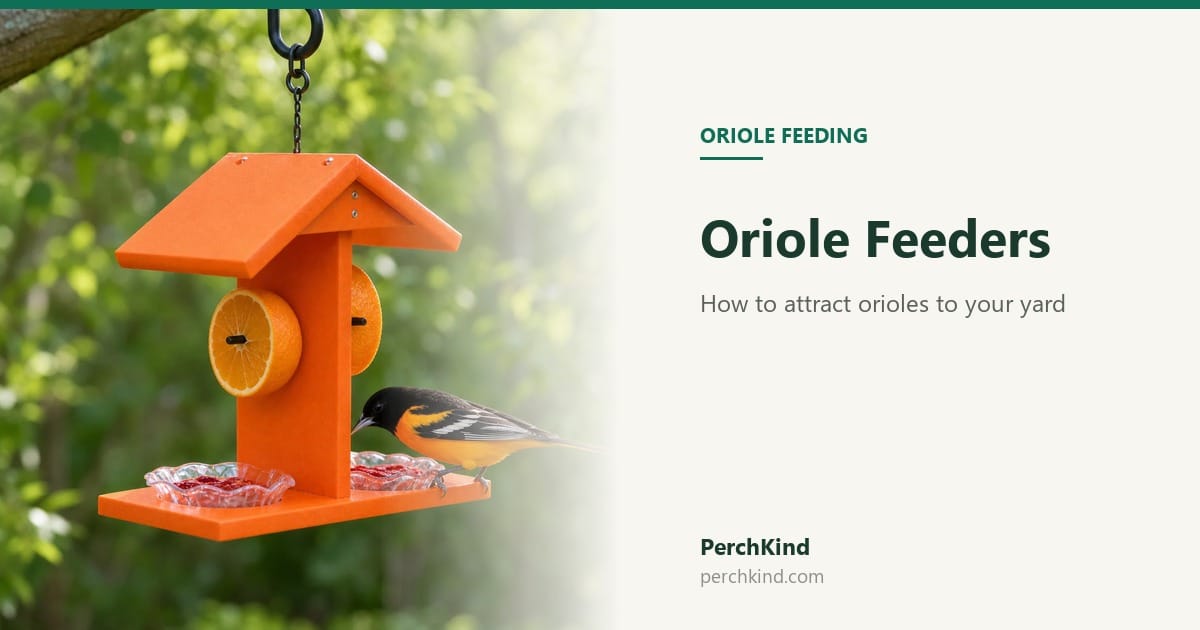
To attract Baltimore Orioles, offer ripe fruit such as orange halves, small amounts of jelly, or plain sugar water in a feeder designed for orioles. Cornell Lab’s Baltimore Oriole account describes these supplements to their natural diet. Choose a format you can keep clean; no food guarantees a visit, and a general seed mix is not the starting recommendation here.
Baltimore and Bullock’s Orioles are seasonal across much of their North American breeding ranges, but timing and winter presence vary. Check local records rather than assuming a single May–August window or an empty feeder for the rest of the year.
This guide concerns Baltimore and Bullock’s Orioles in North America. Their ranges and seasonal presence differ. Old World orioles belong to a different family, so do not transfer these North American feeder recommendations to Europe as a universal rule.
Key takeaways
- Orioles eat insects, ripe fruit and nectar — they are not seed-eaters, so a seed feeder will not work.
- Their long pointed bills are adapted for “gaping”: stabbing soft fruit and opening the bill to release juice.
- They prefer dark-coloured ripe fruit, which is exactly why deep-purple grape jelly is so effective.
- Many Baltimore and Bullock’s Orioles are seasonal visitors; use local species and arrival records rather than fixed nationwide dates.
- Jelly should be a supplement, not a staple. Offer small amounts and clean the cup daily in warm weather.
- Never add red food colouring to nectar. It is unnecessary and offers the bird nothing.
Why orioles ignore seed feeders
Most backyard birds that visit seed feeders are in the finch, sparrow or chickadee families. They have short, thick, conical bills designed to crack open hard seed coats. Orioles are not in that group at all — they belong to the same family as blackbirds and meadowlarks, and their bills evolved for a completely different job.
The bill shape tells you what to offer
An oriole’s long, pointed bill helps it take insects and probe soft fruit. For a backyard feeder, Cornell’s fruit and nectar suggestions are more relevant than treating the bird as a general seed specialist; bill shape alone does not establish that a food can never be eaten.
“Gaping” — the behaviour that explains everything
Orioles feed in a way few backyard birds do. They stab the closed bill into a soft fruit, then open the mouth to cut a juicy swath, and drink the released juice with a brushy-tipped tongue. This is called gaping, and it explains why fruit must be soft and ripe, and why juice-bearing foods work so well. See Cornell Lab’s Baltimore Oriole account.
It also explains the jelly result. Orioles seek out the darkest, ripest fruit available — the deepest-purple grapes, the reddest cherries — and will ignore green grapes and pale cherries even when ripe. Plain grape jelly is dark, soft and juice-rich, which is almost exactly what their feeding behaviour is tuned to find. That is why it works, and it is also why jelly is best understood as a stand-in for ripe fruit rather than a complete diet.
What to put in an oriole feeder
Four things work. The first two are the backbone of any oriole setup.
Orange halves
The classic, and still the best starting point. Cut an orange in half and mount it cut-side out on a spike. Cornell Lab’s own backyard guidance recommends exactly this — hanging orange halves to invite orioles in. Use a real orange, not a plastic imitation; the scent and the juice are the point.
Grape jelly
Cornell Lab’s Baltimore Oriole account recommends only small amounts of jelly and warns against quantities that could soil feathers. Use a shallow, easy-to-clean cup, inspect often and remove spoiled leftovers promptly. Jelly is a supplement, not complete nutrition; no ingredient-specific safety study is claimed here.
Nectar (sugar water)
Use a nectar feeder intended for orioles, not an open seed tray. Project FeederWatch’s feeding guidance describes one part white sugar to six parts water for orioles; follow the exact feeder’s instructions and do not add dye. Inspect and clean frequently, especially in warm weather; discard cloudy or spoiled solution rather than topping it up.
Mealworms
Mealworms are an optional supplemental food where appropriate. Orioles eat varied insects and fruit; a single food such as mealworms or jelly is not a nutritionally complete diet, and visits are not guaranteed.
Types of oriole feeders
Three formats cover almost everything sold for orioles. Most combine two or three food types in one unit.
| Type | What it holds | Best for |
|---|---|---|
| Fruit and jelly feeder | Orange halves on spikes plus shallow jelly cups | Most yards — covers the two foods orioles take most readily |
| Nectar feeder | Sugar water, often with perches sized for orioles | Yards where hummingbird feeders are already up; a useful supplement |
| Combination feeder | Fruit, jelly and nectar in one unit | Buying once; the simplest way to find out what your local orioles prefer |
Choose the food format you can maintain: a fruit holder, a shallow jelly cup, or a properly designed nectar feeder. A combination unit is useful only if each part is suitable and easy to clean; it is not inherently the safest or cheapest choice.
Why the perch matters more than the port
Orioles are larger than hummingbirds, and a feeder designed only for hummingbirds will often be too small for them to settle on comfortably. Look for a feeder with perches long enough to take a bird roughly 7–8 inches (18–20 cm) long. A feeder they cannot perch on steadily is a feeder they will abandon, however good the nectar.
When and where to hang an oriole feeder
Timing and placement matter more for orioles than for almost any other backyard bird, because the window is short.
Put it out before they arrive
Put the feeder out before the expected local spring arrival, using regional sightings rather than a single calendar date. Southern, northern and western populations differ. A later setup can still be found; missing a date does not mean the entire season is lost.
Height and cover
Use a secure, visible hanging point near useful cover that you can reach safely for frequent washing. There is no universal 6–10-foot rule for all yards. Follow mounting instructions and assess nearby glass, cats, wind and cleaning access.
Shade slows spoilage
Fruit and jelly spoil fast in direct sun. A spot with dappled shade through the hottest part of the day will keep food usable noticeably longer, which means less waste and fewer refills.
How to attract orioles: step by step
Work through these in order. The first three do most of the work.
1. Hang the feeder before migration arrives
Use local arrival observations to plan the setup. Timing varies with species, latitude and weather; no date guarantees that a bird will settle in your yard.
2. Start with orange halves only
Offer orange halves on spikes for the first week or two. It is the food Cornell Lab recommends for drawing orioles in, and it tells you whether orioles are using your yard at all before you commit to managing jelly and nectar.
3. Add jelly in a shallow cup
Once you have confirmed birds, add a small amount of plain grape jelly. Keep the portion modest — enough to be found, not enough to coat a bird’s plumage. Refresh daily in warm weather.
4. Add a nectar feeder if they keep coming
Use plain sugar water without dye in a feeder designed for orioles. Inspect frequently and clean at every refill; use the recipe and maintenance requirements appropriate to the exact feeder and local conditions.
5. Plant for them
The longest-lasting fix is not a feeder at all. Cornell Lab points to bright fruits and nectar-bearing flowers — raspberries, crab apples and trumpet vines — as a way to attract orioles year after year. A yard that feeds them naturally holds them longer than one that depends on a jelly cup.
6. Keep it clean and keep it up
Jelly ferments and fruit moulds within a day or two in summer. Wash cups and spikes with hot water regularly, and rinse nectar feeders every time you refill. Damp, spoiled food is the main way an oriole setup goes wrong. The same hygiene principles that apply to cleaning a bird feeder apply here, only more often.
Mistakes to avoid
These six account for nearly every oriole feeder that ends up unused.
Filling it with seed
A general seed offering is not the approach described in Cornell’s Baltimore Oriole guidance. Try its fruit or suitable nectar options, but do not claim that orioles can never eat a particular seed based only on bill shape.
Hanging it too late
Waiting until you see orioles to put the feeder out means competing with every other food source in the area. Early placement catches birds on arrival, when they are actively searching for reliable feeding sites.
Hanging it too low or in the open
Choose a reachable, stable spot near cover rather than assuming height alone determines visits. Do not mount so high that refilling and daily food checks become unsafe.
Using red dye in the nectar
Unnecessary and nutritionally pointless. Plain white sugar dissolved in water is all that is needed. Food colouring adds nothing the bird requires.
Letting jelly sit for days
Remove spoiled jelly and clean the cup rather than adding fresh food over it. Warm-weather inspection matters, but this guide has no evidence that spoiled jelly is the most common cause of birds leaving.
Treating jelly as a complete diet
Jelly is a small supplemental offering, not a complete diet. Diverse native plants and appropriate habitat support natural foraging; mealworms alone are not complete nutrition either.
Quick oriole season checklist
- ☐ Setup timed to expected local arrivals, not a universal mid-April deadline
- ☐ Secure, reachable mounting near useful cover, with safe glass and predator sightlines
- ☐ Orange halves on spikes — fresh, not plastic
- ☐ Plain grape jelly in a shallow cup, small amount
- ☐ Suitable oriole nectar feeder, plain sugar water, no dye; recipe checked against its instructions
- ☐ Perches long enough for a 7–8 inch bird
- ☐ Jelly replaced daily; nectar changed every 2–3 days
- ☐ Cups and spikes washed with hot water regularly
- ☐ Mealworms offered during the breeding season if possible
Frequently asked questions
What is the best food to attract orioles?
Cornell recommends orange halves, small amounts of jelly and suitable nectar feeders for Baltimore Orioles. These are supplements to a varied natural diet, not complete nutrition or a guarantee of visits.
Why won’t orioles come to my seed feeder?
A seed-only station may not offer the foods described in Cornell’s Baltimore Oriole guidance. Try suitable fruit or an oriole nectar feeder where these birds occur, while checking local presence, season, placement and hygiene.
Is grape jelly bad for orioles?
Cornell advises only small amounts so jelly does not soil feathers. Treat it as a supplement, keep the serving shallow and clean, and remove spoiled food promptly. This guide does not establish that a particular syrup ingredient guarantees safety or harm.
When should I put out an oriole feeder?
Before the expected local spring arrival where feasible. Timing varies by species, latitude and weather; use regional observations instead of one date for all of the United States and Canada.
How high should an oriole feeder hang?
Choose a stable hanging point near useful cover that you can safely reach for frequent cleaning. Follow the model’s instructions and assess glass, predators and wind. This guide does not establish a universal 6–10-foot requirement.
Should I put red dye in oriole nectar?
No. Use plain white sugar and water in a feeder designed for orioles. Project FeederWatch describes one part sugar to six parts water; check the exact feeder’s instructions and clean it frequently.
Do orioles eat mealworms?
Orioles eat insects and may take offered mealworms. Treat them as a supplement, not a complete diet or a guaranteed way to attract breeding birds.
How long do orioles stay?
Presence varies by species, latitude and season. Check regional records for the expected breeding, migration and winter periods rather than assuming a fixed four-month visit or no winter birds anywhere in North America.
Make your yard an oriole stopover
Prepare a clean, reachable station around expected local arrivals. Begin with an offering you can maintain, observe actual use and add other suitable foods only if needed. Timing does not guarantee residency or the return of the same birds.
PerchKind stocks oriole feeders built around the points in this guide — orange spikes sized for real fruit, shallow jelly cups that are easy to rinse daily, and perches long enough for a full-grown oriole to settle on properly. Browse the full bird feeder collection, or start with the hanging oriole feeder with two jelly cups and orange holders, which covers both of the foods orioles take most readily in one unit.
If you are setting up a feeder station for the first time, our bird feeder guide covers placement, seed choice and squirrel control for every feeder type. Everything else — species profiles, water, housing and seasonal timing — is collected under birding guides.
Before hanging a feeder, use our bird feeder placement guide to review hazardous glass, shelter, predator sightlines and access for routine cleaning.
Sources and editorial notes
- Cornell Lab of Ornithology, All About Birds — Baltimore Oriole species account (diet, backyard feeding guidance, gaping behaviour, fruit colour preference)
- Cornell Lab of Ornithology — Bullock’s Oriole species account (western range and feeding habits)
- Cornell Lab of Ornithology, Project FeederWatch — Common Feeder Birds list (regional feeder visitors)
Written for PerchKind. Feeding recommendations follow Cornell Lab of Ornithology guidance, which advises small amounts of jelly and warns against over-supplying it. Measurements are given in both imperial and metric. Oriole arrival dates vary by latitude — southern readers should expect birds earlier than the April guideline, northern readers later.
Editorial update, 17 October 2026: Source links and factual qualifications reviewed by the PerchKind Editorial Team. This is an editorial guide, not an independent product trial. Check local wildlife advice and the exact model’s instructions.