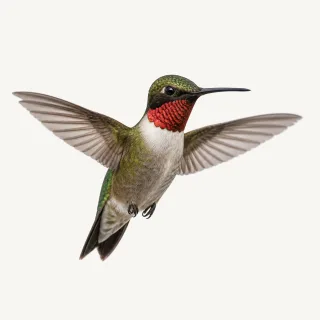

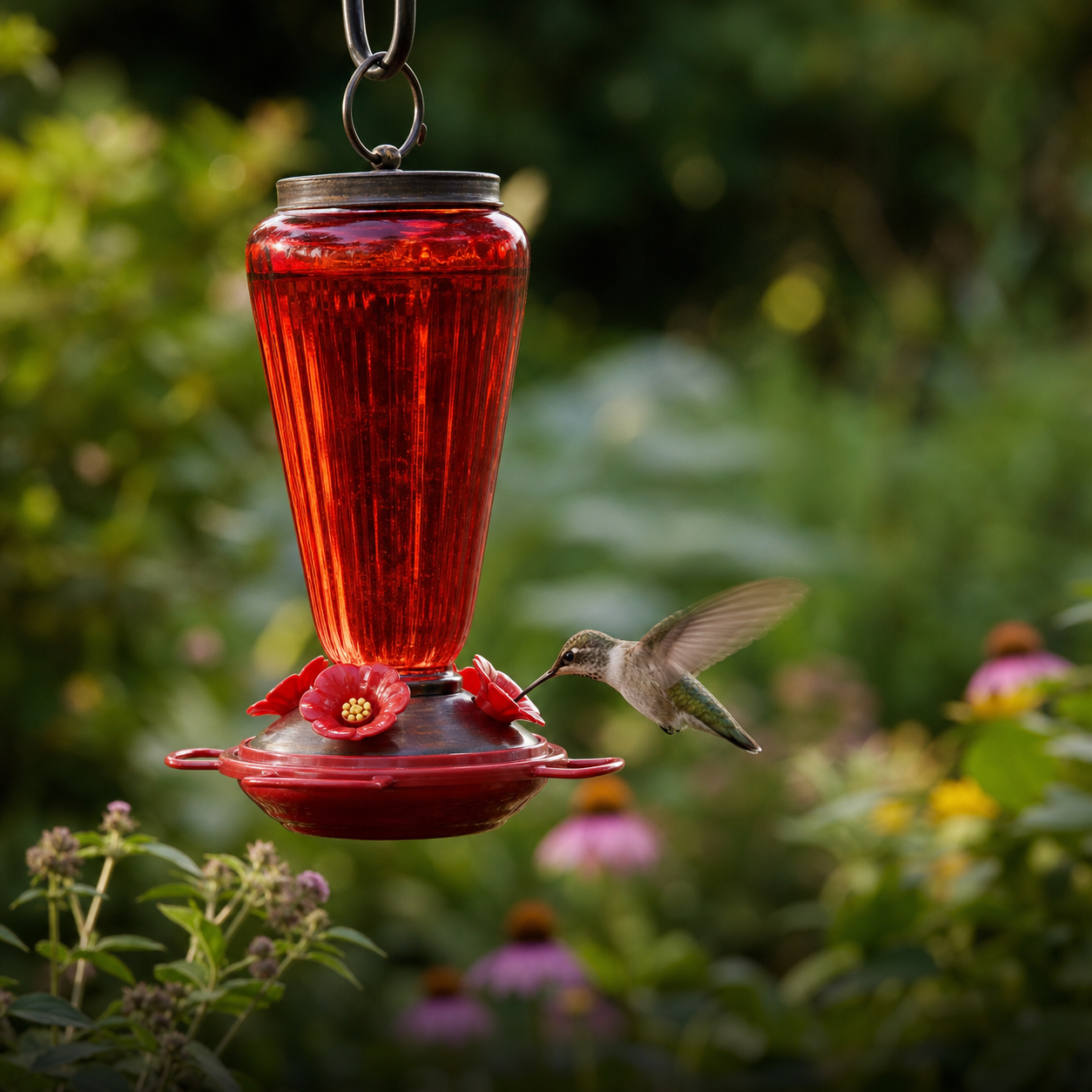
16 oz Glass Hummingbird Feeder with Ant Moat
$24.99

A bird bath provides drinking and bathing water and may attract birds that do not use seed feeders. Choose a shallow, easy-to-clean basin and a location where you can change the water regularly.
Depth, placement and cleanliness matter more than decoration. Use water no deeper than 1 inch (2.5 cm) at the edge, gently sloping to a maximum of 2 inches (5 cm) in the centre. Keep the basin accessible for frequent water changes and cleaning, with nearby escape cover but no dense cover immediately beside it where a cat could hide.
This guide covers choosing, siting and maintaining a bird bath, and links to our detailed guides on specific types — solar, heated, hanging and ground-level. If you are new to backyard birding altogether, our bird feeder guide covers the feeding side, and the two work best when planned together.
Feeding stations attract a predictable group: seed-eaters. Water attracts almost everything else.
A gentle dripper or fountain can help birds notice a bath. It does not guarantee more visits, reveal water depth or make dirty water safe; still-water baths can also be useful when kept shallow and clean.
The seasonal case is just as strong. Through winter, natural water sources freeze and birds still need to drink. During migration, exhausted birds seek out water before food. A reliable bath in a garden becomes a known stopover point, and birds return to it.
Four formats cover almost everything on the market. The right choice depends on your space, your climate and whether you want moving water.
| Type | How it works | Best for |
|---|---|---|
| Solar fountain bath | Photovoltaic panel drives a low-voltage pump; no wiring or outdoor outlet | Sunny spots; moving water with no running cost |
| Heated bath | Thermostatically controlled heater keeps water above freezing | Cold-winter regions where natural water freezes solid |
| Hanging bath | Hangs from a bracket, hook or branch | Small yards and balconies; keeps water above cat height |
| Ground or pedestal bath | Freestanding, at ground level or on a column | Open gardens; the classic look and the easiest to clean |
If you already own a plain basin, a floating solar fountain is the cheapest way to test whether moving water changes your bird traffic before committing to a new bath. If you are starting fresh, an integrated unit with a serviceable pump and a shallow rim is the simpler long-term choice.
Placement decides whether a bath gets used. Three rules cover most of it.
Beyond that, the practical rule is visibility. A bath you can see from a window is a bath you remember to refill and clean. If you never look at it, it will be empty when the birds need it most.
This is the part most people underestimate. A bird bath is a communal water source, and a dirty one spreads disease between every bird that visits.
The same hygiene thinking that applies to feeders applies here. Our bird feeder cleaning guide covers disinfecting ratios and the routine in more detail, and most of it transfers directly.
Birds need water in winter as much as in summer, and natural sources are locked up for months. Two approaches work:
A heated bath uses a thermostatically controlled element to keep water just above freezing. This is the most reliable solution in genuinely cold climates, and it runs at low wattage because it only has to hold a small volume of water above 32°F (0°C) rather than heat it.
A solar bath will not help in hard frost — most units have no battery and simply stop when the panel is shaded or the sun is weak. If your winters are mild and the bath only ices over at night, a solar unit can still be useful during the day.
Whichever you use, keep the depth shallow and break ice with warm water rather than force. Never pour boiling water into a frozen basin; thermal shock cracks ceramic and stone.
Detailed guides for each type, with setup checklists and troubleshooting:
PerchKind stocks bird baths and solar fountain baths built around the practical points in this guide — a shallow rim depth small birds can actually use, a pump you can open and clean, and mounting options for gardens without open ground.
Start with the Solar Cascade hanging bird bath fountain if you want moving water and have a sunny spot, or the decorative ground-stake bird bath with leaf feeder if you want a low-level bath that doubles as a feeding station.
Written for PerchKind. Dimensions are given in both imperial and metric. This page is the hub for all PerchKind bird bath content — it links to every bird bath guide we publish, and is updated as new guides are added.