How to Choose a Suet Bird Feeder: Styles, Woodpecker Fit, and Pest Control
Compare basic cages, tail-prop, bottom-access, outer-cage, and combo suet feeders—plus melting temperature limits, cleaning steps, and squirrel vs. starling trade-offs.
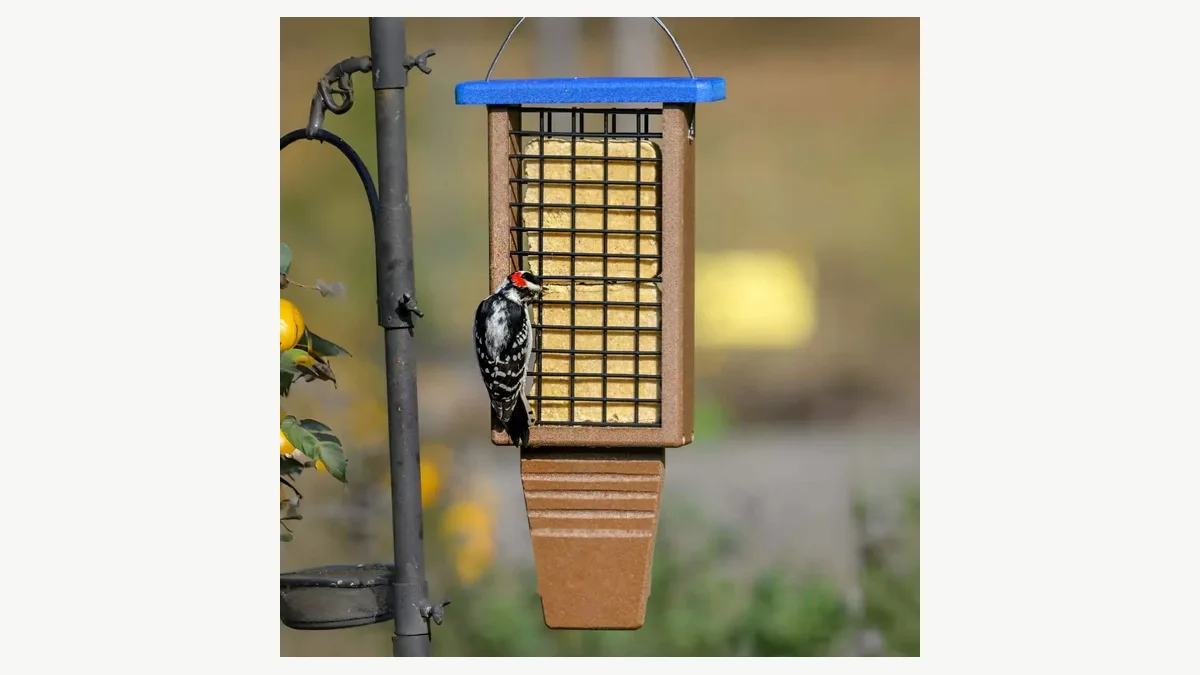
To choose a suet bird feeder, match the feeder structure to the birds you see and the specific problem in your yard. Start with a roofed wire suet cage if you are new to suet feeding. Choose a tail-prop model if medium or large woodpeckers visit, a bottom-access (upside-down) feeder if starlings empty cakes quickly, or an outer exclusion cage—or a pole with a baffle—when squirrels dominate. Avoid offering soft or melting suet in warm weather, and clean the feeder every one to two weeks.
A suet feeder holds a solid block of rendered fat—often blended with peanuts, nuts, or insects—so clinging birds can peck out high-energy bites without carrying the whole block away. Most models look similar at a glance, yet small structural choices decide whether woodpeckers stay to feed, whether starlings clear a cake in a single afternoon, and how easily you can scrub greasy residue in cold weather. If you are deciding where suet fits alongside seed stations, start with our bird feeder selection guide or our winter bird feeding guide.
How the 5 Main Suet Bird Feeder Styles Compare
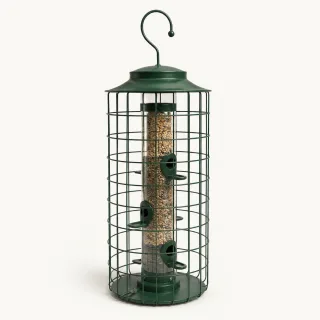
Before comparing individual models, separate two terms that product listings often mix up: a suet cage is the inner wire basket that holds the suet block directly, while a caged suet feeder (or outer-cage feeder) surrounds that inner basket with a second, wider wire barrier to restrict access by body size. Those two designs behave very differently in a backyard.
| Suet feeder style | How it works | Best suited for | Main trade-off |
|---|---|---|---|
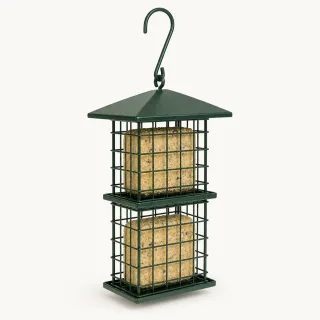
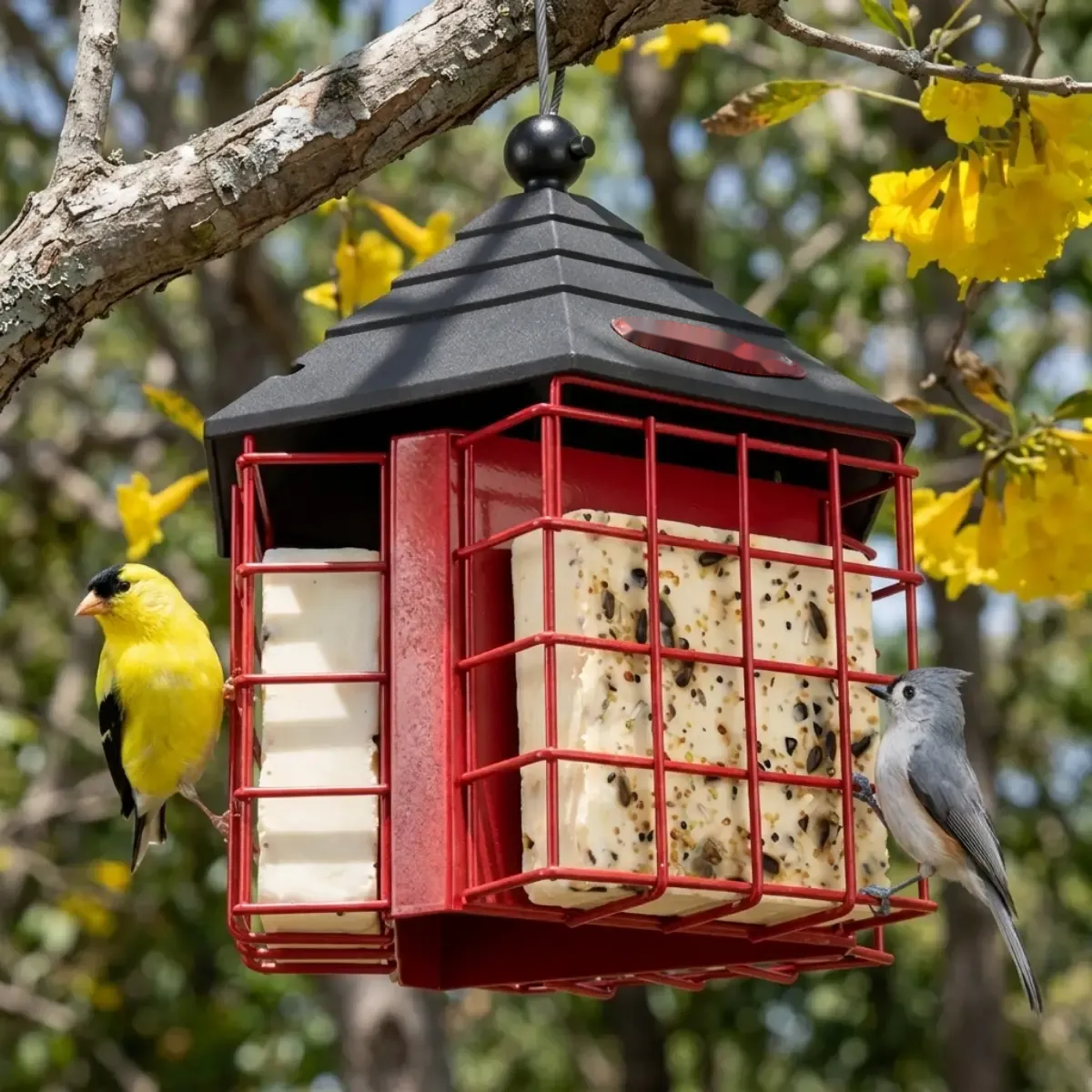
| Basic or roofed wire cage | Holds a suet block in wire mesh with open feeding on the front and back; a roof shields rain and sun. | First-time suet feeders, quiet yards, chickadees, nuthatches, titmice, and small woodpeckers. | Minimal resistance against squirrels, starlings, grackles, or jays. |
| Tail-prop suet feeder | Adds a solid vertical panel below the cage so clinging woodpeckers can brace their stiff tail feathers. | Yards visited by Hairy, Red-bellied, Northern Flicker, or other medium-to-large woodpeckers. | Open sides still allow starlings and squirrels to reach the cake unless paired with smart placement. |
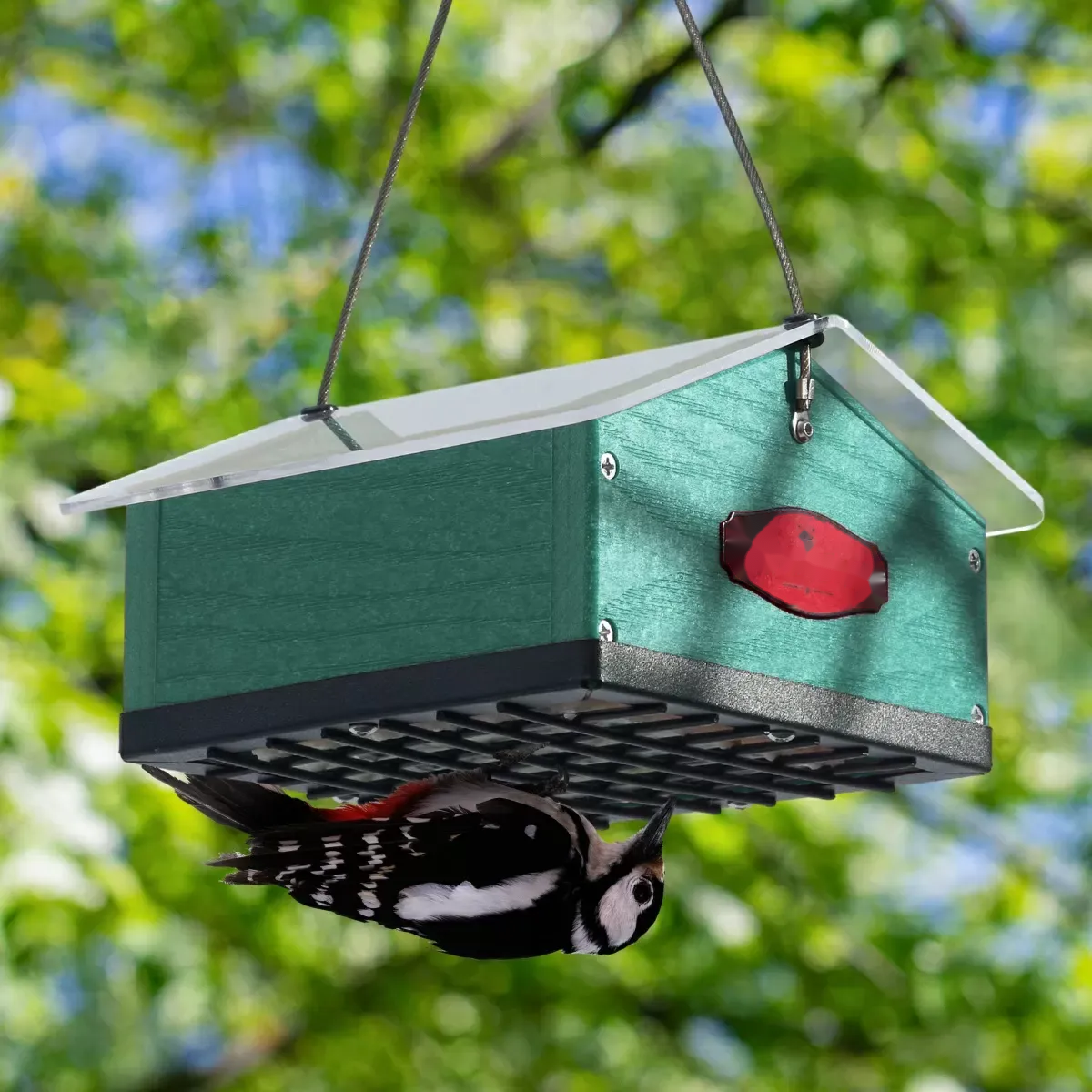
| Bottom-access (upside-down) feeder | Covers the top and sides with a solid roof so birds must cling underneath to peck upward through the bottom mesh. | Yards overrun by European Starlings or grackles where woodpeckers, chickadees, and nuthatches visit. | Discourages starlings by posture, not by blocking squirrels that can hang or climb onto the feeder. |
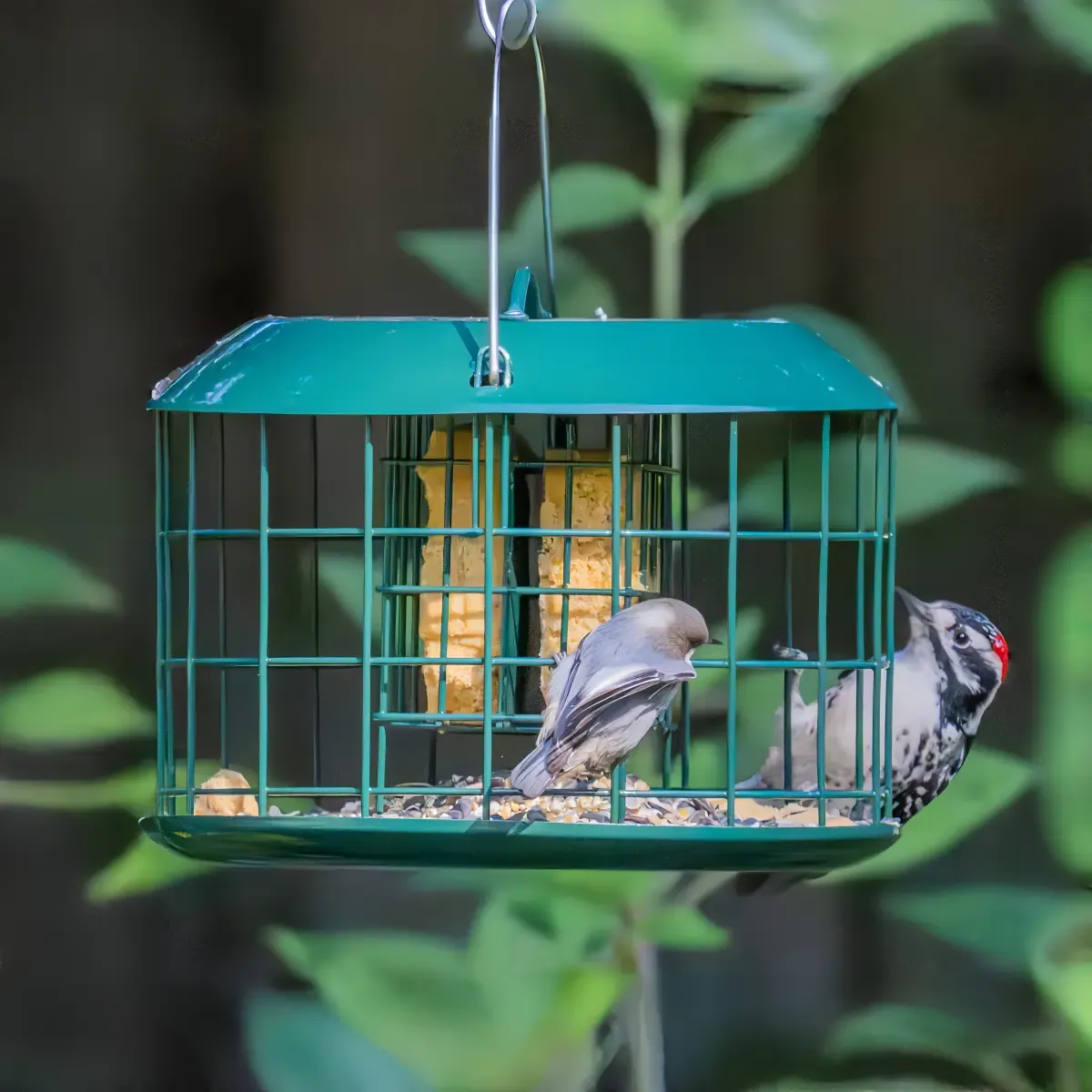
| Outer-cage exclusion feeder | Surrounds the inner suet holder with a larger protective wire cage spaced to admit small birds only. | Yards facing both squirrels and starlings when protecting small clinging birds is the priority. | The same mesh spacing that blocks squirrels and starlings can also exclude larger woodpeckers. |
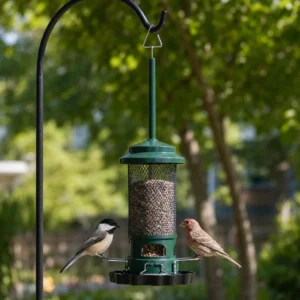
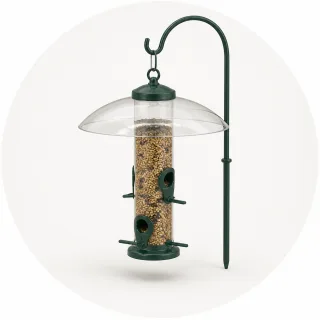
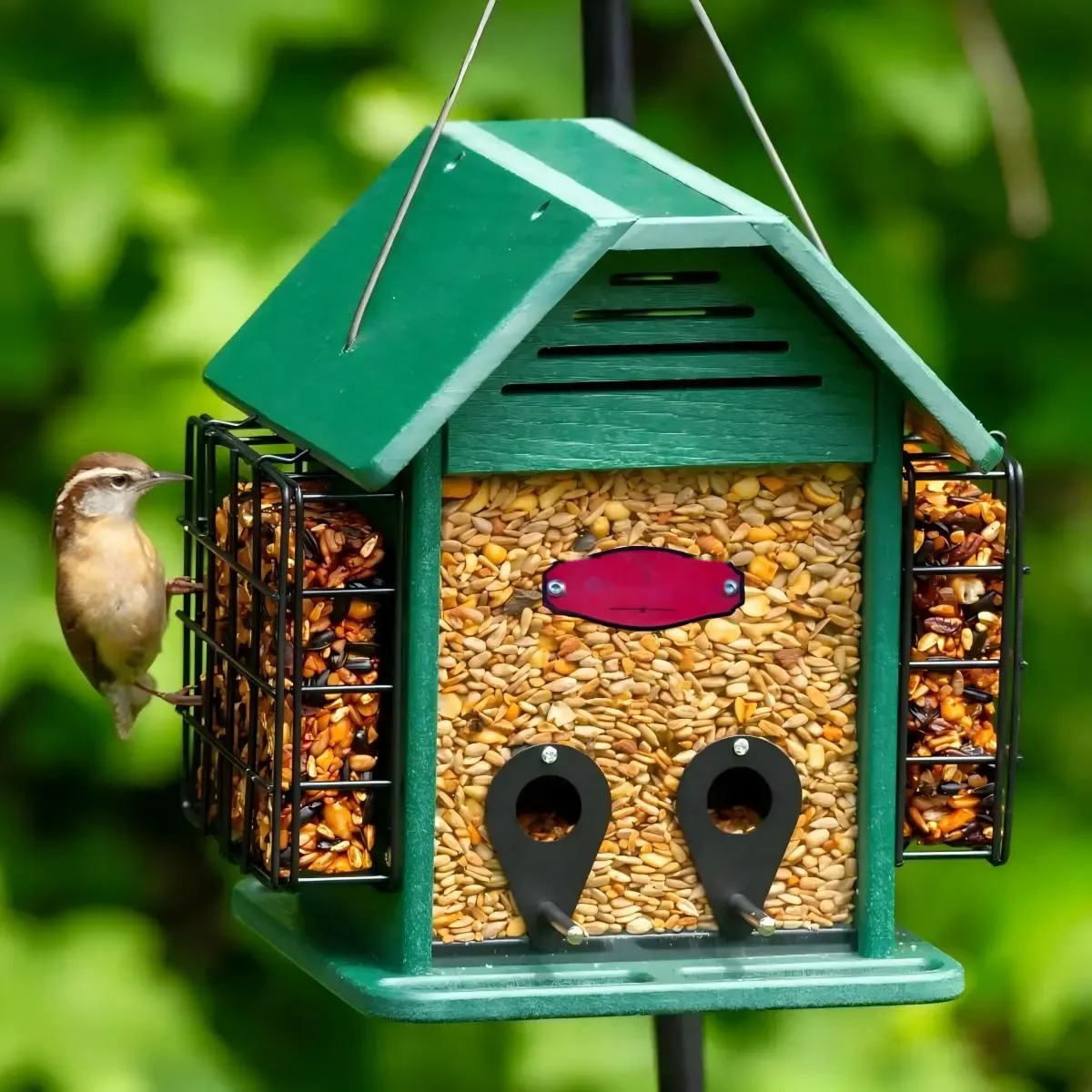
| Seed-and-suet combo feeder | Attaches side suet baskets to a central hopper or mesh seed body so one hanging point serves two foods. | Small yards or single-pole setups aiming to feed mixed seed eaters and clinging birds in one spot. | Side cages remain open to squirrels and starlings; heavier when full and requires checking both food types. |
No single style fits every yard. According to Cornell Lab of Ornithology’s feeder guide, feeder shape and access orientation shape which birds feed comfortably and which larger visitors get slowed down. If you are testing suet for the first time, a straightforward covered cage such as the Roofed Wire Suet Feeder with Lower Perch ($25.99) lets you see which species actually visit your area before paying for specialized pest controls. You can compare all current styles in the PerchKind suet feeder collection.
Tail-Prop Suet Feeders: Short vs. Long Backpanels for Woodpeckers
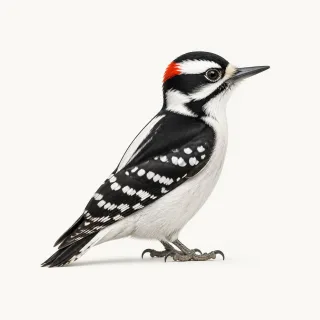
Woodpeckers forage differently from perching songbirds. On a tree trunk, they grip the bark with their feet and press their stiff, pointed tail feathers downward as a third point of contact. On a small bare wire cage, agile Downy Woodpeckers usually manage fine, but medium and larger woodpeckers—such as Hairy, Red-bellied, Northern Flicker, or Pileated Woodpeckers—have nowhere to brace their tails and often shift awkwardly or cut visits short.
That is why the length of the lower backpanel matters more than the label “tail prop” alone:
- Short-backpanel tail-prop feeders provide a compact lower resting strip beneath the suet cage. They stay lighter on tree hooks or narrow branches and suit yards where smaller clinging birds—Downy Woodpeckers, chickadees, titmice, and nuthatches—make up most visits.
- Long-backpanel tail-prop feeders extend farther down below the wire chamber, giving larger woodpeckers room to press their tail feathers flat while feeding lower on the cake. Pair a longer model with a sturdy bracket or short hanger so the feeder does not twist or swing when a heavier bird lands.
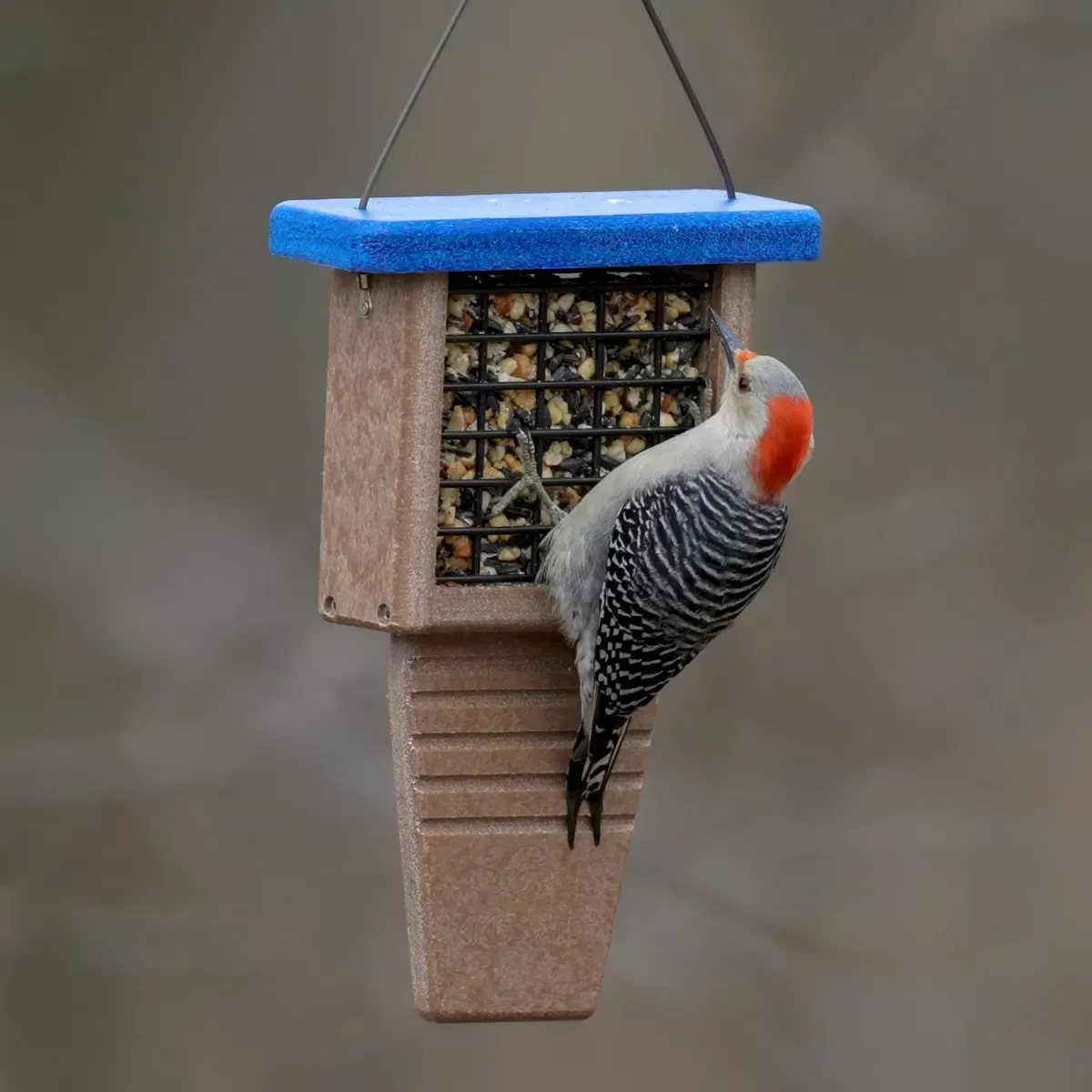
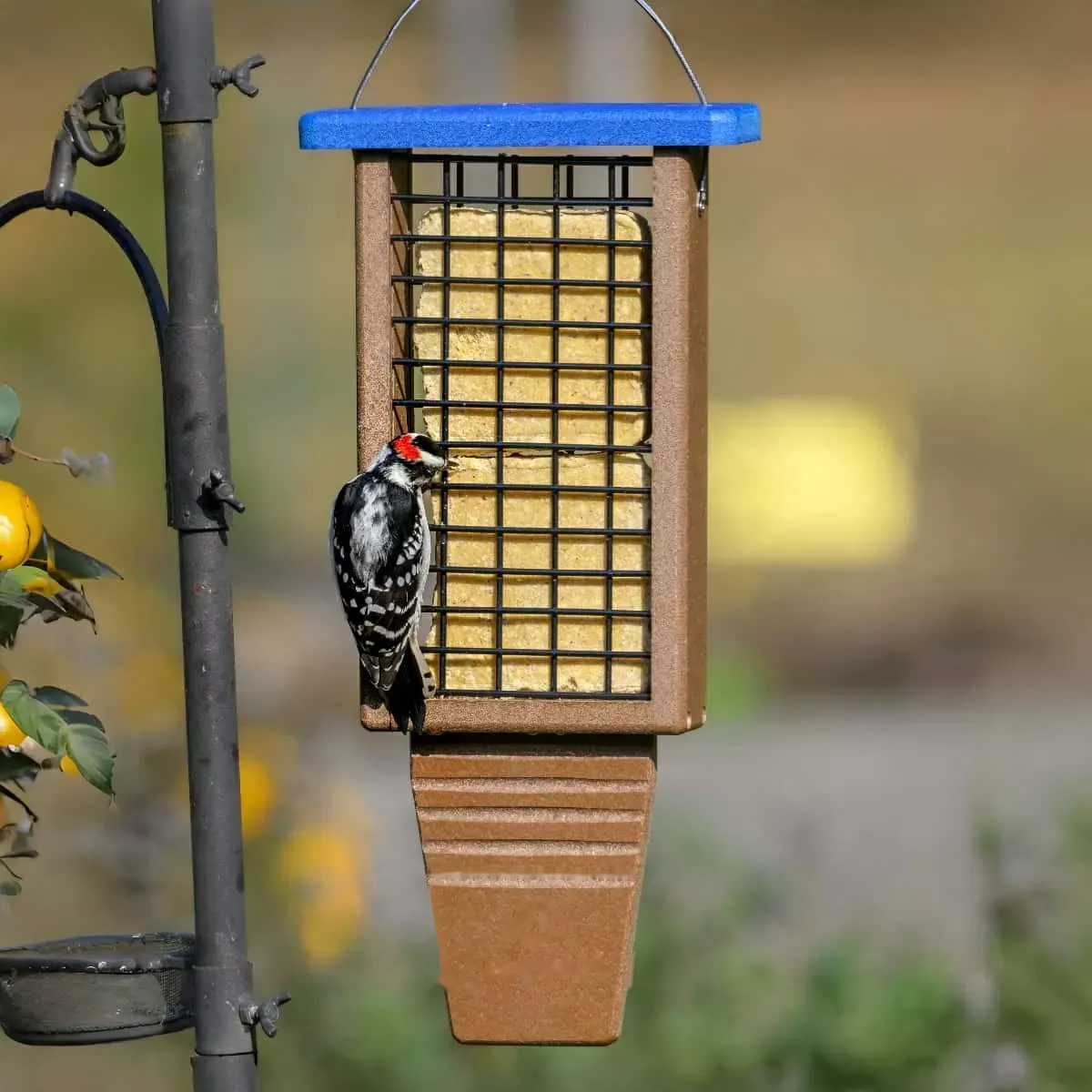
Keep realistic expectations about rare visitors. Large species such as Pileated Woodpeckers depend heavily on mature woodland and dead timber nearby; even a long tail-prop feeder cannot pull them into a treeless yard. Look for smooth, non-porous surfaces you can scrub clean around the backpanel—crevices behind a tail board trap grease and crumbs if ignored.
Squirrels vs. Starlings: Why One Design Rarely Stops Both
One of the most common buying mistakes is assuming a single “pest-resistant” suet feeder solves both squirrels and European Starlings with zero trade-offs. In practice, squirrels and starlings beat feeders in different ways: squirrels climb, jump, pry open weak latches, and hang by their hind feet, while starlings arrive in noisy flocks and perch upright or sideways to strip exposed cakes in hours.
| Setup or feeder design | Helps deter starlings? | Helps deter squirrels? | Admits medium/large woodpeckers? | Key limitation |
|---|---|---|---|---|
| Bottom-access (upside-down) feeder alone | Yes (strong) | Low on its own | Usually yes (they cling inverted well) | A determined squirrel hanging from a branch or bracket can still reach underneath. |
| Outer-cage exclusion feeder | Yes (by body size) | Moderate to strong (against adult gray squirrels) | Often no (blocks larger woodpeckers and cardinals) | Mesh openings small enough to block starlings and gray squirrels also restrict larger desirable birds; tiny red squirrels or chipmunks may still test gaps. |
| Bottom-access feeder + baffled freestanding pole | Yes (strong) | Strong (when clear of launch points) | Yes | Requires open yard space away from trees, fences, and roofs—not feasible on small balconies. |
| Standard or tail-prop cage + hot-pepper suet | No (birds do not taste capsaicin) | Helps discourage mammals | Yes | Capsaicin deters squirrels and mammals, not starlings or grackles; handle carefully and wash hands after refilling. |
As All About Birds explains, downward-facing suet feeders work because woodpeckers, nuthatches, and chickadees are built to cling upside down, whereas starlings and jays struggle to hover or feed comfortably from underneath. Still, an upside-down roof does not turn a branch-hung feeder into a squirrel barrier. If squirrels are also raiding your suet, mount the bottom-access feeder on a freestanding pole with a properly positioned baffle—our guide to keeping squirrels off bird feeders walks through clearance distances and humane setup options.
If you live in a tight yard or patio without room for a baffled pole and mainly want to protect chickadees, nuthatches, wrens, and Downy Woodpeckers, an outer-cage model is the more direct physical barrier—provided you accept that bulkier woodpeckers may not fit through the outer grid.
Single Cage, Multi-Cake, or Seed-and-Suet Combo: Match Capacity to Your Yard
Larger capacity sounds convenient because it promises fewer refills, but in a quiet yard or a first-time setup, holding multiple cakes out in rain, thaws, or mild spells simply leaves fat exposed long enough to soften, mold, or turn rancid. Match the feeder’s holding style to how fast your birds actually eat:
- Start small in a new or low-traffic yard: A single-cake covered cage (or cutting a commercial cake in half) lets you gauge local demand without wasting food. If a cake sits untouched for over a week, check placement and visibility—our troubleshooting guide on why birds are not using a new feeder helps narrow down the cause.
- Upgrade to a multi-sided or multi-cake feeder only after traffic builds: When regular flocks of chickadees, nuthatches, and woodpeckers empty a single cake in a few days, a multi-sided station gives several birds room to cling without constant chasing.
- Use a seed-and-suet combo when hanging space is tight: A central seed chamber with twin side suet baskets consolidates black-oil sunflower seed and suet onto one sturdy hook or pole. Remember the maintenance rule from our hopper bird feeder guide: inspect both the seed tray and the side suet cages after wet weather so damp seed never hides behind dry layers.
Temperature Limits, Suet Types, and When to Stop Offering Suet
Your choice of suet cake matters just as much as the metal cage holding it. Traditional suet is the hard fat around cattle or sheep kidneys, and the Georgia Department of Natural Resources buyer’s guide to suet and bird puddings highlights two label details most shoppers overlook: first, fat content varies dramatically—high-energy plain suet can be around 95% fat, while heavily filled budget blocks drop as low as 15% fat; second, blocks packed with cracked corn and cheap filler grains break apart more easily in wet weather and tend to attract European Starlings and House Sparrows.
Watch local temperatures closely so suet never turns into a health hazard:
- Raw butcher suet: Only suited to consistently freezing weather. Cornell Lab’s All About Birds warns that raw suet turns rancid quickly once temperatures climb above freezing (32°F / 0°C).
- Vegetable-oil-based cakes: Soften earlier than beef tallow. Birds Connect Seattle notes that vegetable oils have lower melting points around 75–77°F (24–25°C).
- Rendered beef suet cakes: Hold their shape longer, but Birds Connect Seattle notes that beef fat melts above 90°F (32°C)—and direct afternoon sun can push a dark metal cage well above the shaded air temperature.
- No-melt suet dough: Formulated with binders such as cornmeal or peanut butter to stay firmer in mild warmth, yet it still needs daily checks and shade.
Why melting suet is more than a mess: Softened or liquefied fat smears onto a bird’s belly and face feathers, matting the plumage that insulates and waterproofs the bird. During spring and summer nesting, oil transferred from an adult bird’s feathers onto eggs can clog shell pores and harm developing embryos. If a cake feels greasy, sags through the mesh, smells sour, or shows visible mold, take it down immediately and discard it. In cool winter conditions, Birds Connect Seattle recommends discarding an uneaten cake after about a week (or slightly longer in steady cold) rather than leaving stale fat outside indefinitely. Store spare cakes in a cool, dry place—or refrigerate them—to prevent spoilage and pests.
Safe Placement, Window Protection, Cleaning, and Bear-Country Rules
A well-chosen feeder still fails if it is hung in full sun, positioned where predators hide, or left unwashed between refills. Follow a repeatable setup and care routine:
- Hanging height and stability: Hang the feeder roughly 5–6 feet (1.5–1.8 m) off the ground so you can inspect latches and refill safely without a ladder. Keep a steady support—a short hanger or sturdy arm limits swinging in winter wind—and place it within sight of trees or shrubs for escape cover without overhanging dense bushes directly underneath where roaming cats can wait.
- Window collision safety: Do not rely on feeder distance alone to keep birds safe around reflective glass. Treat hazardous windows on the outside with closely spaced exterior markings or exterior screens. See our bird feeder placement guide for step-by-step window and predator checks.
- Cleaning schedule: Project FeederWatch recommends cleaning seed and suet feeders roughly every week or two, and more often during wet weather or heavy bird traffic. Empty leftover crumbs, scrub grease from hinges, roofs, and corners with warm water and mild dish soap (disinfecting periodically as detailed in our bird feeder cleaning guide), rinse thoroughly, and let every part dry completely before loading a fresh cake. Wear gloves, wash your hands afterward, and rake or sweep oily crumbs below the feeder so rodents are not drawn in.
- Sick birds or bear activity: If you notice lethargic, fluffed-up birds or eye/respiratory symptoms, pause feeding, clean and disinfect affected feeders, and follow current local wildlife agency guidance (Project FeederWatch). In bear country, remove suet feeders whenever bears are active—suet is a high-calorie attractant, and squirrel baffles do not stop bears. As Connecticut DEEP’s winter feeding guidance notes, bear activity windows vary by region and winter weather, so always check your local wildlife agency’s current dates.
Suet Bird Feeder FAQ
Why are birds ignoring my new suet feeder?
Birds often take days or weeks to discover a new food source, especially if natural insects or mast are plentiful. Check that the feeder hangs near mature trees or cover where woodpeckers and nuthatches already forage, is not swinging heavily in the wind, and holds a fresh, firm cake (peanut-based suet often draws woodpeckers more readily than seed-heavy filler blocks). If a cake sits untouched for more than a week in mild weather, discard it rather than leaving stale fat out.
Do upside-down suet feeders keep squirrels out?
Not reliably on their own. Bottom-access designs discourage European Starlings and grackles because those birds struggle to cling upside down, but squirrels can hang by their hind feet from nearby branches, railings, or hooks to reach underneath. For squirrel control, pair a bottom-access feeder with a baffled freestanding pole clear of launch points, or consider an outer-cage design if excluding larger woodpeckers is acceptable.
What is the difference between a suet cage and a caged suet feeder?
A suet cage is the standard wire basket that holds a suet block directly and allows access by birds of almost any size. A caged suet feeder adds a second, larger protective wire cage around the inner suet holder so smaller clinging birds can pass through while squirrels and larger nuisance birds are blocked—though larger woodpeckers may also be excluded.
Can I feed suet in summer?
Only if you monitor the cake closely and switch away from raw or low-melting-point suet. Beef tallow melts above 90°F (32°C) and vegetable-oil cakes soften around 75–77°F (24–25°C). Hang the feeder in full shade, choose a firm no-melt commercial suet dough if summer feeding suits your climate, and remove it immediately if the surface becomes soft, greasy, or foul-smelling.
How often should I clean a suet bird feeder?
Follow Project FeederWatch guidance and wash suet feeders about once every week or two—and sooner during wet, warm, or high-traffic periods. Open latches fully, scrub grease out of roof seams and corners, rinse thoroughly, and let the feeder dry completely before adding a new cake.
Should I hang a suet feeder next to my seed feeder?
You can place them in the same general viewing area, but giving a suet feeder its own hook or a bit of spacing helps reduce crowding if starlings, jays, or dominant flock birds gather at your hopper or platform tray. If yard space only allows one hanging point, a seed-and-suet combo feeder offers both foods together with the trade-off of less selective pest control.
Ready to compare current in-stock styles? Browse the PerchKind suet feeder collection, explore the full bird feeder catalog, or read more practical setup articles in PerchKind Birding Guides.
Sources referenced inline:
- Cornell Lab of Ornithology, All About Birds — How to Choose the Right Kind of Bird Feeder
- Cornell Lab of Ornithology, Project FeederWatch — Feeding Birds
- Birds Connect Seattle — Bird Feeding 101: Suet
- Georgia Department of Natural Resources, Wildlife Resources Division — Out My Backdoor: Buyer’s Guide to Suet, Bird Puddings
- Connecticut Department of Energy and Environmental Protection (DEEP) — Guide to Winter Bird Feeding
Editorial note: Written for PerchKind. Product photos shown above are supplier product images of current in-stock listings provided as structural examples; this guide does not report independent field trials, laboratory tests, or guaranteed bird visits. Dimensions, materials, and included hanging hardware vary by model—always check the current product page before ordering.