How Full Should a Hummingbird Feeder Be? Match Nectar to Use
Separate reservoir capacity from the amount you offer. Use cleaning, leftovers and model instructions to choose a practical nectar fill without a universal dose.
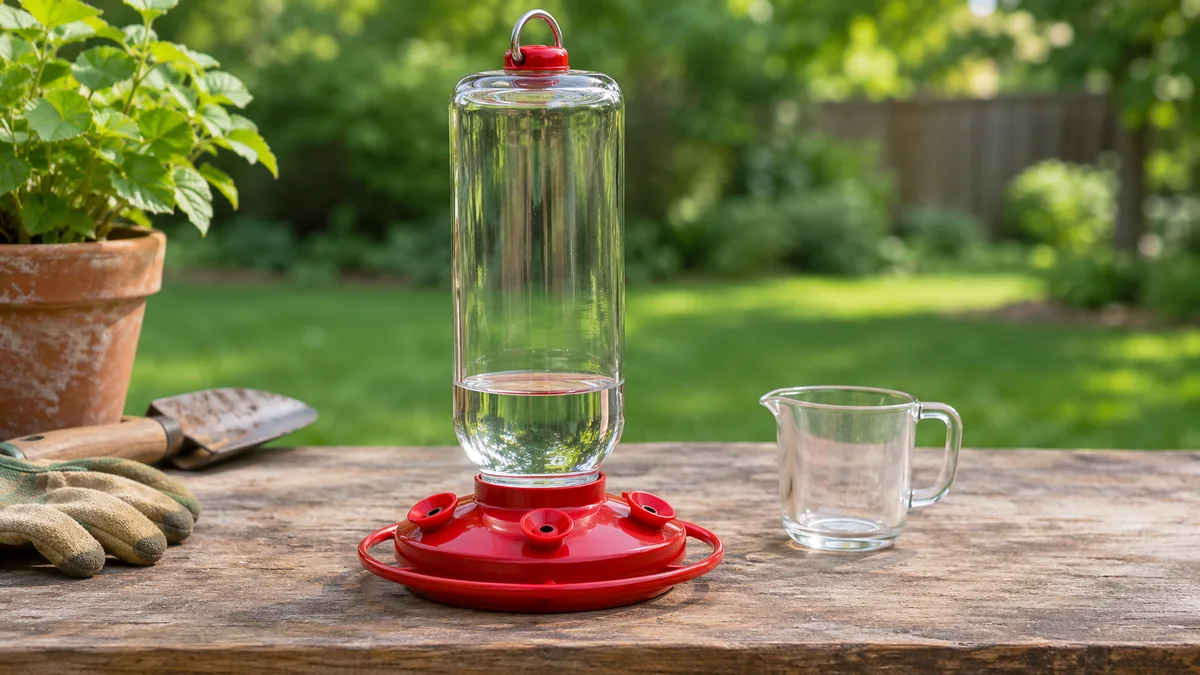
A hummingbird feeder does not need a full reservoir just because it has room for more nectar. Choose an amount you can replace at the next cleaning, while following the fill limits and assembly instructions for your particular feeder. If much of the nectar is still there when you clean, offer less next time. If it empties early, check for leaks before assuming the birds drank it all.
This guide is for people feeding wild hummingbirds where they occur in the Americas. It addresses how much prepared nectar to put outside, not a different recipe for each feeder size. There is no single full, half-full or ounce rule that fits every design and yard.
Capacity is not a required serving
Separate four different quantities: the reservoir’s stated capacity, the amount you offer, the operating fill level specified for that model, and the batch you mix in the kitchen. A large batch does not have to go outside at once, and a large bottle is not a daily feeding target.
The International Hummingbird Society advises against filling feeders completely when the nectar is not being consumed between changes. Adjust the offering rather than keeping leftovers outside longer to avoid waste.
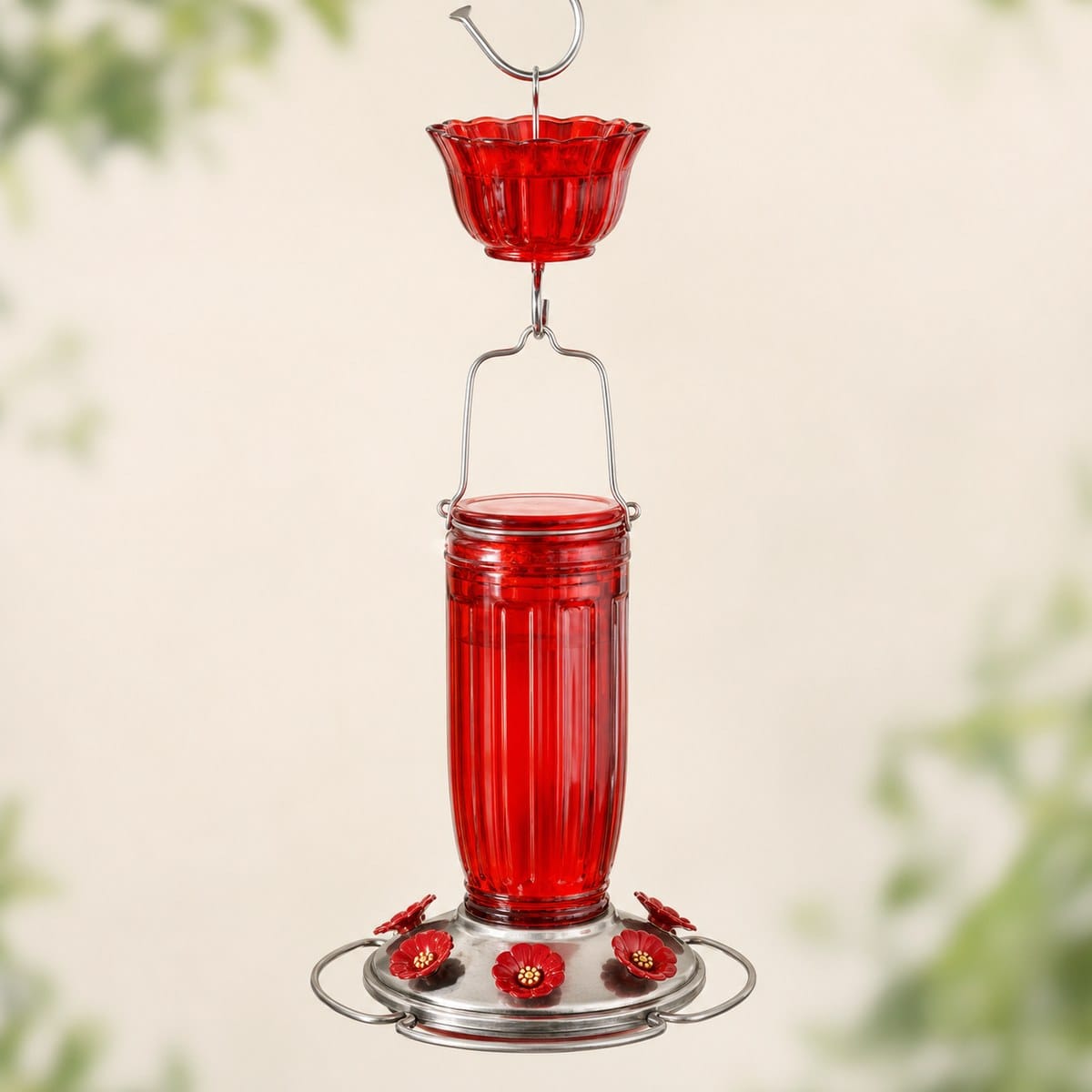
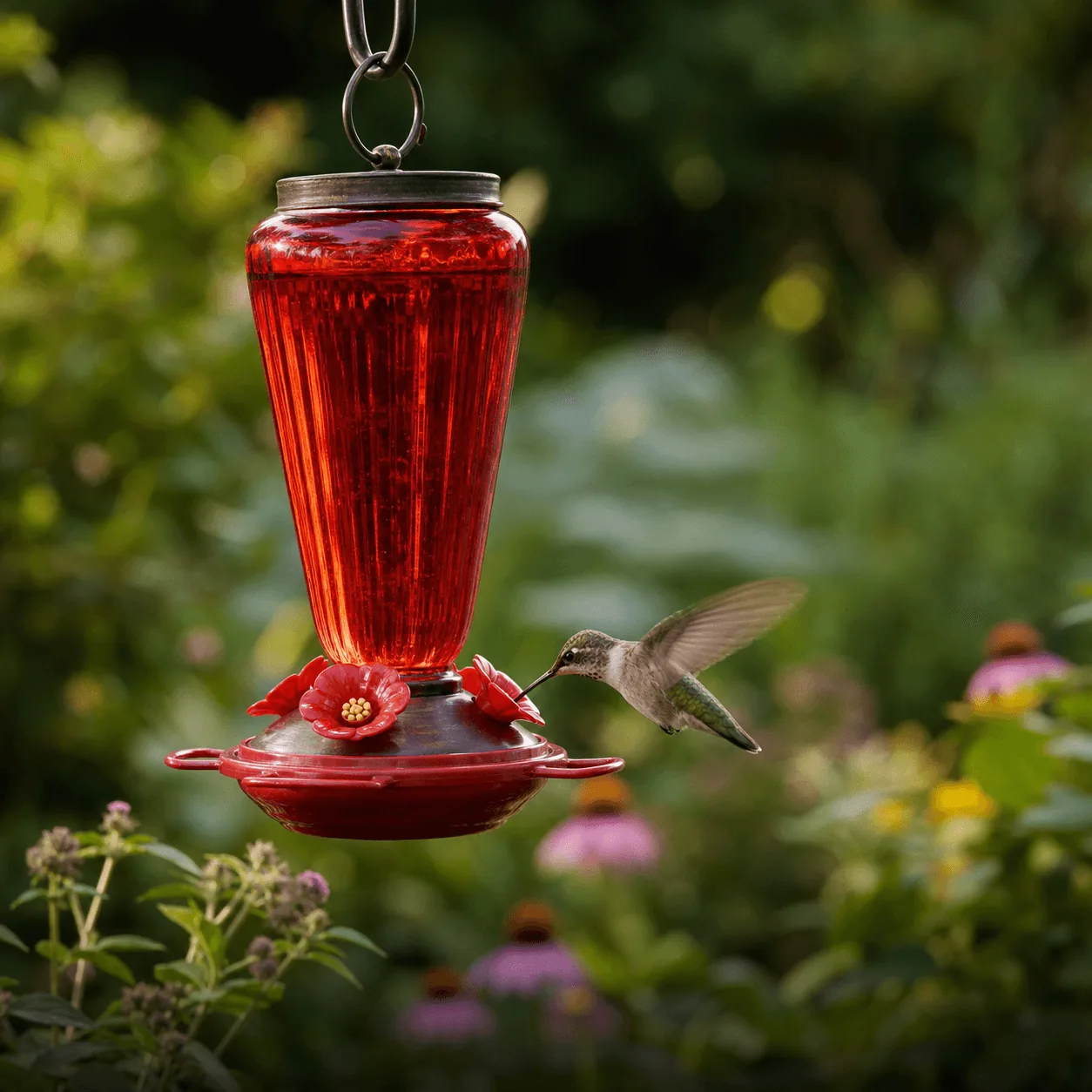
For example, the current 16 oz glass hummingbird feeder with ant moat is listed with a 16 oz reservoir and six ports. Those details do not tell you how many birds will visit or how much they will drink. We do not have a verified manufacturer specification for its minimum operating fill, so we do not publish one.
Check the feeder design before choosing a fill level
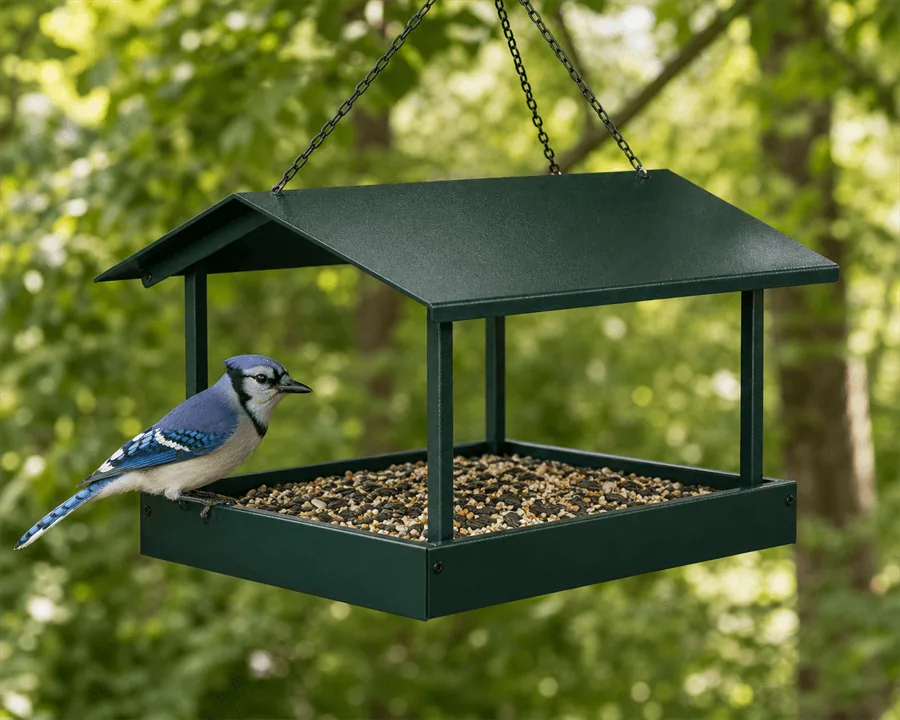
In a bottle-style feeder, the reservoir supplies a separate feeding base. In a saucer-style feeder, the nectar sits in a shallow dish under the ports. A visual halfway mark in one design is not an equivalent amount or working level in another.
Follow the model’s own maximum line, assembly sequence and any minimum level. Make sure nectar is accessible through the intended ports, the parts seat properly and the feeder hangs as instructed. If the instructions are missing, ask the seller for them rather than inventing a universal air gap or trying to force a seal by overfilling.
The ant moat is a separate compartment: it holds water, not nectar. Keep it distinct from the food reservoir when measuring what you put out. Compare the current hummingbird feeder collection by cleanability and documented design, not capacity alone.
Let the next cleaning determine how much goes outside
Begin with an amount you can monitor and maintain, within the model’s instructions. Inspect it regularly; do not wait for the bottle to be empty before cleaning. The goal is a manageable fresh offering, not using every ounce of storage capacity.
Audubon’s feeding FAQ varies cleaning frequency with the weather, calling for daily or alternate-day care in hot weather. Cornell also advises daily changes in very hot weather. These are care recommendations, not proof that every refill stays fresh until a particular deadline.
If nectar becomes cloudy or contaminated, discard it and clean immediately. Do not wait for a planned change, and do not treat clear-looking nectar as a guarantee of freshness. Use our feeder cleaning guide alongside the cleaning instructions for your model.
Use leftovers and leaks to choose the next action
Compare conditions at the feeder before changing the amount. A falling level alone cannot separate bird visits, a leak, evaporation or an accidental spill.
If you find fresh drips or a wet joint, follow our hummingbird feeder leak checks before increasing the offering.
| What you observe | What to check | Next action |
|---|---|---|
| Much nectar remains at cleaning | Is the offering larger than the activity you see? | Discard the remainder, clean and try a smaller measured offering. |
| The reservoir empties early | Look for wet surfaces, drips or a disturbed feeder. | Resolve leaks or spills first; increase the offering only if the setup works and you can maintain it. |
| Nectar remains but birds cannot reach it | Check the model’s fill limits and feeding-base assembly. | Correct the setup; do not prescribe a universal minimum from another feeder. |
| You cannot return for the next cleaning | Can someone provide the necessary care? | Arrange care or pause the feeder; a larger refill does not replace maintenance. |
Do not top fresh nectar onto an old offering. The International Hummingbird Society recommends cleaning between refills rather than topping off. Discard leftovers when cleaning, rinse thoroughly and refill with freshly prepared or appropriately stored nectar.
Keep a simple refill log instead of counting birds
You do not need to estimate an individual hummingbird’s daily intake. Record what you offered and what you found, using the same marked measuring vessel. Note weather and any leak so you do not mistake lost liquid for consumption.
| Time and weather | Amount offered | Leftover, drips or other change | Next offering |
|---|---|---|---|
| ________ | ________ | ________ | ________ |
| ________ | ________ | ________ | ________ |
This blank worksheet contains no test results or recommended dose. If leftovers repeatedly remain at cleaning, reduce the next offering within the model’s working limits. If you observe visits and the feeder empties without leaking, consider offering more or checking sooner. Reassess when the weather or visiting activity changes.
If birds are not visiting at all, repeatedly adding more nectar is unlikely to answer the question. Use our new-feeder troubleshooting guide and placement guide to check the site and setup.
Mix a small batch without changing the nectar ratio
The Smithsonian’s recipe uses one part refined white sugar to four parts water. Measure the ingredients by volume, stir until dissolved and let a warm mixture cool before use. Do not add red dye, honey or artificial sweeteners.
To make less, reduce both ingredient measurements proportionally; do not change the concentration because you want a smaller serving. Ingredient measurements are not an exact promise of finished volume. Measure the prepared nectar separately if you want to record the amount placed in the feeder.
Keep unused freshly prepared nectar separate from any nectar removed from the feeder. Mix manageable batches, keep stored nectar refrigerated and discard anything spoiled. Do not pour an old outdoor remainder back into a clean storage bottle.
Frequently asked questions about partial fills
Is half-full always the right starting point?
No. Half of a large reservoir can still be too much for the care you can provide, while another design may have different operating limits. Start with the instructions, then adjust a measured offering based on what remains at cleaning.
Does a bottle have to be completely full to prevent leaks?
Do not treat that as a universal rule. Check the specific design, assembly and seals. Without that model’s verified instructions, neither a full bottle nor a particular air gap is a reliable fix to prescribe.
Should I fill to capacity during migration?
Base the amount on the activity you actually observe and the care you can provide, not the calendar alone. More available nectar is not a guarantee of more visitors or a reason to delay cleaning.