Blue Jay Feeders: How to Attract Blue Jays to Your Yard (2026)
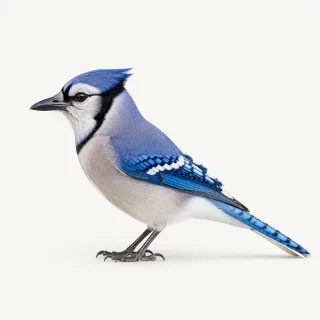
Cover: AI-generated editorial illustration of a Blue Jay; not a wildlife photograph or product test. To attract Blue Jays, offer suitable fresh food such as peanuts, sunflower seeds or suet, with enough room to reach it. Cornell Lab’s Blue Jay account reports a preference for post-mounted trays and hoppers over hanging feeders and notes visits [...]
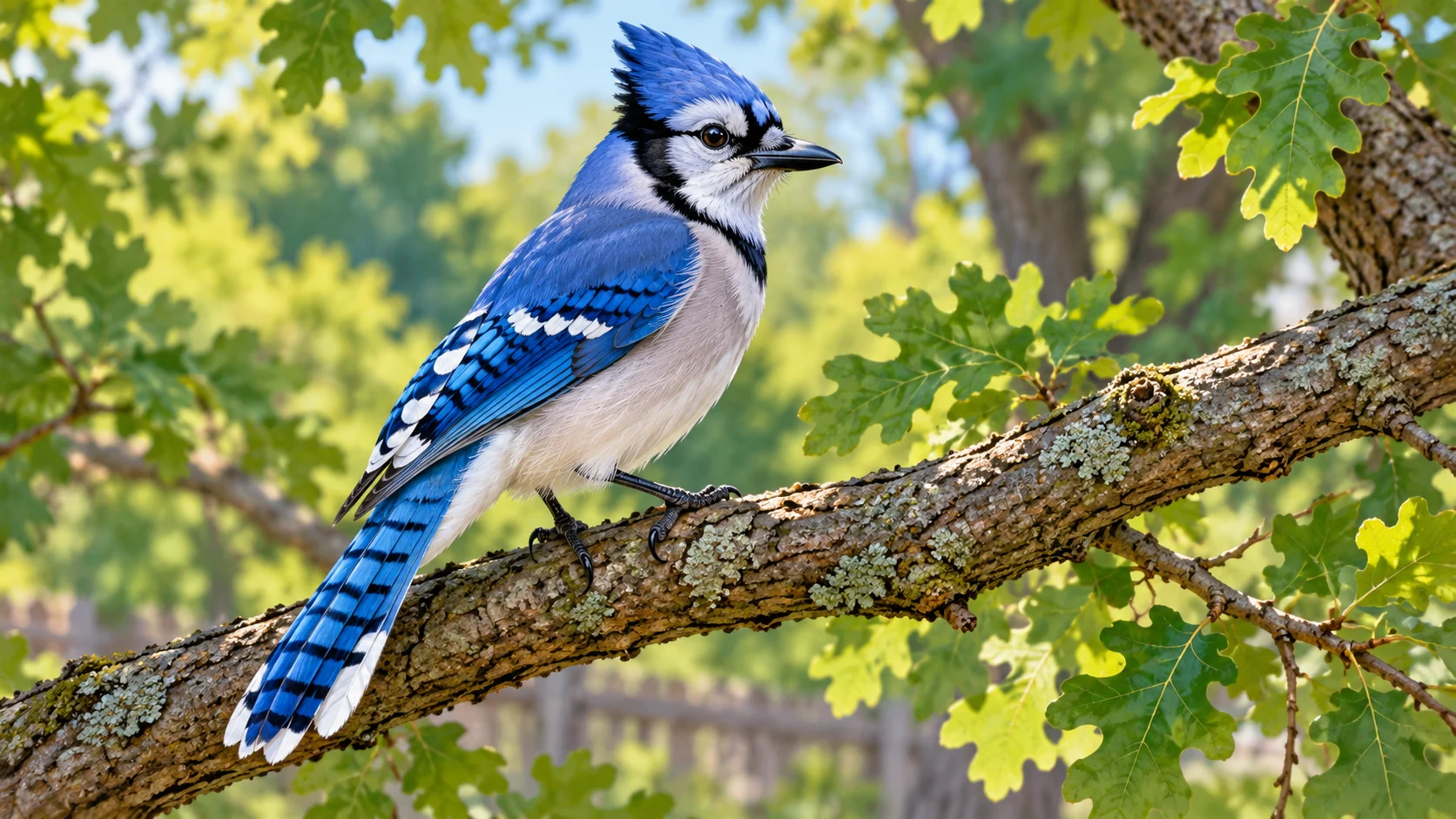
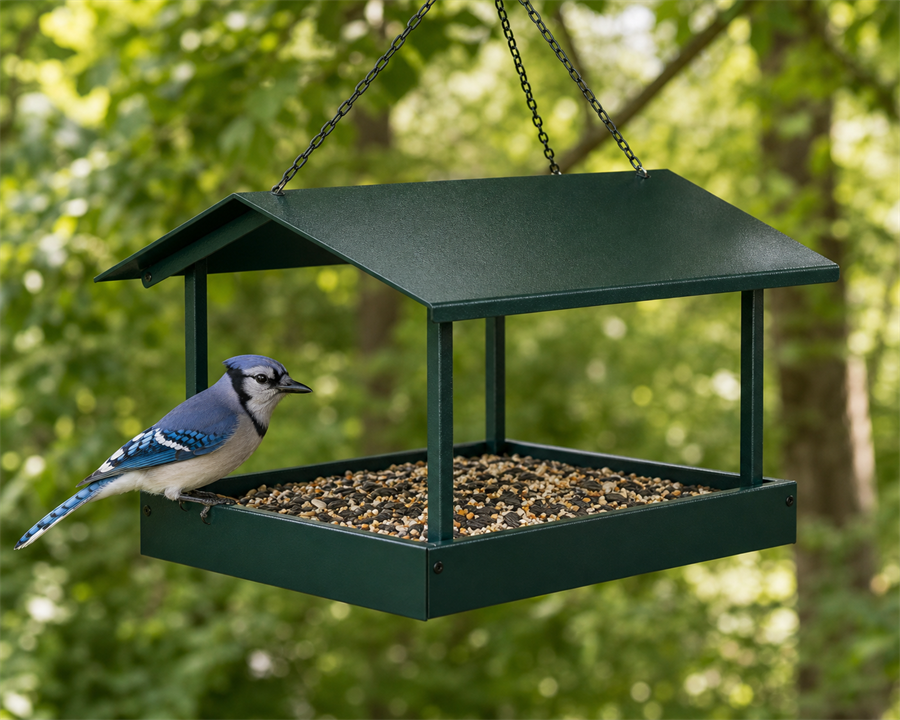
Cover: AI-generated editorial illustration of a Blue Jay; not a wildlife photograph or product test.
To attract Blue Jays, offer suitable fresh food such as peanuts, sunflower seeds or suet, with enough room to reach it. Cornell Lab’s Blue Jay account reports a preference for post-mounted trays and hoppers over hanging feeders and notes visits to birdbaths. These are starting choices, not guarantees of visits or time spent feeding.
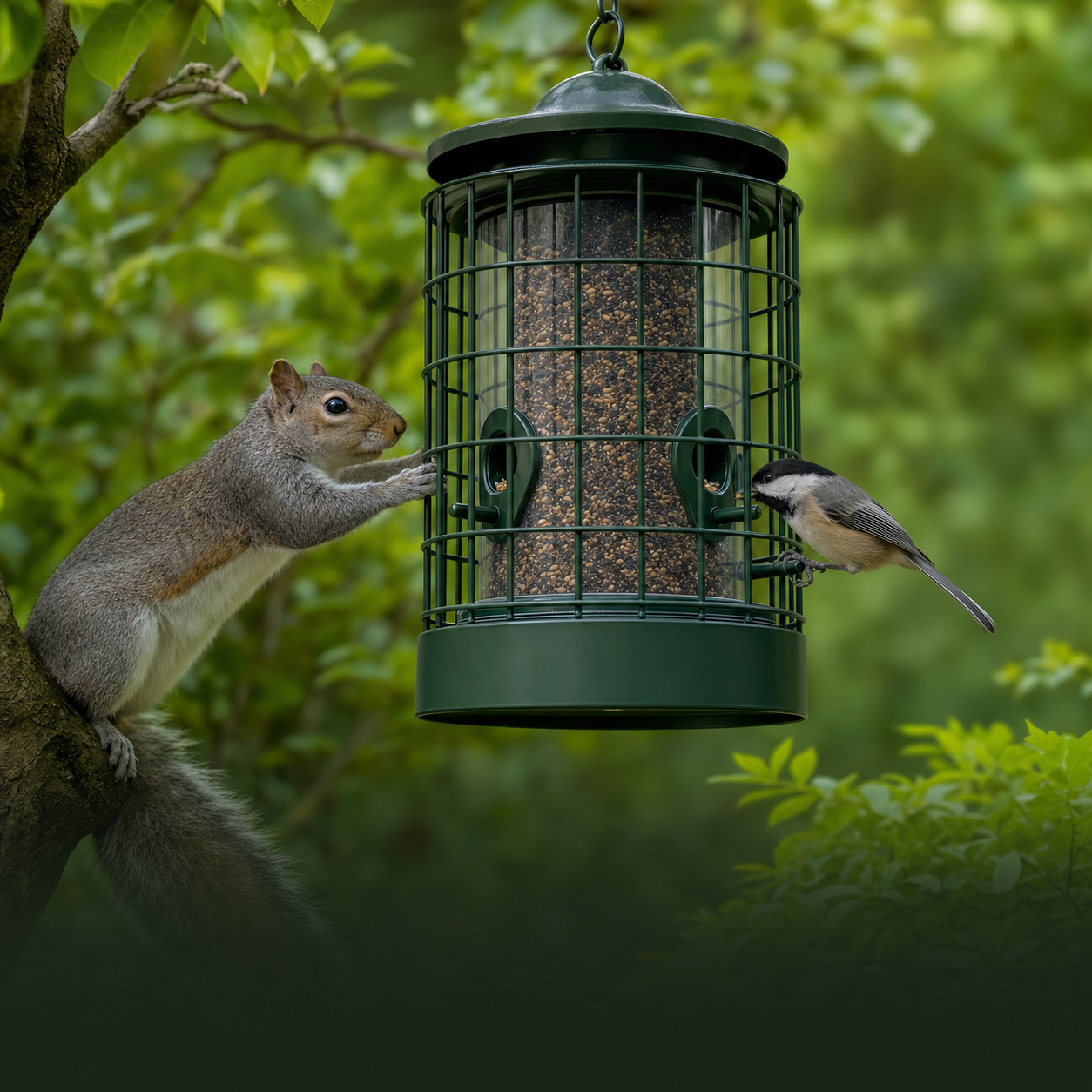
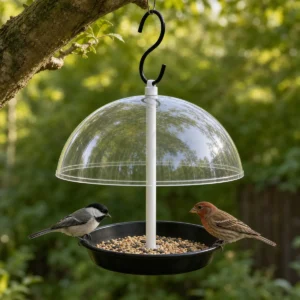
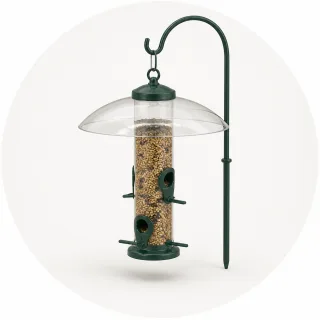
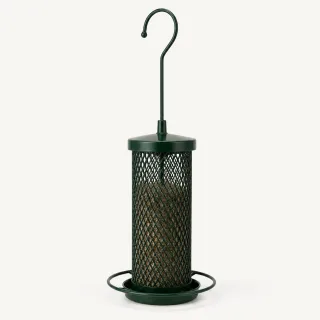
Blue Jays need room to land and reach food. A short-perch tube designed for small birds may be unsuitable, but an unused feeder alone does not establish the cause; check food, habitat, season and local species too.
This guide covers attracting Blue Jays in North America, where they are resident across the eastern and central states and provinces and much of Canada. They are not a shy species and rarely need coaxing; the work is mostly about offering the right food in a form they can actually use.
Key takeaways
- Blue Jays are omnivores in the crow family (Corvidae) — not seed specialists like finches.
- Cornell Lab’s guidance: they prefer tray or hopper feeders on a post, not hanging feeders.
- Their top foods are peanuts, sunflower seeds and suet.
- They do not migrate reliably — some move south, some stay, and the pattern varies year to year.
- The reputation for raiding nests is overstated: in a large study, only 1% of jays had evidence of eggs or birds in their stomachs.
- Blue Jays drink and bathe regularly, so fresh water may give them another reason to visit; it does not guarantee a particular increase in visits.
What Blue Jays actually eat
Most feeder advice written for “small birds” does not apply to Blue Jays, because they belong to a completely different family. They are corvids — the same family as crows, ravens and magpies — and their diet reflects that.
Omnivores, not seed specialists
Cornell Lab classifies the Blue Jay as an omnivore and a ground forager. That means insects, nuts, seeds, fruit and occasionally other animals’ eggs all feature in their diet. In practice, the bulk of what they eat is insects and nuts. At a feeder, this translates into a clear preference for high-fat, high-protein foods rather than the small seeds that finches and sparrows favour.
The nest-raiding reputation is mostly undeserved
Blue Jays have a long-standing reputation as nest robbers, and it is worth putting in context. In an extensive study of Blue Jay feeding habits, only about 1% of jays showed evidence of eggs or birds in their stomachs. The overwhelming majority of their diet was insects and nuts. See Cornell Lab’s Blue Jay account.
They are also not always the aggressor. At feeders in Florida, Cornell notes that Red-headed Woodpeckers, Florida Scrub-Jays, Common Grackles and grey squirrels strongly dominate Blue Jays and often keep them off the food entirely. The bird that clears your feeder and the bird that gets pushed off it can be the same species on different days.
The colour is not what you think
A detail worth knowing if you want to understand what you are looking at: the pigment in Blue Jay feathers is melanin, which is brown. The blue is created by light scattering through modified cells on the surface of the feather barbs – a structural colour, not a pigment. Crush a Blue Jay feather and the blue disappears. This is structural colour, not a blue pigment. See Cornell Lab’s Blue Jay account.
Why they prefer post-mounted feeders
This is the single most useful thing to get right, and it comes straight from Cornell Lab’s backyard guidance: Blue Jays prefer tray feeders or hopper feeders on a post rather than hanging feeders.
What to check on the actual mount
Cornell reports the mounting preference but does not establish a universal mechanical explanation or a measured improvement in feeding time. As a practical setup check, make sure the support is secure and the tray leaves room to land. Follow the model’s mounting instructions and observe actual use rather than promising a particular result.
Tray and hopper: which suits your yard
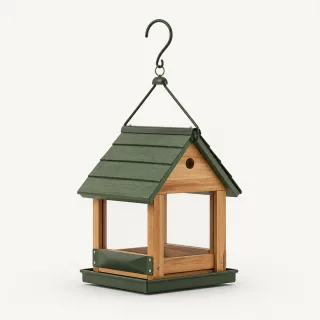
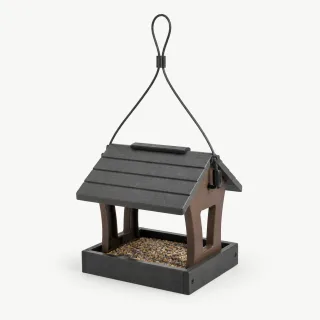
A tray or platform feeder is the closest match to how Blue Jays naturally feed, which is on the ground or at ground level picking through leaf litter. An open tray on a post mimics that and gives a big bird room to stand.
A hopper adds a seed reservoir and roof. Whether it reduces refills or limits rain exposure depends on the actual model, fill amount and weather. Compare tray access, drainage and cleaning access rather than assuming a hopper is always the better choice.
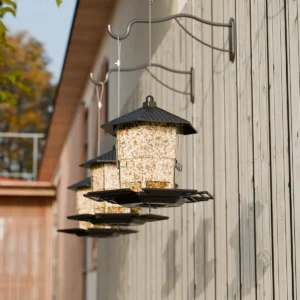
If you only have a hanging feeder
A securely hung tray with adequate access is an option to assess. Use the manufacturer’s approved mounting method; do not improvise a rigid conversion or load an unsuitable support. Cornell’s reported preference for post-mounted trays and hoppers is not evidence that every hanging model fails or that a particular mount guarantees more visits.
The best foods for Blue Jays
Cornell Lab names three foods specifically. A fourth is worth adding for variety.
| Food | Why it works | Notes |
|---|---|---|
| Peanuts | High fat and protein; matches their natural diet of nuts and insects | Use fresh, unsalted whole or shelled peanuts as appropriate to local guidance; keep them dry and remove spoiled food. |
| Sunflower seeds | Cornell Lab names this directly; high oil content | Black oil sunflower is easier for them to open than striped varieties |
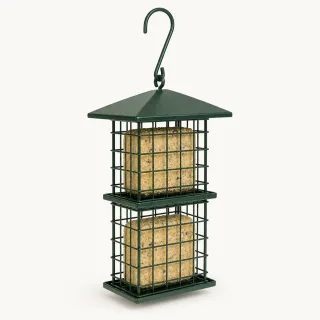
| Suet | Cornell Lab names this directly; dense energy source | Particularly valuable in winter and during the breeding season |
| Acorns and tree nuts | Their natural staple — jays are credited with spreading oak trees | An appropriate native oak may provide future acorns; allow for space, growing conditions and the time needed to mature. |
Offer fresh, unsalted peanuts if appropriate to local wildlife guidance. Jays may cache food, but there is no one-day test or guaranteed return time. Keep portions manageable and remove damp or spoiled food.
Where to put a Blue Jay feeder
Blue Jays are bold and not especially shy, which gives you more placement freedom than with most species. Three considerations still matter.
- Post mount over hanging, where possible. Stability is the whole point — a rigid post gives a large bird somewhere solid to land.
- Within reach of cover, but not buried in it. Jays are forest birds and like to approach from trees. A feeder 10–15 feet (3–5 m) from a tree or large shrub suits them without giving cats cover directly underneath.
- Cornell notes that Blue Jays use birdbaths. Providing fresh water is an option alongside food, not evidence that birds will stay longer in every yard.
- Window safety still applies. Jays are large, fast and frequently move between feeder and cover. Treat hazardous glass with closely spaced exterior markings or an exterior screen. Feeder or birdbath distance alone does not prevent collisions.
Observe which birds discover the feeder and when. A jay’s arrival is not proof that other species will soon follow, and this guide contains no measured discovery or attendance results.
How to attract Blue Jays: step by step
1. Put out whole peanuts first
In-shell or shelled unsalted peanuts are options where local feeding advice permits. Observe which birds visit, but do not use a fixed response time as proof that jays are absent.
2. Switch to a tray or hopper on a post
Consider a post-mounted tray or hopper where the model and site allow it, following the preference reported by Cornell. Check secure support and feeding access; this guide does not establish longer visits or a higher number of birds feeding together.
3. Add sunflower seeds and suet
Broaden the offering. Black oil sunflower and a suet cake give jays year-round reasons to stay, and suet is especially valuable through winter and the breeding season when their insect intake rises.
4. Put out a bird bath
Cornell Lab’s Blue Jay account notes visits to birdbaths. Keep the bath clean, with stable footing and water no deeper than 1 inch (2.5 cm) at the edge, sloping to at most 2 inches (5 cm) in the centre, following Cornell Lab’s birdbath guidance. Fresh water does not guarantee resident jays.
5. Plant an oak if you have the space
Planting an appropriate native oak can provide future acorns and habitat. It takes time and suitable growing conditions; it is not an immediate or guaranteed permanent food supply.
6. Keep the feeder clean and the ground tidy
Jays are ground foragers and will clear up spilled seed, but wet shell debris builds up fast under a tray feeder. Rake or sweep periodically, and wash the tray regularly. The hygiene routine in our bird feeder cleaning guide covers feeders of this type.
Blue Jay myths and mistakes
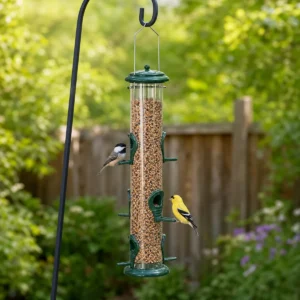
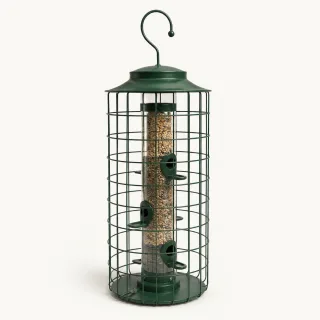
Assuming they will use a small tube feeder
The most common frustration. Tube feeders are designed around lightweight birds and small ports. A Blue Jay either cannot get at the seed or cannot perch comfortably. If jays ignore your setup, check the feeder type before you check anything else.
Believing they are driving other birds away
Blue Jays are loud and assertive, which reads as bullying. But Cornell’s observations at Florida feeders found Blue Jays being dominated by Red-headed Woodpeckers, Florida Scrub-Jays, Common Grackles and grey squirrels. A noisy bird is not necessarily a dominant one.
Worrying that they raid other birds’ nests
The evidence is much weaker than the reputation. In a large dietary study, only about 1% of Blue Jays had any trace of eggs or birds in their stomachs. Insects and nuts made up the overwhelming majority of their diet.
Offering only small seeds
Millet and similar small seeds are finch food. Blue Jays want fat and protein — peanuts, sunflower, suet. Fill a feeder with millet and the jays will leave it to the sparrows.
Expecting them to leave in winter
Blue Jays do not follow a predictable migration. Some migrate in flocks along the Great Lakes and Atlantic coast, some stay put all winter, and some individuals migrate one year and not the next. Cornell notes that no one has fully worked out why. Keep the feeder stocked year-round and you will not miss them either way.
Quick Blue Jay setup checklist
- ☐ Whole peanuts out first, as an area test
- ☐ Tray or hopper feeder mounted on a post (not hanging, where possible)
- ☐ Perches and ports sized for a 10–12 inch bird
- ☐ Black oil sunflower seed added
- ☐ Suet offered, especially winter and breeding season
- ☐ Clean bath with stable footing: at most 1 inch at the edge and 2 inches at the centre
- ☐ Feeder 10–15 feet (3–5 m) from trees, clear of cat cover
- ☐ Hazardous glass treated with exterior markings or screens
- ☐ Tray washed and shell debris cleared regularly
Frequently asked questions
What is the best feeder for Blue Jays?
Cornell reports a preference for tray or hopper feeders on a post rather than hanging feeders. Check the actual tray, access and approved mounting method. This is a preference, not a universal performance guarantee or a proven explanation of the birds’ behavior.
What food attracts Blue Jays the most?
Cornell names peanuts, sunflower seeds and suet as suitable feeder foods. Use fresh, unsalted food and observe local birds; this guide does not establish a universal ranking or guaranteed response time.
Do Blue Jays keep other birds away from feeders?
Less than their reputation suggests. They are loud and assertive, but Cornell’s observations found Blue Jays being dominated at feeders by Red-headed Woodpeckers, Florida Scrub-Jays, Common Grackles and grey squirrels. Most yards support jays alongside other species without difficulty.
Do Blue Jays eat other birds’ eggs?
They can eat eggs and nestlings. Cornell summarizes one dietary study in which about 1% of sampled jays had evidence of eggs or birds in their stomachs; that result is not a universal rate for all populations or seasons.
Do Blue Jays migrate?
Inconsistently. Thousands migrate in flocks along the Great Lakes and Atlantic coasts, but many stay through winter in all parts of their range. Some individuals migrate one year and not the next, and the reason is not well understood. Keep feeders stocked year-round.
Will Blue Jays use a hanging feeder?
They may use a securely hung tray with room to land. Cornell reports a preference for post-mounted trays or hoppers, but mounting suitability and actual visits vary. Follow the model’s mounting instructions; no setup always performs better.
Do Blue Jays use bird baths?
Yes. Cornell reports that Blue Jays often drink from birdbaths. Keep water fresh and the basin shallow; adding a bath does not guarantee more visits or a longer stay.
Are Blue Jays actually blue?
Not in the way you would expect. The pigment in their feathers is melanin, which is brown. The blue is a structural colour produced by light scattering through modified cells on the feather barbs, a structural colour rather than a blue pigment.
Make your yard worth returning to
A useful starting setup is suitable fresh food, adequate feeding access, secure mounting and clean water where appropriate. Observe regional species and seasonal use, and keep equipment clean. No feeder, food or bath guarantees that Blue Jays will visit or remain in a yard.
PerchKind stocks platform and tray bird feeders and hopper feeders with the wide perches and open trays that suit larger birds. Browse the full bird feeder collection, or start with the adjustable hopper bird feeder with a wide perch tray, which holds a bulk seed supply and gives big birds the standing room they need.
For everything else — feeder types, seed choice, squirrel control and seasonal timing — see our bird feeder guide. Jays also need water, and the principles in our birding guides cover baths and housing alongside feeding.
For a tray-feeding setup, compare the hanging platform feeder and our platform feeder food guide. Check the model’s mounting instructions and choose food appropriate for your local birds.
Sources and editorial notes
- Cornell Lab of Ornithology, All About Birds — Blue Jay species account (feeder preference, diet, migration behaviour, dietary study, feather colour)
- Cornell Lab of Ornithology, Project FeederWatch — Common Feeder Birds list (regional feeder visitors and food preferences)
- Cornell Lab of Ornithology, All About Birds — Cornell Lab’s Blue Jay account (bird bath use)
Written for PerchKind. Cornell’s species guidance informs the food and feeder preferences described here; practical setup checks are editorial advice, not measured product results. Compare the mounting instructions for the actual model. A hanging feeder should not be represented as a post-mounted model, and no mounting choice guarantees visits.
Editorial correction, 21 October 2026: Food choices, species scope and model-specific claims have been aligned across the article and FAQ. This guide reports no independent product or bird-attendance trial.