Winter Bird Feeding: What to Offer and When to Refill
Choose one winter bird food to start, then check what remains after rain, snow, or a thaw before you refill.
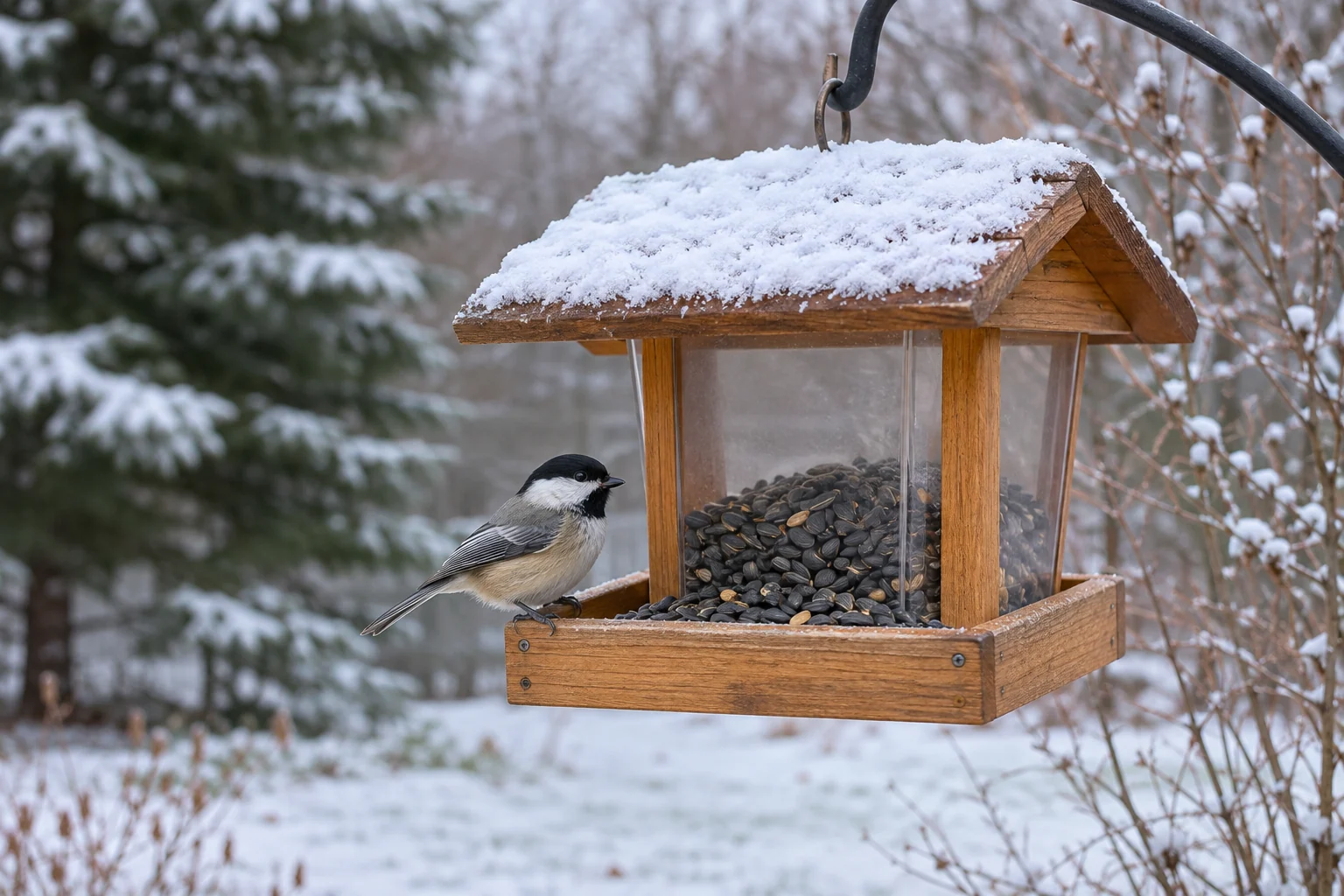
For winter bird feeding, start with a small amount of dry black-oil sunflower seed. Refill only after checking what remains, especially after snow, rain, or a thaw. Remove wet or moldy seed and let the cleaned feeder dry before filling again. Pause feeding if you see sick birds or local wildlife guidance advises against it.
The morning after a snowfall, a feeder can look comfortably full while the tray below it is empty. Before you reach for the seed bag, check whether the food is dry and can actually get through the outlet. That small habit matters more than filling a feeder to the top before every cold night.
Should You Feed Birds in Winter?
Winter feeding can supplement natural food, particularly when snow or ice covers the seeds and other food birds normally find. It is optional, and a feeder is not a substitute for habitat. Put one out if you can keep it clean and dry and your local wildlife authority says feeding is appropriate. If you cannot maintain the feeder safely, put it away for now.
Weather is only one part of the decision. In bear country, a cold week does not guarantee that bears are inactive. Connecticut DEEP’s winter feeding guide is one example of how advice varies by local bear activity. Follow the guidance where you live rather than borrowing another region’s dates.
If you live in an apartment or rarely get to the feeder after storms, it is fine to skip the feeder instead of setting up a larger one that is harder to service. A native shrub or a patch of standing seed heads can support birds without a refill schedule.
What to Feed Birds in Winter
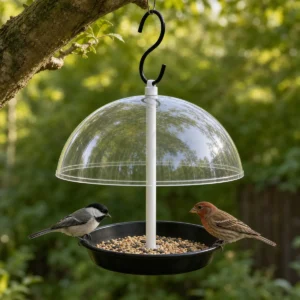
For a first bag in most North American backyards, choose black-oil sunflower seed if your feeder is designed to dispense it. Its thin shell and broad appeal make it a practical starting point. Project FeederWatch’s feeding guide explains how seed size and feeding behavior change the best pairing. Add a second food only if you have a reason to serve it and a feeder that suits it.
| Winter bird food | Where to offer it | When to skip it |
|---|---|---|
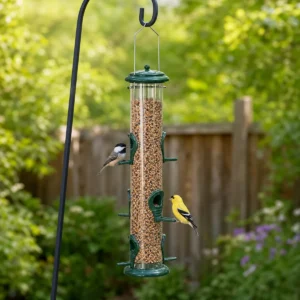
| Black-oil sunflower seed | A covered hopper or a seed tube with openings large enough for whole seeds. | The seed sticks in the outlet or collects where you cannot inspect it. |
| Hulled sunflower hearts | A sheltered feeder when you want fewer hulls on a deck or patio. | You cannot keep the exposed kernels dry or check them often enough. |
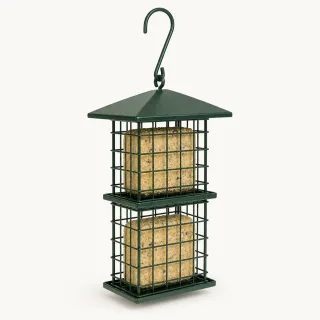
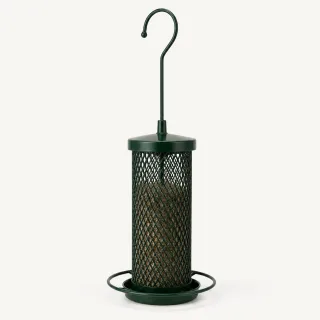
| Suet cakes | A secure suet cage, especially if you see woodpeckers or nuthatches nearby (see how to choose a suet bird feeder). | You do not have a suitable cage or cannot remove deteriorating food. |
| Nyjer seed | A finch feeder with very small openings, if finches are your main visitors. | The seed pours through a general-purpose opening or sits untouched. |
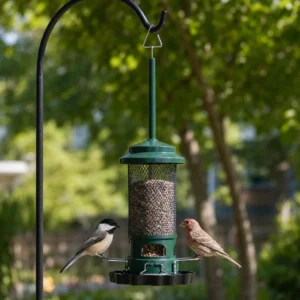
Use these pairings as starting points, not promises of particular birds. A sunflower feeder can host chickadees or cardinals; a suet cage can suit clinging birds. If you are unsure which design matches the birds you see, start with the bird feeder selection guide. If the birds regularly pick out one ingredient and leave the rest, serving the preferred seed on its own is a simpler test than trying a larger blend.
Start With One Food and a Small Refill
The first fill is a test of how your yard uses food, not a test of the feeder’s capacity. Begin with enough to make seed available at the opening without filling the reservoir all the way. At your next visit, distinguish intact seed from empty hulls and see whether the outlet feeds the tray. That tells you more than the level in a clear reservoir.
- If the food is dry and being eaten, add a modest amount. Adjust the next refill according to what the birds actually use.
- If the same dry seed is still sitting there, wait before adding more. Make sure birds can reach the food and that the outlet is not blocked.
- If you find damp clumps or spoiled food, empty the affected feeder, clean it, and let it dry before offering fresh seed.
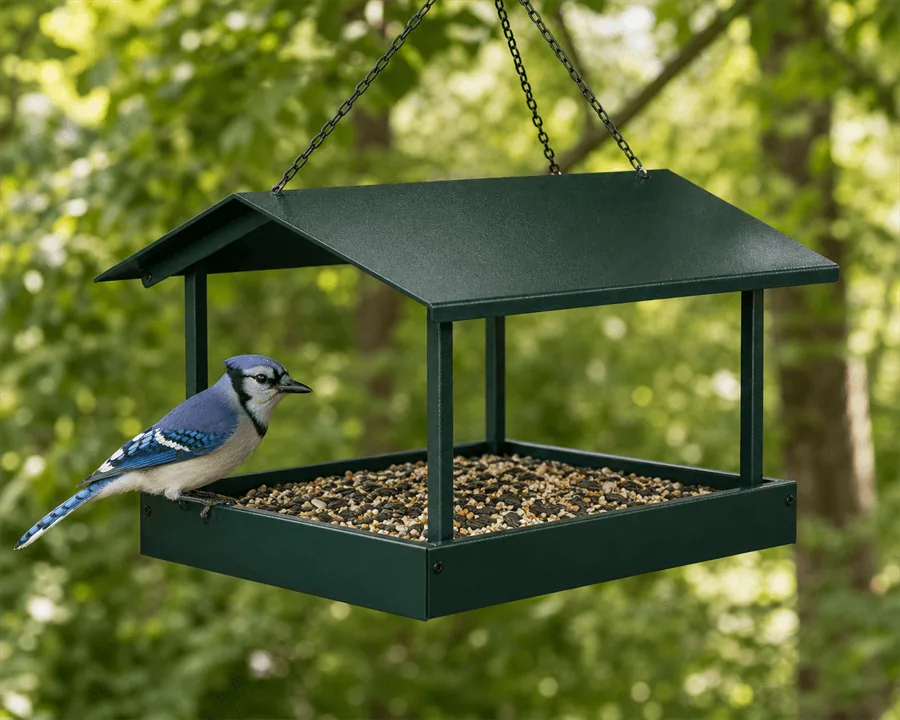
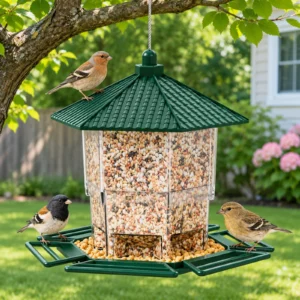
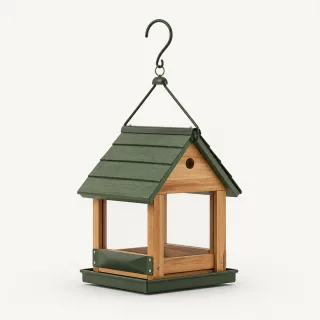
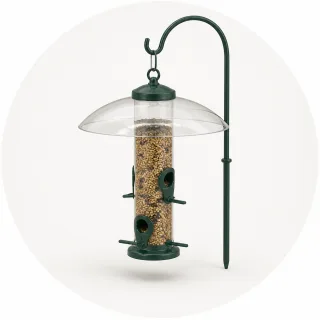
Hulled sunflower lowers shell mess but is less forgiving in damp weather. Use the guide to keeping bird seed dry if the same corner keeps getting wet. If you do need a different setup, the bird feeder collection is a starting point. Check which food the model accepts and whether you can reach the tray and reservoir to clean them; a roof does not make every opening weatherproof.
Store the rest of the bag somewhere cool and dry in a closed container. Put the scoop back dry, too. If the station starts to look empty sooner, check the ground before increasing the portion. A pile of whole seed can mean the food is spilling or being sorted out, not that birds need more. In that case, change one thing: try a smaller portion or a single seed, then check the ground again.
What to Check Before Snow and After a Thaw
Before snow: Clear old hulls from the tray, check that the outlet is open, and refill only if the seed is dry and running low. Plan a recheck for when you can safely reach the feeder. If access will be difficult, do not compensate by piling extra seed into an exposed tray.
After snow or a thaw: Inspect the feeding surface, the outlet, and the bottom of the reservoir. The top can look dry even if meltwater reached the tray. If the seed is dry and the tray is clear, you may not need to do anything. If seed is firmly stuck in the outlet, empty the feeder and find the obstruction rather than forcing new food through it.
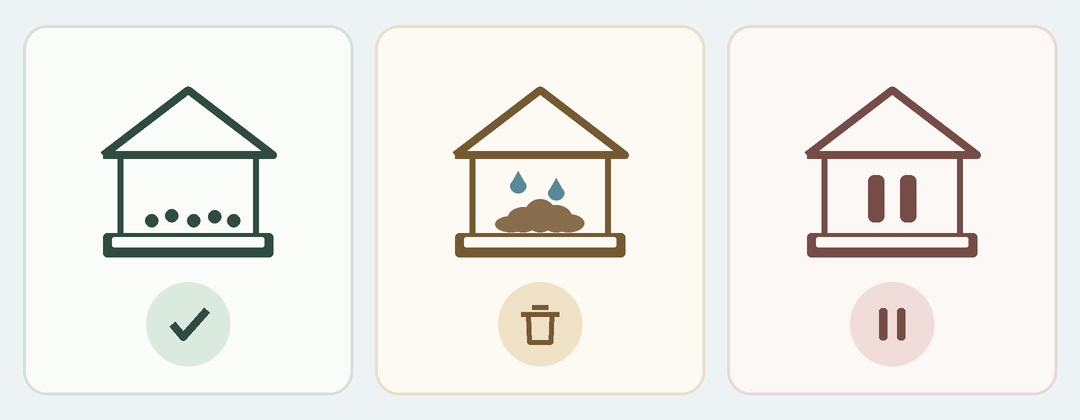
When putting it back: Use a clean, fully dry feeder and a fresh portion. Project FeederWatch recommends cleaning seed and suet feeders more often in wet weather or with heavy use. Our seed feeder cleaning guide goes through the steps. If the empty feeder gets wet again before it dries, take it inside to dry rather than refilling it on the spot.
For example, a little snow on the roof with free-flowing seed below does not call for a reset. A tray with a layer of slush and seed packed behind the opening does. Check the station when you can approach it safely, clear the wet food, and wait for the surfaces to dry. A short break gives you time to solve the problem instead of repeating the same refill.
When to Pause Feeding Instead of Refilling
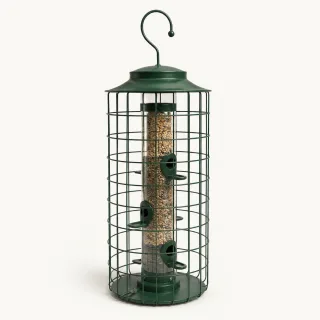
Remove the feeders if you see sick birds at the station, or if your local wildlife agency advises a pause. Follow its instructions for reporting or cleaning and for when to reopen. The right response is not the same as replacing a scoop of rain-soaked seed. If bears are active or rodents keep reaching spilled seed, stop offering food while you address the problem. Do not treat a covered feeder or a baffle as a substitute for local bear guidance.
Pause, too, when you cannot keep up with cleanup. Ask a neighbor to help only if they can check the food and remove anything wet, not just top it up. Station visits are usually supplemental; a briefly empty feeder is better than leaving spoiled seed out for days. The Aldo Leopold Foundation’s account of a Wisconsin chickadee study is useful context, but it is not a prediction for every species or yard.
Don’t Forget Water and Natural Food
Clean, shallow water gives birds another reason to visit, including some that do not eat seed. On freezing days, the guide to keeping a bird bath usable without electricity explains how to check for ice and rotate clean dishes. Start with something you can maintain rather than trying to keep multiple stations open.
Leave suitable native seed heads standing or retain a native shrub that bears fruit into winter. The Connecticut winter feeding guide explains why a yard with plant-based food supports birds that never visit a feeder. Choose plants native to your own area; do not copy a list made for another climate.
Winter Bird Feeding FAQ
Is feeding birds in winter necessary?
No. A clean feeder can supplement natural food, but it is optional. Skip it if you cannot keep it clean or if local wildlife guidance advises against feeding.
What if the feeder still looks full after snow?
Check the outlet and tray before refilling. If the seed is dry and reaches the tray, leave it alone. If moisture has caused clumping, discard the spoiled seed, clean the feeder, and let it dry.
Do I need suet as well as seed?
No. A feeder with black-oil sunflower seed is a workable first setup where local guidance allows it. Add suet in a suitable cage if you want to offer a separate food for birds such as woodpeckers.
Can I pause feeding while I travel?
Yes. If nobody can check the feeder and clean it after wet weather, taking it down is a reasonable choice. Restart only when you can look after it again and local guidance allows it.
Can I mix fresh seed with damp seed?
No. Empty out the damp seed and clean the contact surfaces. Refill after they are fully dry. Fresh food does not make old, wet food safe to serve.