How to Keep Ants Off a Hummingbird Feeder: A Safe, Practical Fix
A practical, safety-led sequence for stopping ants from reaching a hummingbird feeder without oils, sticky coatings, pesticides, or poison.
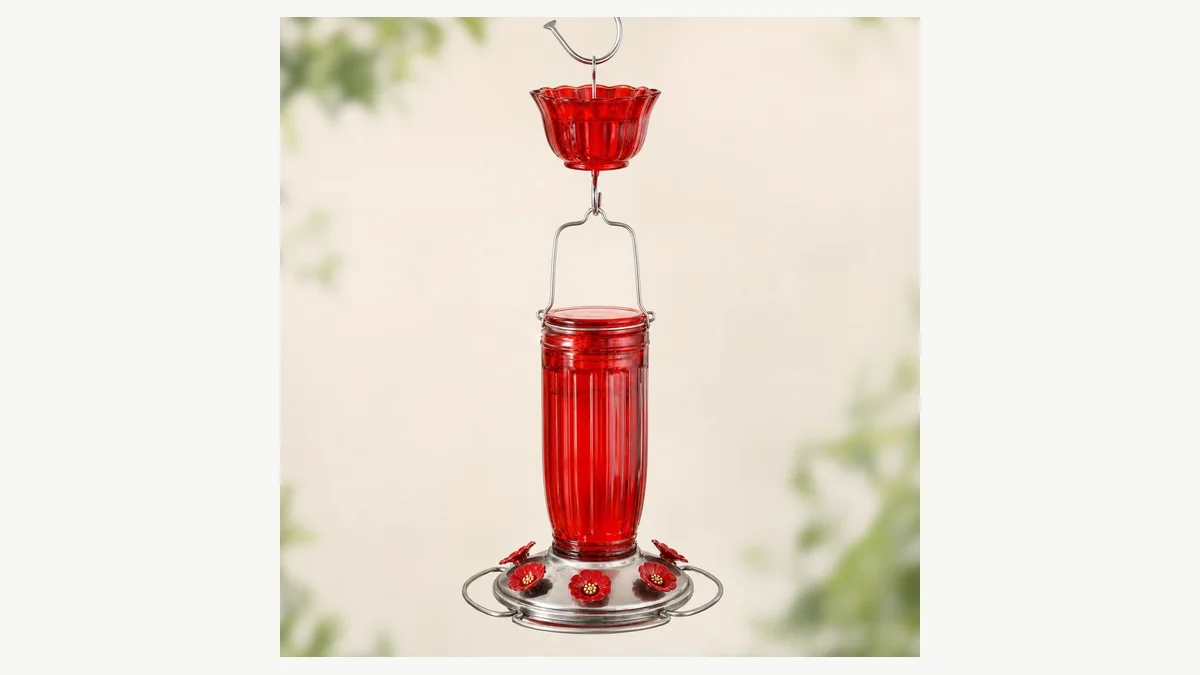
Start with a water-filled ant moat placed between the ants’ climbing route and the feeder. Then remove branches, rails, drips, and other bridges that let ants walk around it. If ants have reached the nectar, discard it, clean the feeder, and refill it with fresh nectar before putting it back outside.
This guide focuses on ants reaching a hummingbird feeder. It does not promise an ant-proof setup. A water moat can interrupt one route, but placement, leaks, maintenance, and other insects still matter.
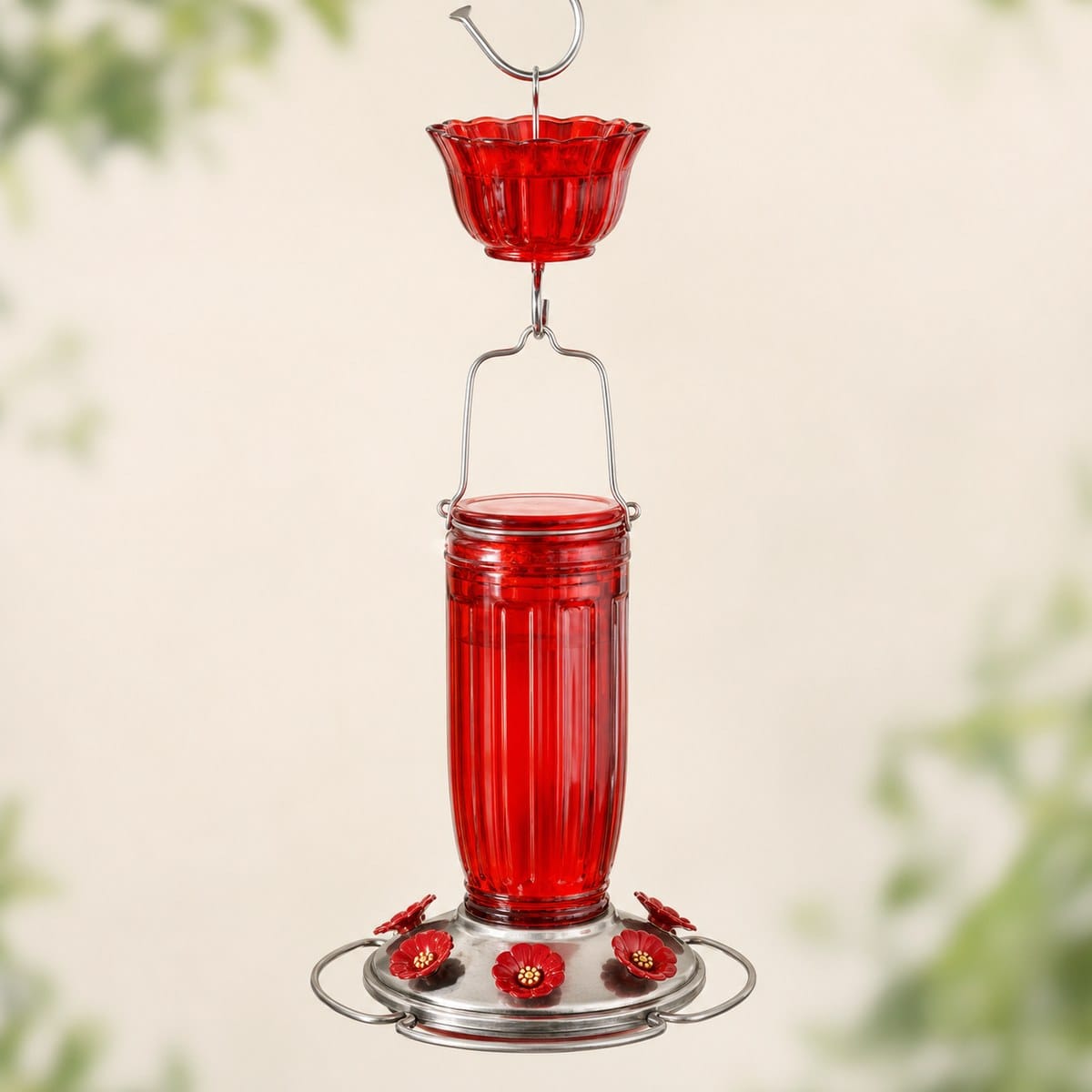
Start with a water-filled ant moat in the climbing route
An ant moat is a small cup or reservoir that holds plain water. It works as a physical break in the route ants use to reach the nectar. The water needs to sit between the hanger and the feeder, where an ant would otherwise climb. Texas Parks & Wildlife describes a small water moat on the hanging line or hook, which matches this physical-barrier approach.
Use clean water and check the cup whenever you check the feeder. Refill it when it is low or dry. A dry moat is only an empty cup, so it cannot provide the water barrier you intended.
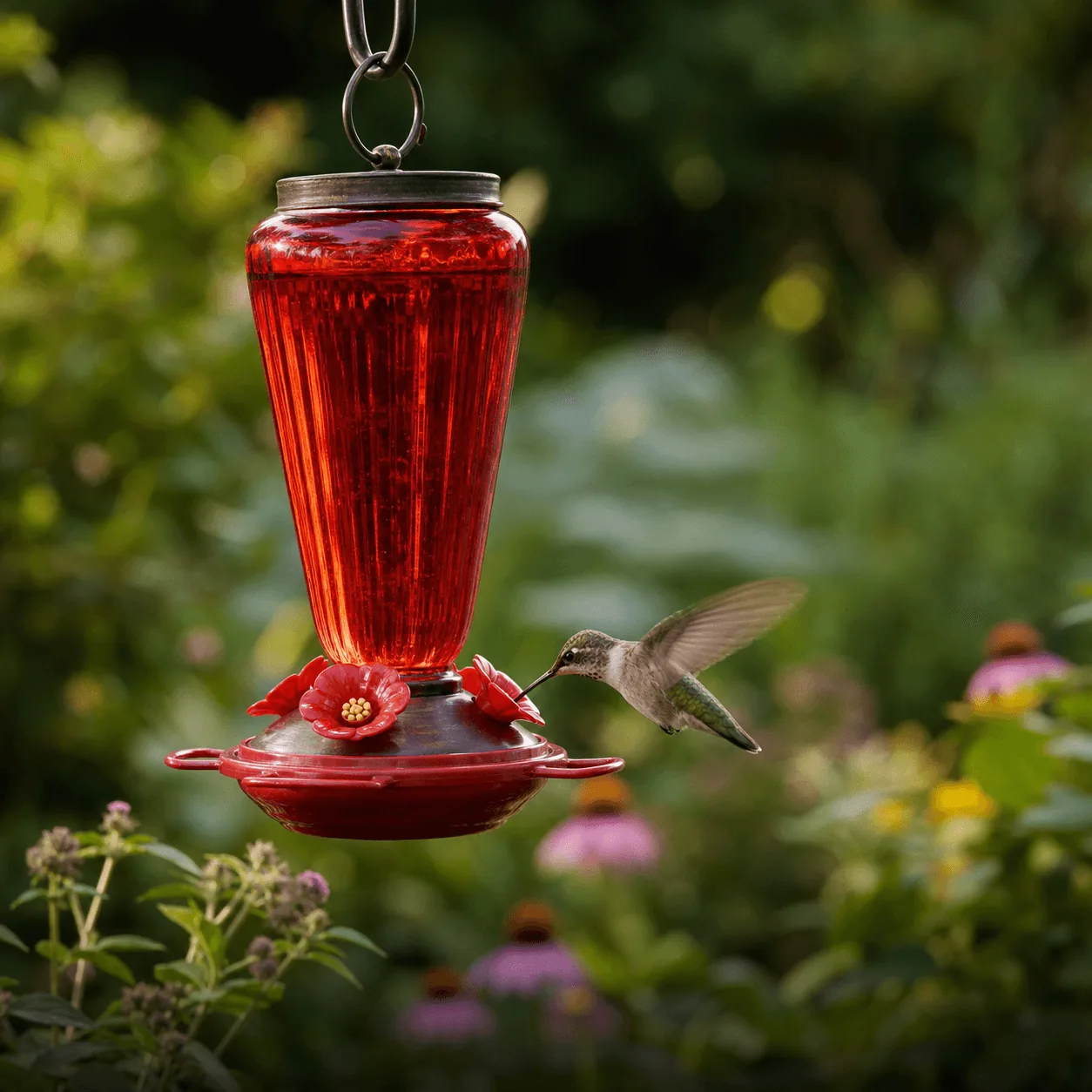
Some hummingbird feeders include a built-in moat. For example, the PerchKind 16 oz glass hummingbird feeder is listed with a built-in ant moat. That documented feature does not mean every insect will be excluded or that the feeder has been independently tested as ant-proof.
Keep the moat between the hanger and the feeder
Look at the feeder as an ant would. If ants climb a hook, pole, wire, or branch, the moat must interrupt that path before the ants reach the feeder body. A moat hanging beside the route may be easy for ants to bypass.
After hanging the feeder, watch the connection points. Make sure the hook, wire, feeder, and moat are not touching a branch, wall, fence, deck rail, or plant. If two surfaces touch, they can create a bridge over the water.
Thin monofilament line is sometimes used to make climbing more difficult. Iowa State University Extension lists ant moats and monofilament as physical options, but the line still needs to support the feeder safely and stay clear of nearby surfaces. Treat it as a placement option, not a guarantee.
Remove the bridges ants use to bypass the moat
When a moat seems to fail, inspect the whole route before adding another substance. Check for:
- a branch touching the hanger or feeder;
- a vine, leaf, or plant stem resting against the hook;
- a fence, wall, roof edge, or deck rail close enough to reach;
- a string, tie, or decorative part that touches another surface; and
- nectar on the outside of the feeder that gives ants a second target.
Move the feeder only as far as needed to break a route while keeping it reachable for cleaning and observation. Relocation can help with one path, but it does not replace a filled moat or routine checks.
Clean nectar drips before they create a scent trail
Ants may follow sticky nectar residue even when the main reservoir is sealed. Wipe visible drips from the feeder, hanger, hook, and nearby support. Check the base and feeding ports for wetness, and use the feeder’s instructions when investigating a suspected leak.
If the feeder is repeatedly wet, use our hummingbird feeder leak guide to locate the wet surface before changing the fill amount or buying another feeder. A falling nectar level alone does not prove that birds drank it. Spills, leaks, evaporation, and disturbance can look similar.
For the full washing and replacement routine, see How to Clean a Hummingbird Feeder. Keeping the outside clean helps remove the residue that can lead ants back to the feeder, but it does not make a contaminated nectar batch safe to keep.
What to do when ants are already in the nectar
Do not try to skim ants out and keep using the same nectar. Take the feeder down carefully and follow this reset:
- Discard the nectar that ants entered or that may have been contaminated.
- Take apart only the parts your feeder instructions identify as removable.
- Wash and rinse the reservoir, base, ports, hanger, and moat according to the model instructions.
- Wipe sticky residue from the outside and from the support points.
- Inspect the route for a branch, rail, plant, or leak that could have let ants return.
- Refill with fresh nectar made for hummingbird feeding and hang the feeder after the route is clear.
Use the nectar amount guide to prepare a manageable quantity. Capacity describes how much a reservoir can hold, not how much you must leave outside between cleanings.
Know what an ant moat cannot solve
An ant moat addresses ants that climb toward the feeder. It is not a universal insect barrier. Bees and wasps may approach from the air, and a moat does not prove that they will stay away. A bee guard, feeder format, and site choice address different concerns and should not be treated as interchangeable fixes.
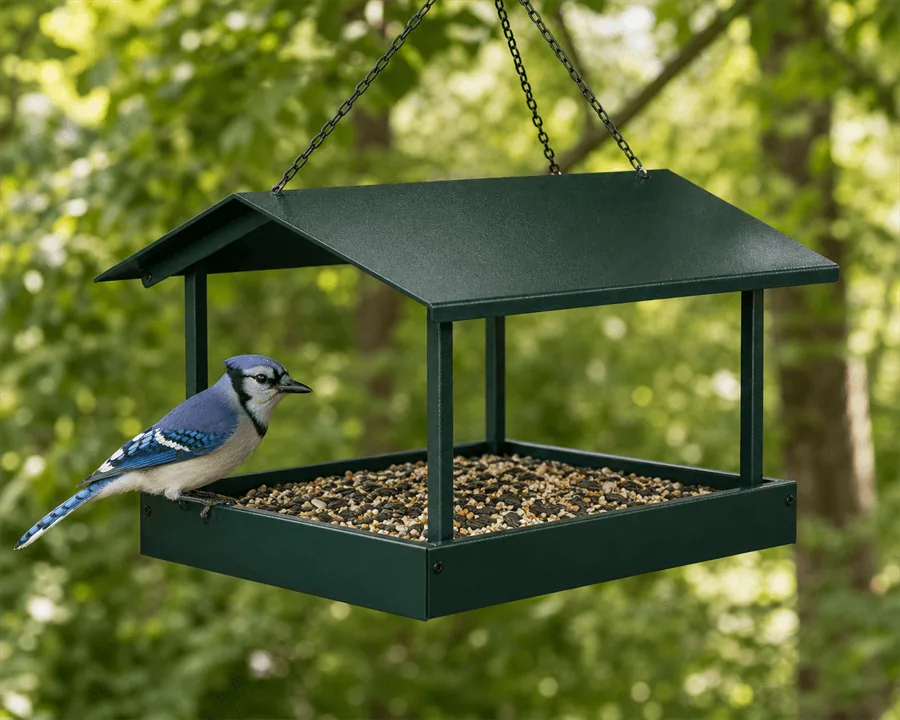
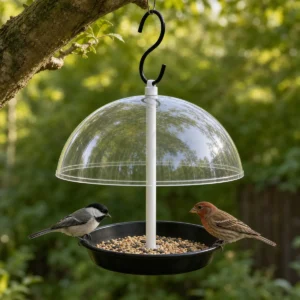
A saucer-style feeder can make the nectar harder for climbing ants to reach because the feeding ports sit above the reservoir. That design difference may help with access, but it does not remove the need for cleaning, leak checks, and a safe location.
If insects continue to gather, first identify whether the problem is ants on the route, bees at the ports, wasps, or a nectar spill. Choosing a response based on the observed insect avoids putting an unsuitable substance near the birds.
Avoid oils, sticky coatings, pesticides and poison
Do not coat the hanger, hook, feeder ports, or nearby surfaces with petroleum jelly, cooking oil, WD-40, or another sticky or oily product where a hummingbird could touch it. Operation RubyThroat warns against petroleum-based and sticky substances near hummingbirds because they can affect feathers and flight. It also advises against pesticides and poison near a feeder.
Some older extension pages and personal posts mention oil as an ant barrier. Those suggestions conflict with the stricter bird-safety guidance used here. A plain-water moat, clean placement, and removal of nectar residue provide a physical approach without putting an oil or pesticide on a bird’s route. For nectar care, University of Florida Ask IFAS gives the standard 1:4 nectar guidance and emphasizes regular cleaning.
Do not use cinnamon, talc, glue, tape, or homemade chemical mixtures as a shortcut. Their presence in a forum or a short video is not evidence that they are safe around hummingbirds or compatible with your feeder.
For broader site and window considerations, read our bird feeder placement guide. For documented feeder formats, browse the hummingbird feeder collection. Check the moat, route, outside surfaces, and nectar clarity each time you service the feeder, and adjust the setup when the evidence at your own feeding station changes.
Sources consulted include Operation RubyThroat, Iowa State University Extension, Texas Parks & Wildlife, University of Florida Ask IFAS, Pop’s Birding, and the current Google result set. Advice from forums, social posts, and videos is identified as anecdotal or limited when it could not be fully read.