



How to Keep a Bird Bath From Freezing Without Electricity
Offer clean water without an outdoor outlet using a shallow-dish swap routine. Learn why sunlight, floating balls and ordinary solar pumps cannot guarantee an ice-free bath.
To provide water without electricity, rotate shallow, frost-suitable dishes and replace frozen water with fresh water. Check again while freezing conditions continue. Sunshine may help, but this routine does not keep a bath permanently ice-free. If you need unattended water through a freezing night, do not rely on a floating ball or an ordinary solar fountain pump.
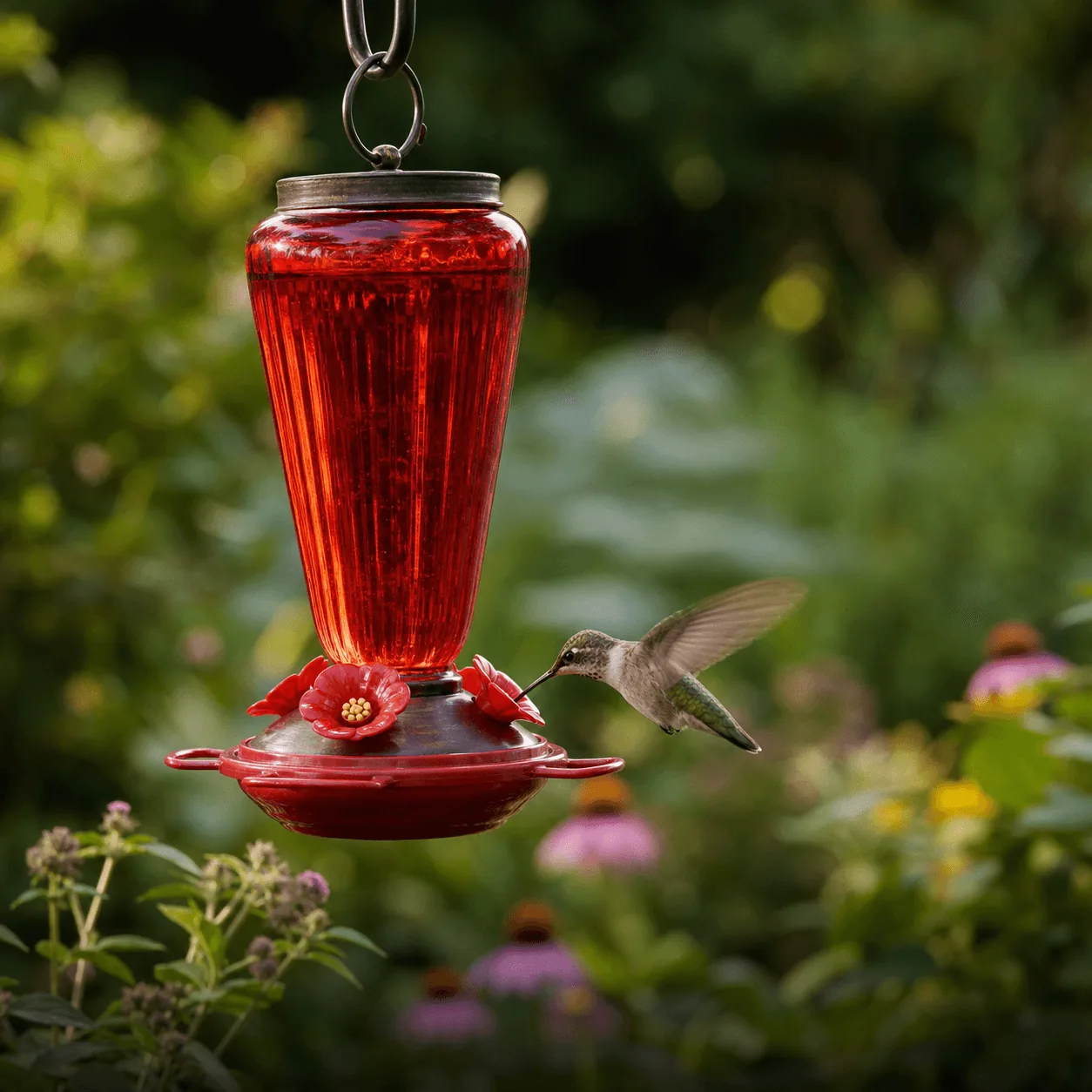
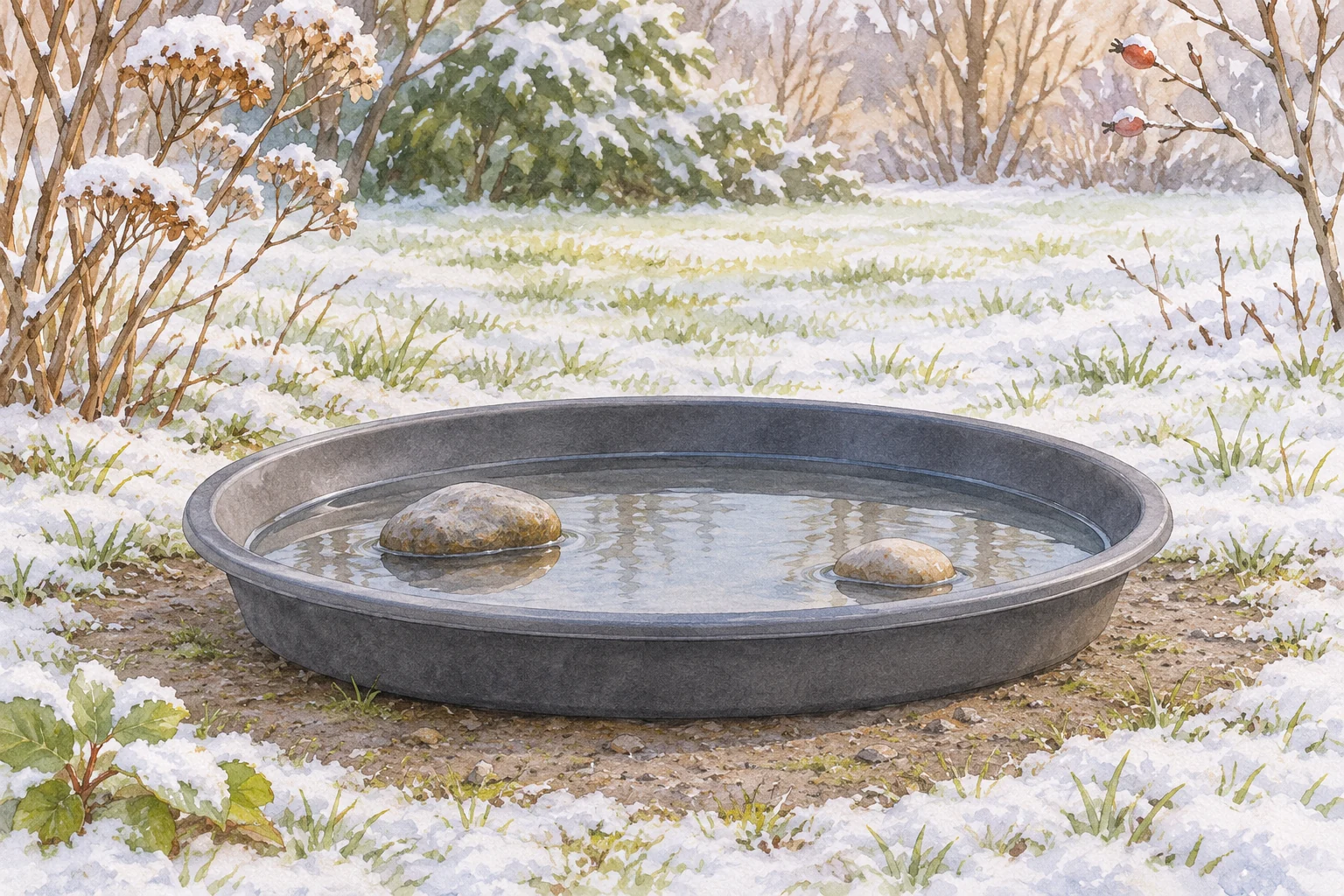
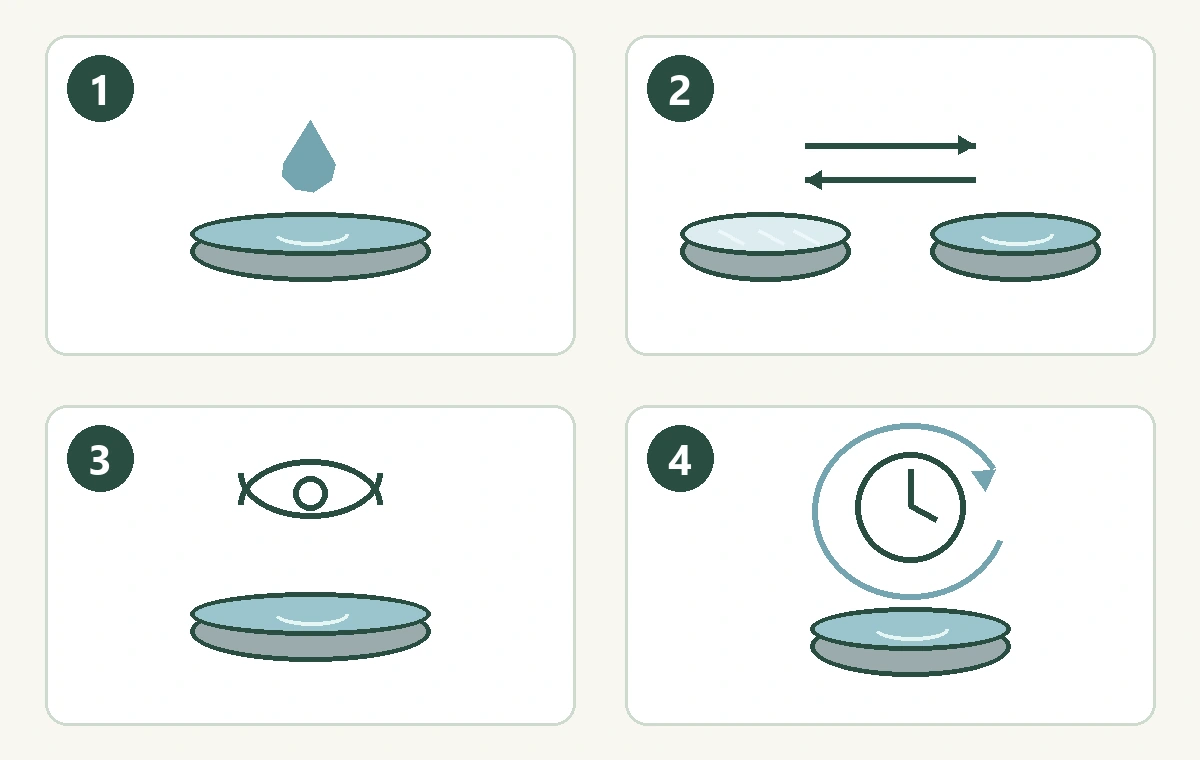
The cover is an AI-generated editorial illustration. The routine diagram is an original explanatory graphic; neither depicts a PerchKind product test or establishes a freeze rating.
The useful goal is to give birds access to clean liquid water when you can maintain it. You do not have to keep an ornamental pedestal bath full all winter to do that. A separate dish can be easier to carry, inspect and replace, while the main bath is stored according to its maker’s instructions.
1. Know what a no-electricity routine can deliver
Ask yourself whether you need a drinking opportunity during the day or continuous open water while you are away. Those are different requirements. A dish can freeze again after you replace it; the weather and your next inspection determine whether water remains available.
K&H’s winter guidance limits the usefulness of non-electric measures to milder conditions and brief frosts. Treat sun, water changes and surface movement as ways to manage the situation, rather than a promise that a basin will stay open in sustained cold.
There is no tested number of ice-free hours for the routine in this article. Do not set a fixed refill schedule based on a claim about somebody else’s yard. Start with checks you can realistically make, and shorten the interval if ice has already returned.
2. Prepare a shallow dish you can safely swap
Use a stable, watertight dish whose manufacturer permits the freezing conditions it may face. A heavy-looking bowl is not automatically frost-proof. Make sure you can lift and empty it safely when it contains water, and have a second suitable dish ready.
For small backyard birds, provide a shallow approach and secure footing. Audubon’s birding FAQ describes about 1 inch (2.5 cm) of water as suitable for small birds and about 2 inches (5 cm) at a bath’s deepest point. Measure the water birds actually reach, rather than the height of the outside wall. Secure stones can offer perching areas, but should not make the dish unstable or difficult to clean.
Choose a level place you can reach without an awkward winter walk. Look for winter sun while keeping a clear view around the basin: do not hide it beside dense cover where a cat can wait. For the broader setup, see our bird bath guide.
3. Follow a water-swap routine, then check again
The National Wildlife Federation suggests several heavy-duty plant saucers that will not crack with ice, replacing frozen ones with fresh ones in the morning when an outdoor outlet is unavailable. The following steps turn that idea into a manageable household routine; the extra checks are an editorial precaution, not a measured anti-freezing result.
- Prepare indoors. Keep a clean spare dish ready. Check its condition and the care instructions before filling it with fresh, unheated tap water.
- Exchange the dishes. Set the spare in the prepared location. Remove the frozen dish if it is safe to carry; do not leave two dishes balanced on each other.
- Inspect access. Check the actual water depth, footing and stability. Make sure the surface is open and the water is clean.
- Look again during the day. Replace the water when frozen or dirty. If it freezes before your next check, inspect sooner next time. A morning refill alone does not establish all-day access.
- Reset the spare. Let a removed frozen dish thaw gradually in a suitable place, then empty and clean it according to its instructions. Have it ready for the next exchange.
Keep a brief note of the time, whether the surface was open and whether you changed the water. This is a maintenance reminder, not a scientific test. If you repeatedly find solid ice, you have learned that your current check interval does not maintain access in those conditions.
Replacing water does not replace cleaning. Remove visible dirt promptly and keep a regular basin-cleaning routine. Follow the material’s care instructions, rinse cleaning residues away and refill with clean water.
4. Treat sunshine, floating balls and solar pumps as limited aids
| Idea | Reason to consider it | Limit to plan around |
|---|---|---|
| A sunny location | May help keep water liquid during daylight | It does not provide overnight heating or establish a freeze rating |
| A wind-moved floating ball | RSPB includes it among methods for keeping a small opening | Movement depends on conditions; inspect the water instead of assuming the ball worked |
| A solar fountain pump | Circulates water when its operating requirements are met | Circulation alone is not a verified heating or de-icing function |
| Fresh-water exchanges | Let you offer open water without running a heater | The replacement water can freeze again; somebody must return to check |
RSPB’s bird bath guidance discusses both a floating ball and a specific solar water product. That does not establish that every solar fountain heats water. Check the exact product’s stated function, freezing limits and storage instructions; a battery for a pump is not evidence of a heater.
If you are choosing a fountain for moving water in suitable weather, our solar bird bath fountain guide explains the questions to ask. Do not buy a circulation-only unit to solve an overnight ice problem.
5. If the main bath freezes, protect the basin first
Do not hammer the ice or force it out of a rigid basin. Avoid pouring boiling water into a frozen bowl. Material-specific instructions matter: Water Fountain Online tells owners of its concrete baths to let a frozen bowl thaw gradually and to provide a separate dish of water meanwhile. Its guidance also calls for draining, drying and sheltering its baths before hard freezes.
Use your own basin maker’s instructions for winter storage. Do not turn a heavy bowl upside down on a pedestal unless it is designed to rest securely that way. If its frost tolerance is unknown, resolve that before leaving water in it through a freeze.
A separate winter dish lets you keep offering water while protecting a bath that should be put away. It does not turn the stored bath, its pump or its fittings into winter-rated equipment.
6. Keep drinking water free of antifreeze additives
Never add salt to keep a bird bath liquid. The U.S. Fish and Wildlife Service explicitly warns against this because it can harm birds and other wildlife. Audubon and RSPB also advise against antifreeze chemicals, including glycerin. Keep the water plain.
Avoid improvised candle or flame heaters under a basin. This guide provides no tested design for them. If you later choose powered equipment, use an outdoor product suitable for the basin and follow its installation instructions; get qualified help when an appropriate outdoor supply is needed.
7. Decide whether your routine or your purchase needs to change
Before buying a winter basin, ask the seller: Is this exact model suitable for water freezing inside it? What storage is required? How heavy is it when filled? Can I easily empty, scrub and exchange it? Ask about a pump and any heater separately; one component’s rating does not cover the whole setup.
Then check your own availability. If you can swap dishes and inspect them repeatedly, the routine above may suit you. If you need continuous unattended access during sustained freezing weather, the no-electricity routine does not meet that requirement. Consider a suitable purpose-built water system and power arrangement rather than adding more unverified “hacks.”
Browse the PerchKind bird bath collection to compare designs, but confirm winter suitability for the exact item before ordering. This guide does not verify a freeze rating or heater compatibility for the products in that collection.
Start with the next practical step: prepare a suitable spare dish, put out clean shallow water, and decide when you will check it again.